
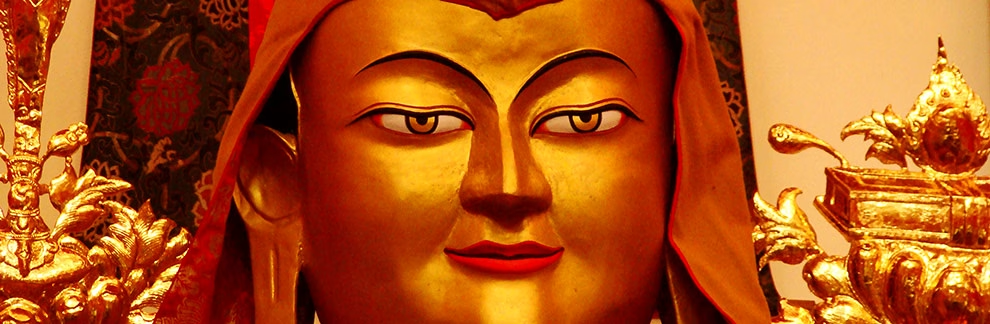
Tushita Main Gompa
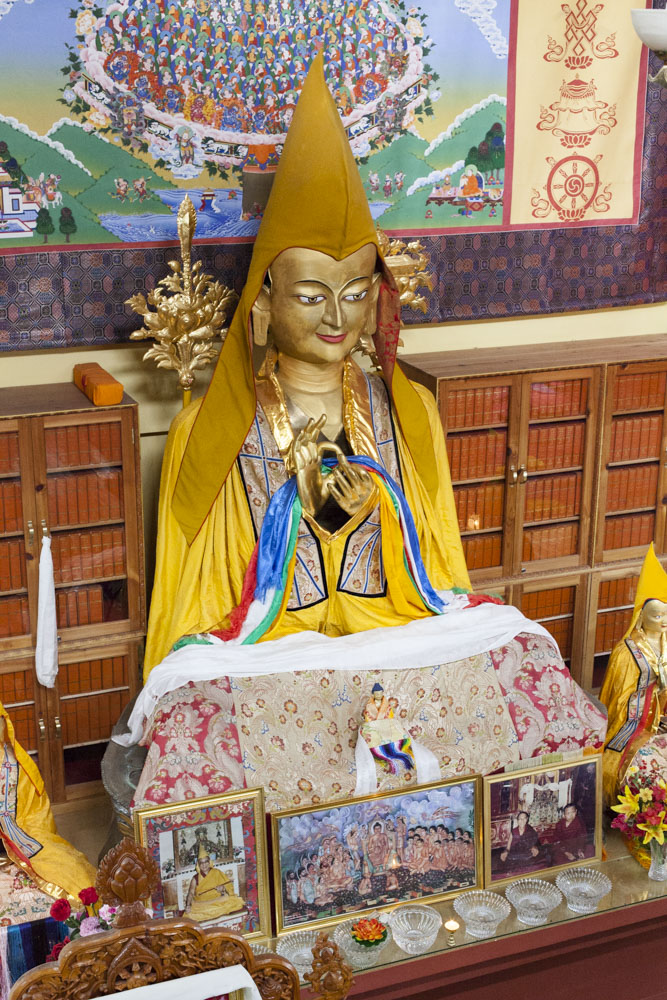
Lama Tsongkhapa Statue
Lama Tsongkhapa is the founder of the Gelugpa school of Tibetan Buddhism. He was born in 1357 in the Tsong Kha region of Amdo in Tibet.
Lama Tsongkhapa is revered as one of the most significant Tibetan Buddhist teachers, appearing at a time when people did not understand how analytical study and yogic practice were to be united. He taught the correct way to practice both and is an example of how learning and meditative application are to be used as a unified path to achieve enlightenment.
Our statue of Lama Tsongkhapa is fifteen-feet in height, the largest one here at Tushita. When it was housed in the old meditation hall, Lama Tsongkhapa had to stick his head through a special hole cut for him in the low ceiling!
His importance in this lineage is demonstrated by his central position in the beautiful new gompa, which was completed in 2008.
🪷
Lama Tsongkhapa Disciples Statues
We have two statues of Lama Tsongkhapa’s root disciples which can be found on the altar of our Main Gompa. They have been on display there since the beginning of 2014.
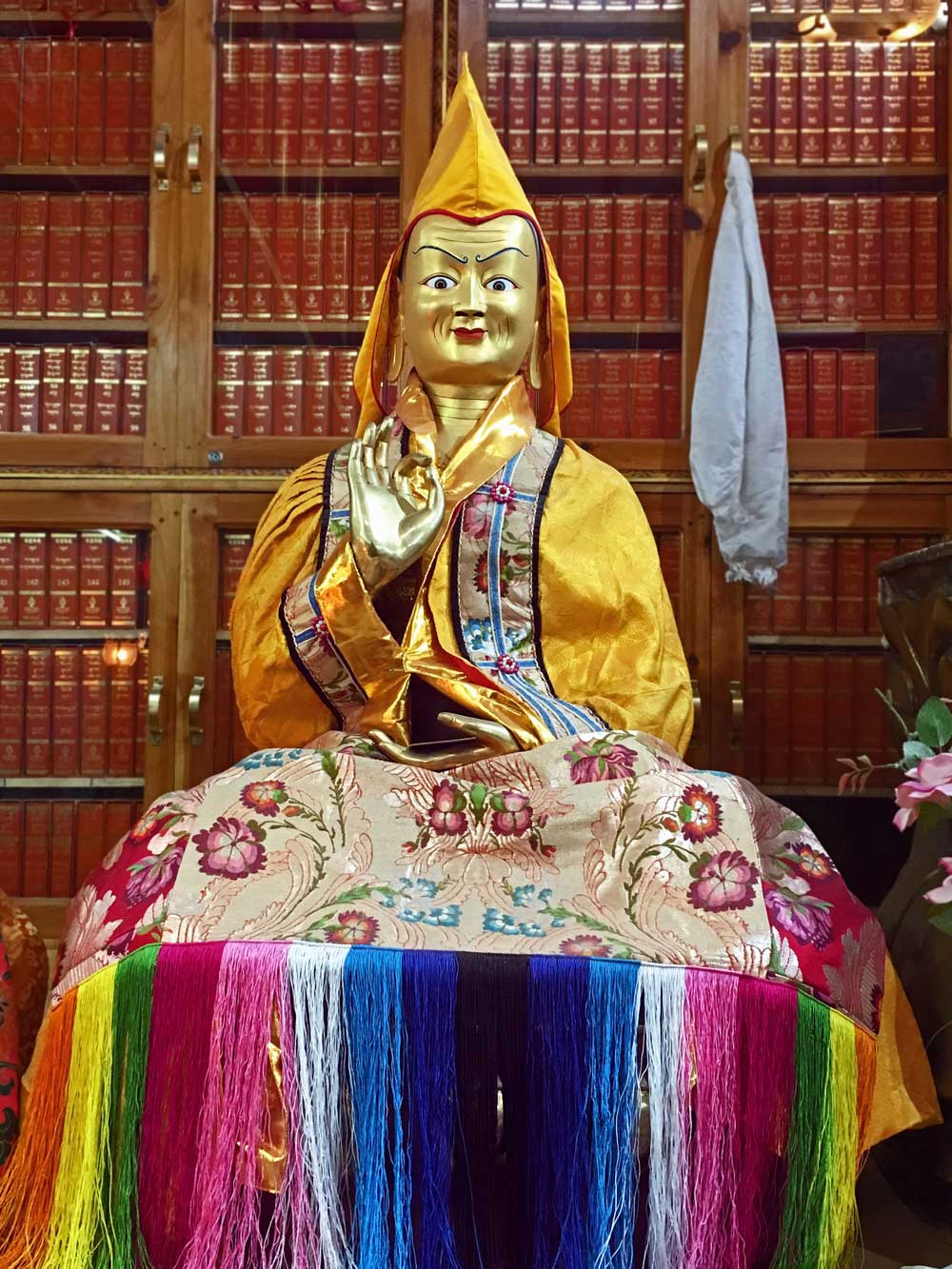
Gyaltsab Je
(Gyaltsab Dharma Rinchen: Tibet, 1364–1432) was a famous student of Lama Tsongkhapa. He supervised the construction of Gaden Monastery (which was founded by Lama Tsongkhapa) and was appointed its second abbot after Tsongkhapa. He became the Gaden Tripa or “holder of the Gaden Throne”, the head of the Gelug tradition after Lama Tsongkhapa’s death.
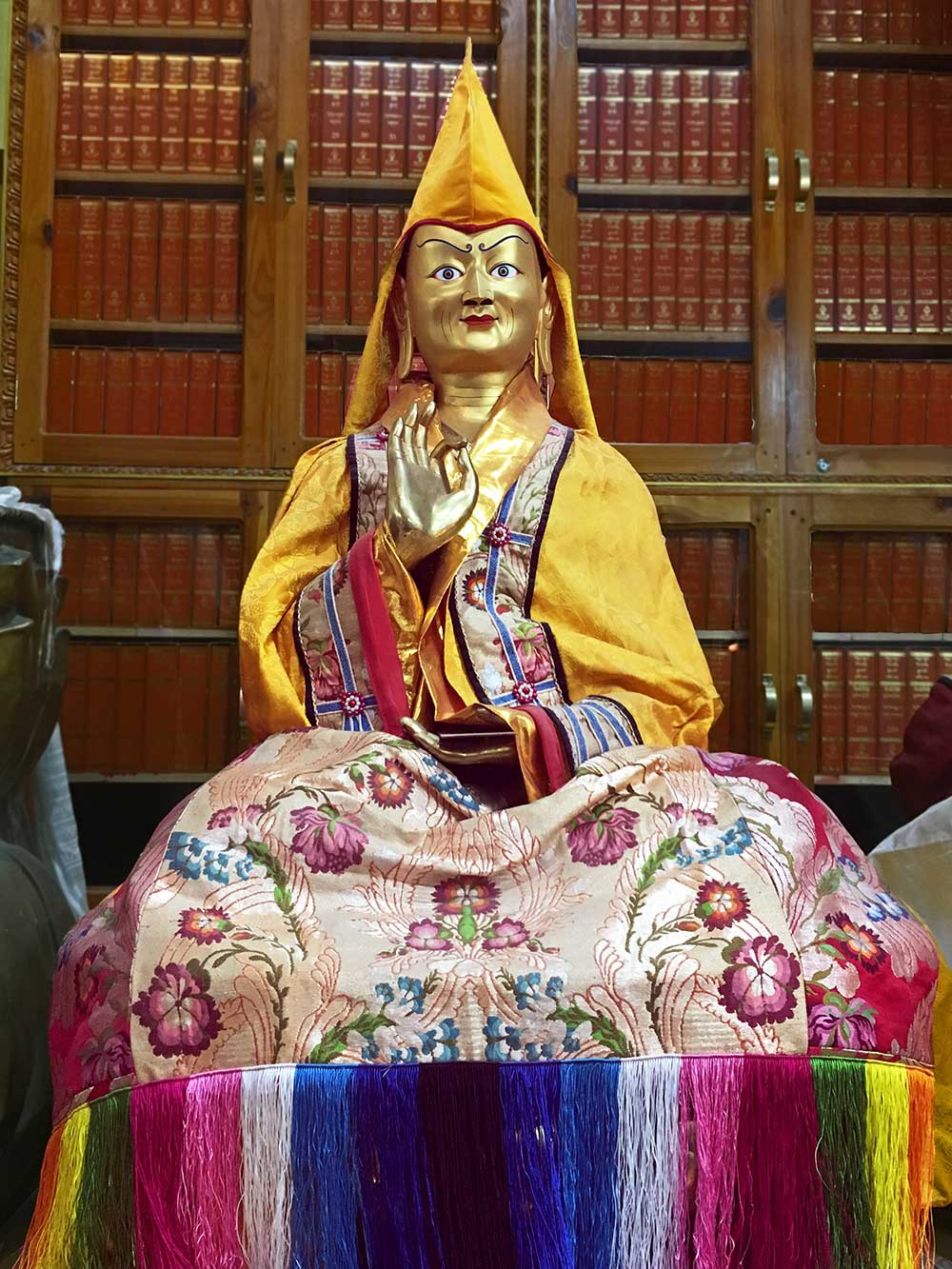
Khedrup Je
(Khedrup Gelek Pelzang: Tibet, 1385–1438) was one of Lama Tsongkhapa’s main disciples and is recognized as the 1st Panchen Lama (one of the most important figures in the Gelug tradition, second only to His Holiness the Dalai Lama). He played an important role in the education of the First Dalai Lama who was the youngest of Lama Tsongkhapa’s five main disciples.
Khedrup Je was a prolific writer, completing fifty-eight treatises and many prayer books. He wrote an important text on Kalachakra which is used by His Holiness the 14th Dalai Lama as the basis for his Kalachakra tantra empowerments.
For a detailed story of this project click here.
🪷
Lama Atisha & Padmasambhava Statues
The highest nobility is in subduing your own mind.
Lama Atisha 985-1054
The highest excellence is in having a mind which seeks to help others.
Our altar in the Main Gompa was completed in late 2014 with the arrival of our two statues of Lama Atisha and Padmasambhava (Guru Rinpoche). They can be seen flanking our statues of Lama Tsongkhapa and his two main disciples Gyaltsab Je and Khedrup Je. Behind them are our two collections of canonical texts in Tibetan Buddhism known as Kangyur and Tengyur (see picture below). We had the joyful task of extending the altar in order to fit all these precious holy objects!
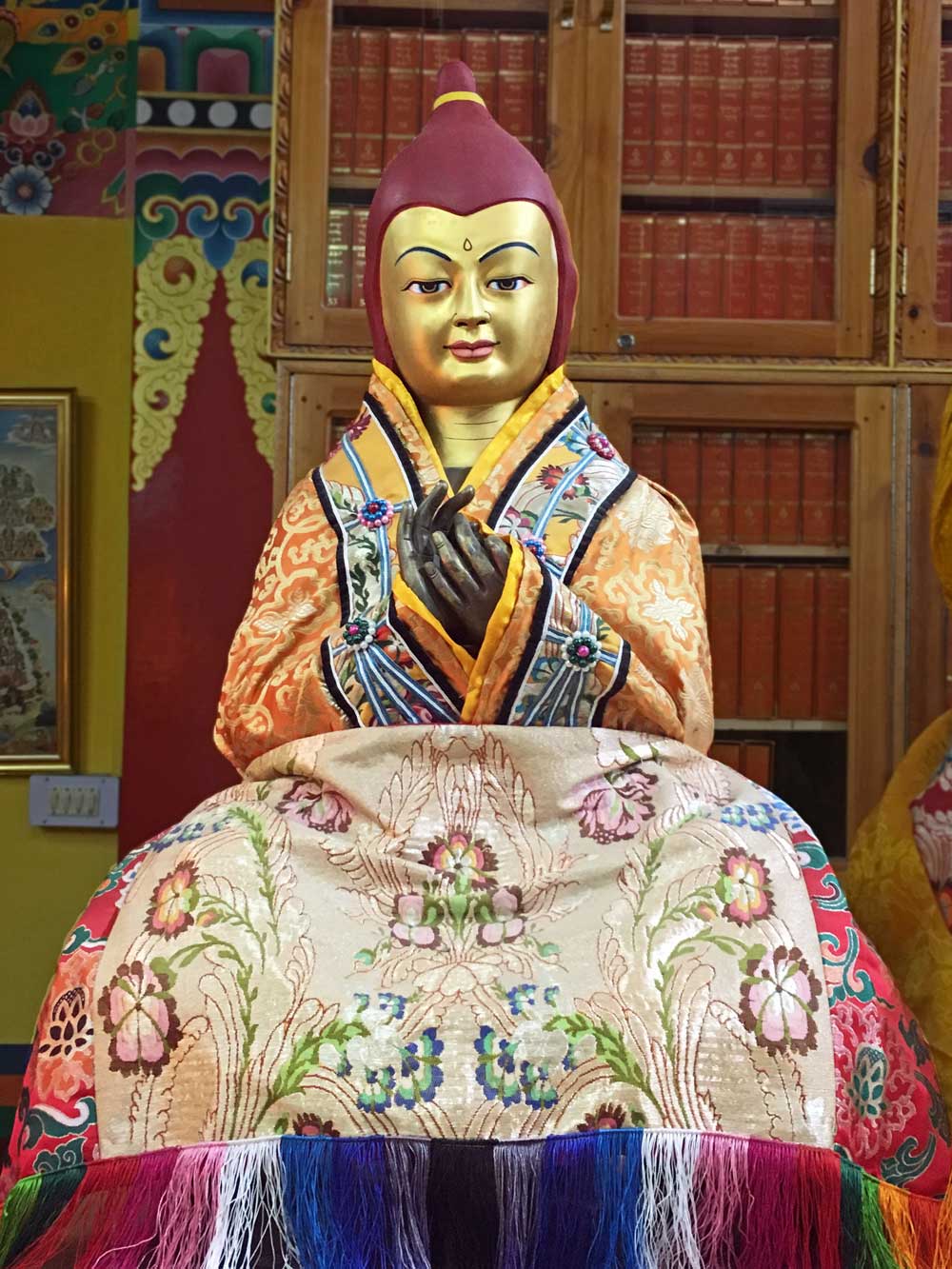
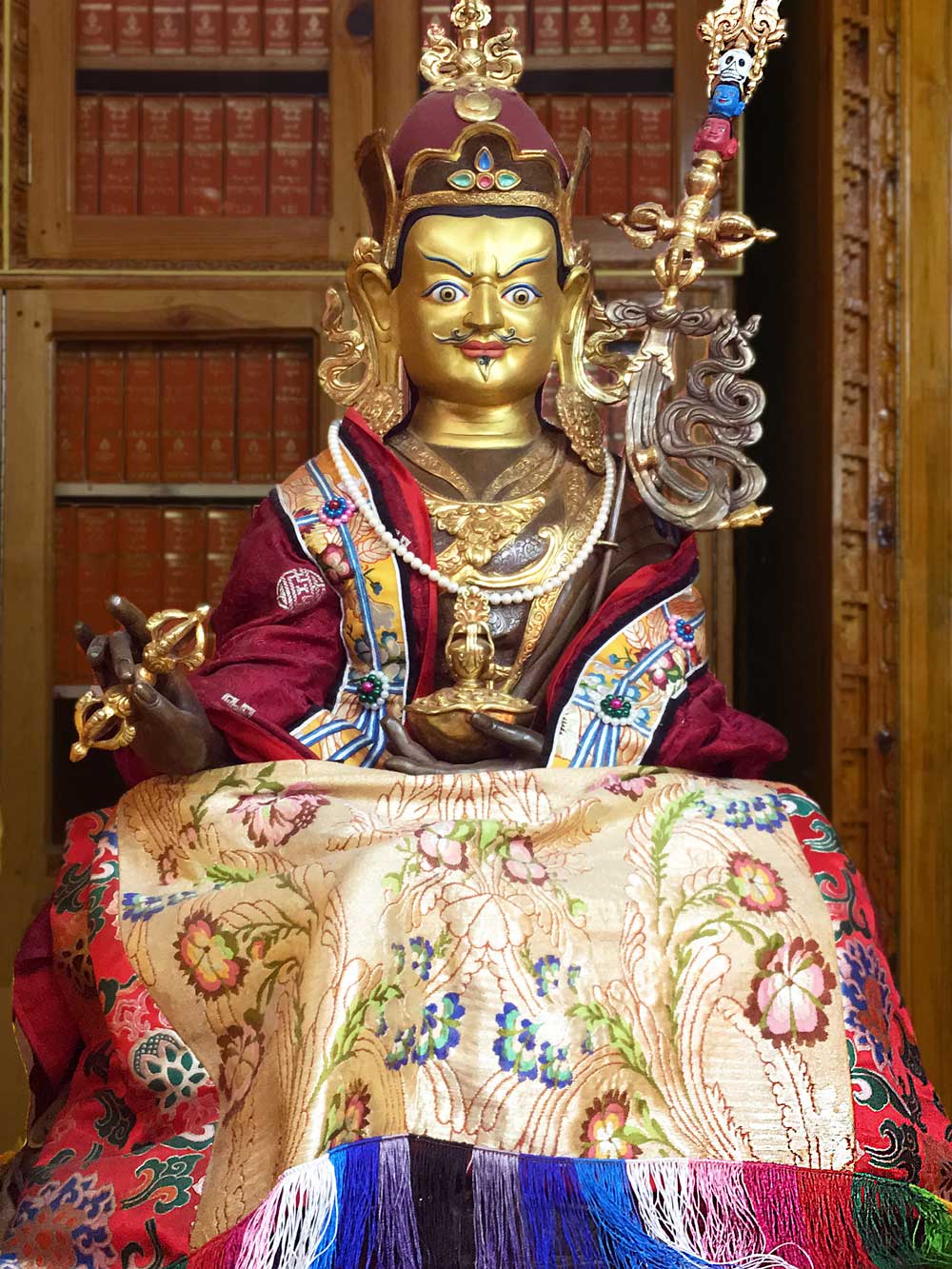
The Lama Atisha and Guru Rinpoche statues are almost forty inches tall (approx. 1 meter) and were made in Kathmandu, Nepal by a reputed artist. Following in the traditional Tibetan style they were made of copper and then carefully painted. The statues made the long journey by road from Kathmandu up the hills to Dharamsala. Upon arrival a group of experienced monks from the Gyurme Tantric College dressed and filled them with mantras.
On the twenty-fifth of February 2015 during Losar celebrations (Tibetan New Year) we were incredibly blessed by the presence of Khadro-la (Rangjung Neljorma Khadro Namsel Drolma) and Dagri Rinpoche. Together they consecrated these two statues along with our two statues of Lama Tsongkhapa’s disciples.
🪷
Maitreya Statues
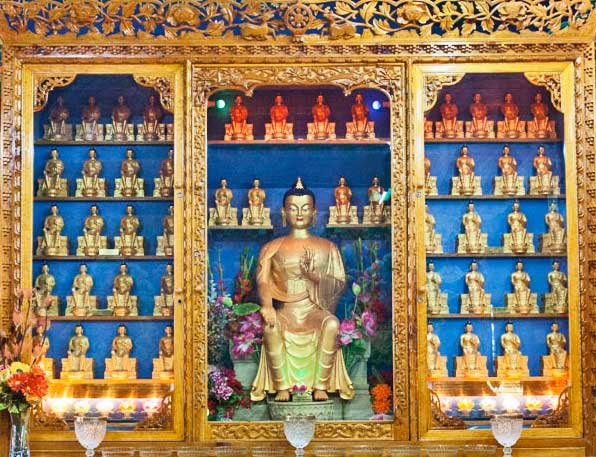
Maitreya is the Buddha of Loving Kindness who is predicted to descend from Tushita Pure Land to turn the wheel of dharma as the fifth universal Buddha at a time of great degeneration on Earth. He is pictured seated with his legs uncrossed, ready to spring to the aid of sentient beings. The Buddha Maitreya’s name is derived from the Sanskrit maitri.
The very name maitri – that’s “loving-kindness”. Now in today’s world we really need the promotion of Maitreya, loving-kindness.
His Holiness the Dalai Lama
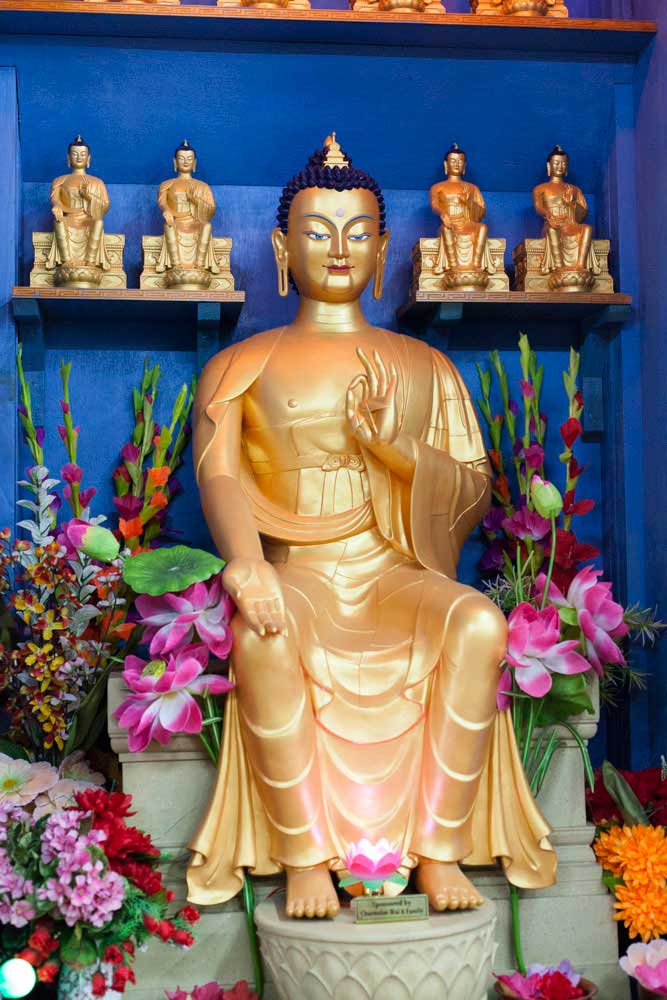
Lama Yeshe’s wish was to build a large Maitreya statue in order to inspire the qualities of loving-kindness and compassion in the world.
The main Maitreya statue here at Tushita is a small scale version of the huge statues being built in the holy places of Kushinagar and Bodhgaya in north India.
The statue at Kushinagar is being built by Maitreya Project. More information about both statues can be found here: https://fpmt.org/centers/india/
Maitreya Project’s vision is to affect peace through the practice of loving-kindness at every level of society: peace within the individual, the family, the community, and the world.
Lama Zopa Rinpoche, the Spiritual Director of the Maitreya Project, has said that the construction of the statue itself is not the goal–it is simply the method for achieving the goal. “The goal is to benefit as many people as possible for as long as possible.”
🪷
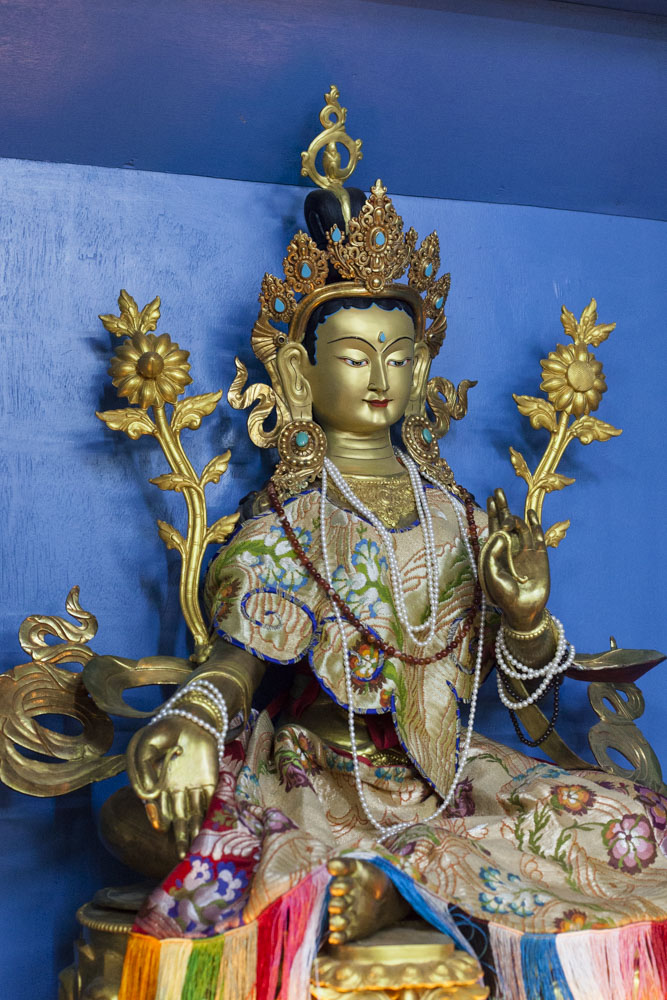
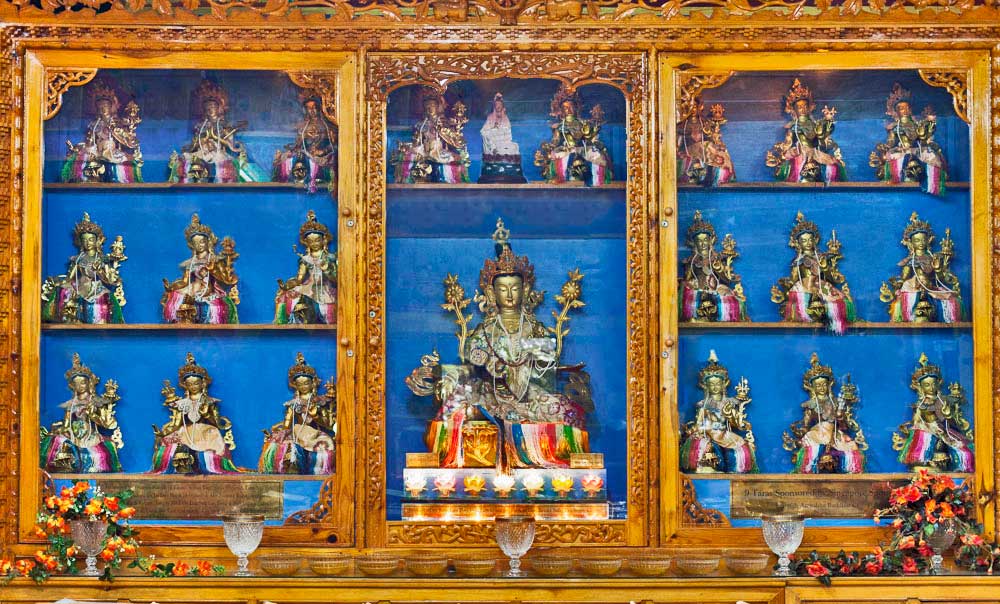
Twenty-one Tara Statues
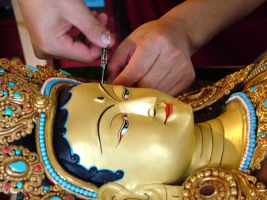
After a long period of fundraising, construction and delivery, towards the end of June 2010 the long awaited 21 Tara statues arrived from Nepal. The first mission was for them to be unpacked and checked. It was amazing to witness this event – as from the large crate boxes, bundles were removed and unpacked to reveal 21 precious statues of Tara. Our librarian, Tashi, worked closely with 2 of our resident monks, Old Lama Gyupa & Ven Jampa to carefully unpack and check each statue. Next, we gathered the mantras and blessed pills to fill each statue. The twenty 18″ Taras were then taken to the local Gyudmed monastery to be filled while the main Tara remained at Tushita.
We were incredibly fortunate that Lama Zopa Rinpoche was here with us at that time, remaining with us for 5 weeks from July 8th. During that time, Rinpoche guided every step of the process during the Tara preparation and all 21 Taras were filled with microfilm of the 4 Dharmakaya relic mantra.
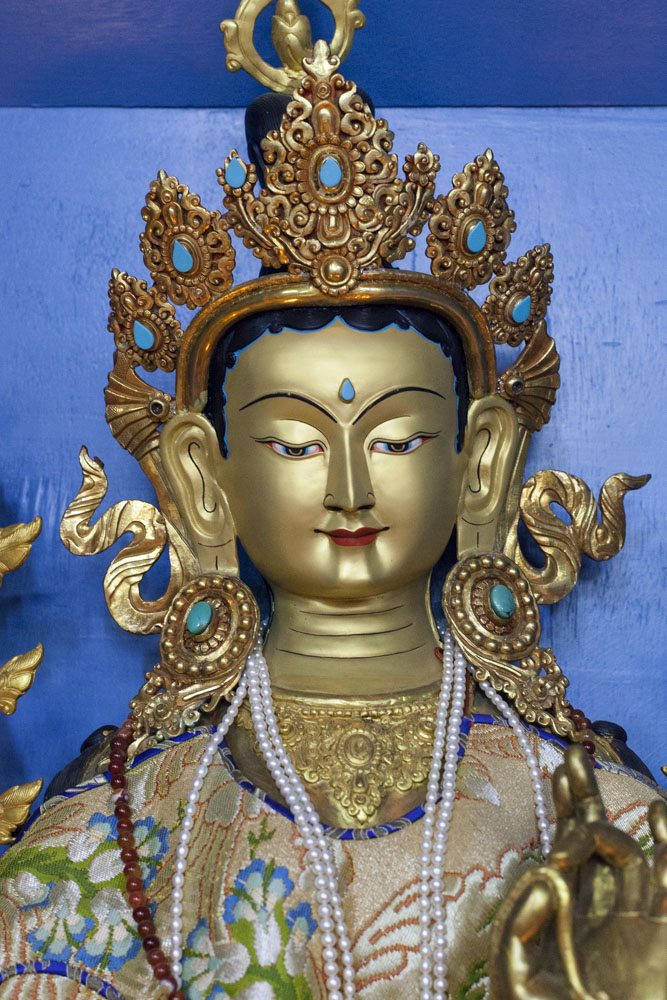
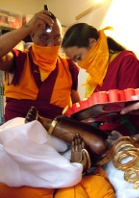
The preparations culminated in a series of extraordinary events on August 12th, the last day that Kyabje Lama Zopa Rinpoche was at Tushita. Dagri Rinpoche and Khandro la were invited to fill the main Tara (pictured right), then there was a Tara puja and consecration with Kyabje Lama Zopa Rinpoche, Dagri Rinpoche and Keutsang Rinpoche.
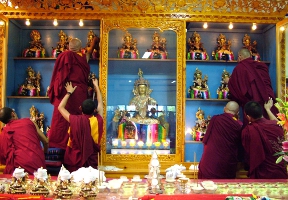
Kyabje Lama Zopa Rinpoche had kindly sponsored the divine dresses for all of the Taras. On entering the gompa that afternoon, Rinpoche took out a bag of pearls which had been recently offered to him in Hong Kong. The crowd looked on in disbelief as Lama Zopa and Dagri Rinpoches climbed up into the cabinets to personally offer the pearls (pictured left), then beautiful long white khatas to each Tara. All in all making these Taras incredibly holy and auspicious, and a wonderful addition to Tushita’s Main Gompa.
We were guided through the Lama Tsongkhapa Guru Yoga practice followed by consecration prayers. In Kyabje Lama Zopa Rinpoche’s infinite kindness, we then returned to the gompa for the 4 Mandala Offering Tara Puja and extensive prayers which we completed sometime after 3am!
There were special dedications made for all the sponsors of the statues – each name was individually read out – and all those who had been involved in the project. So most heartfelt thanks to all the sponsors and helpers who have made this possible. We really appreciate your support.