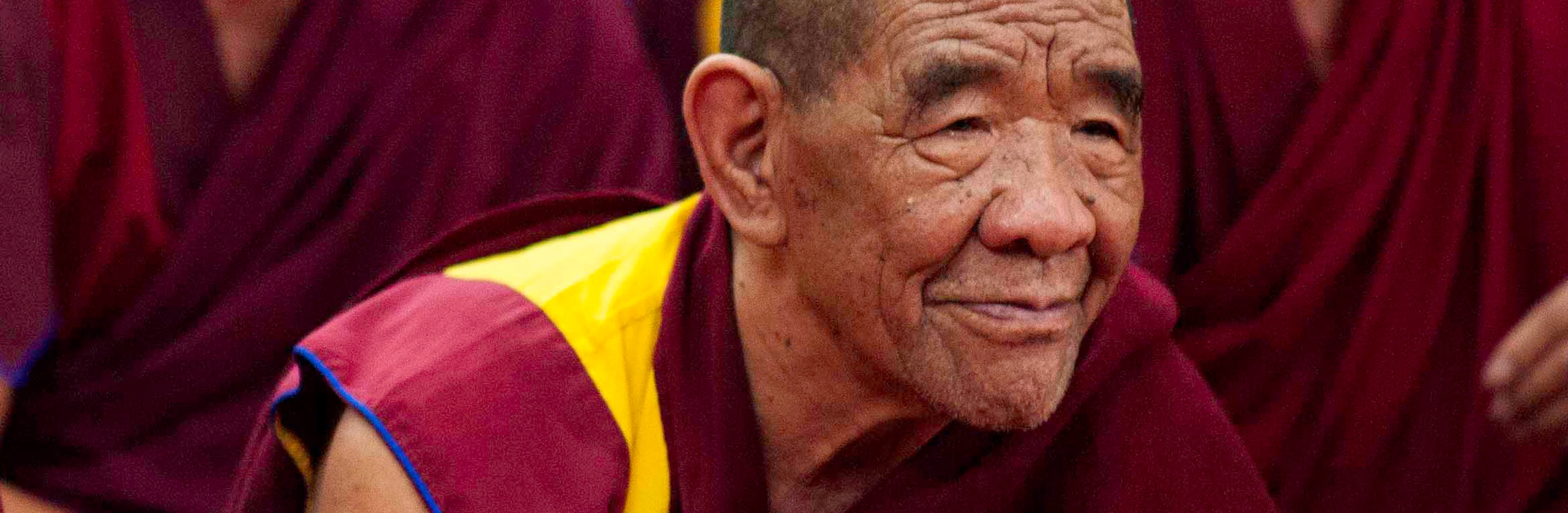
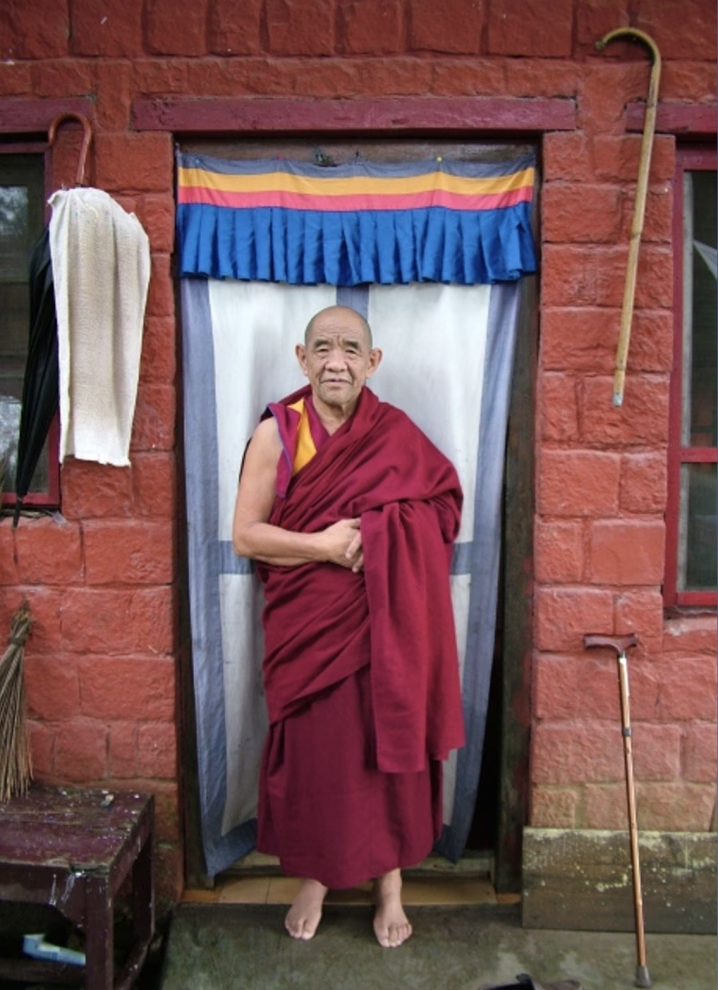
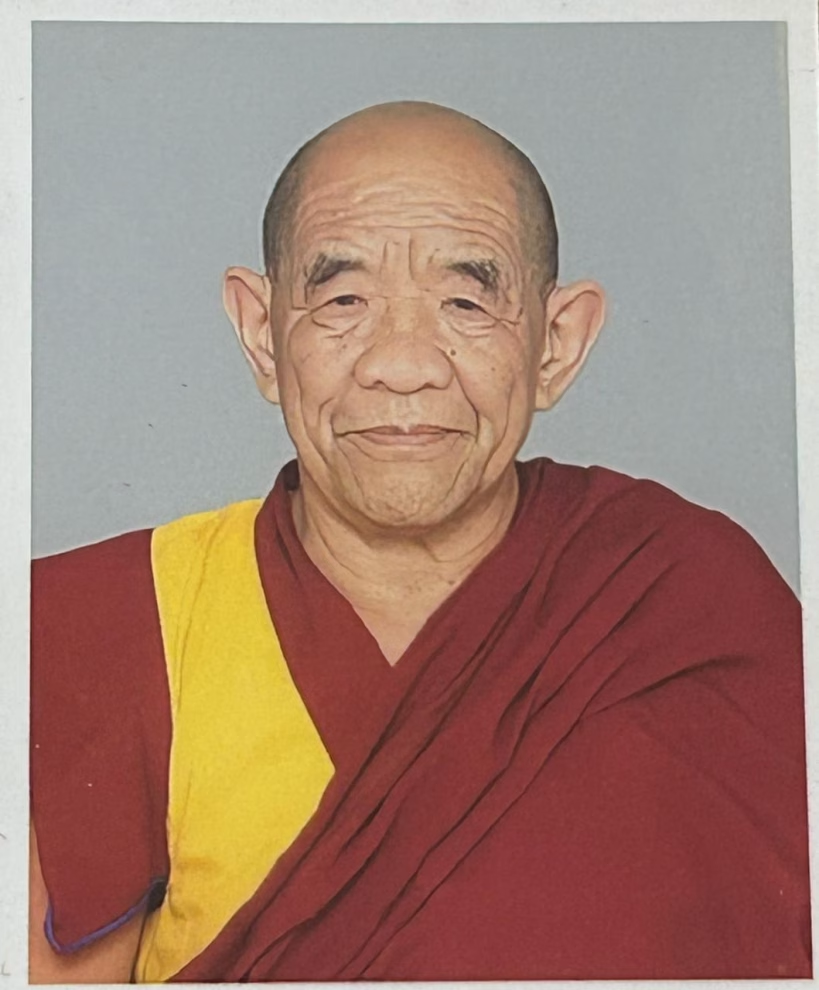
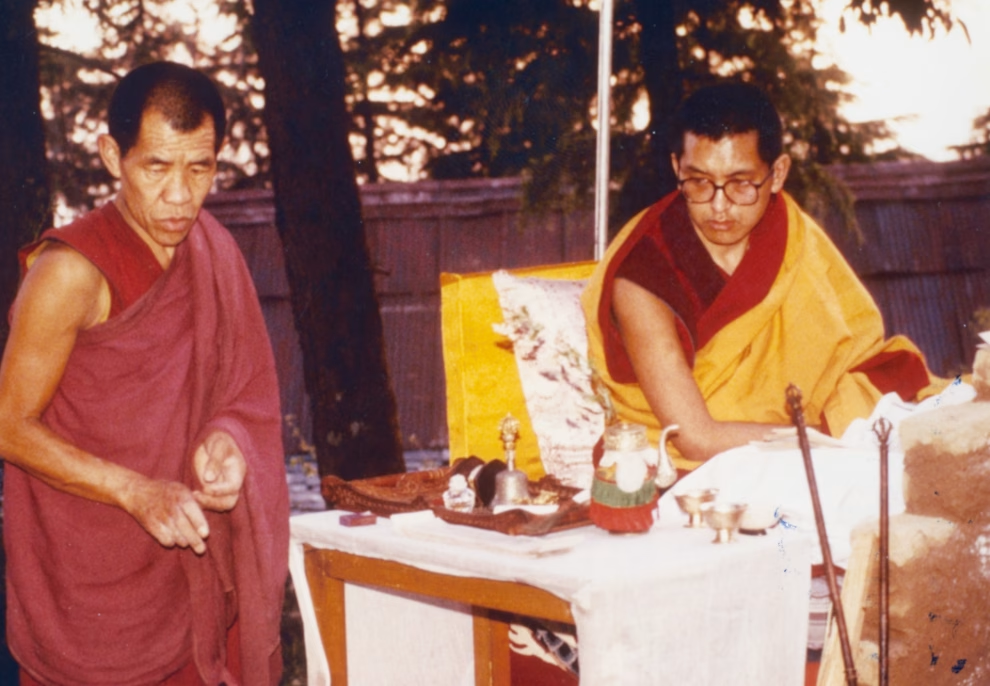
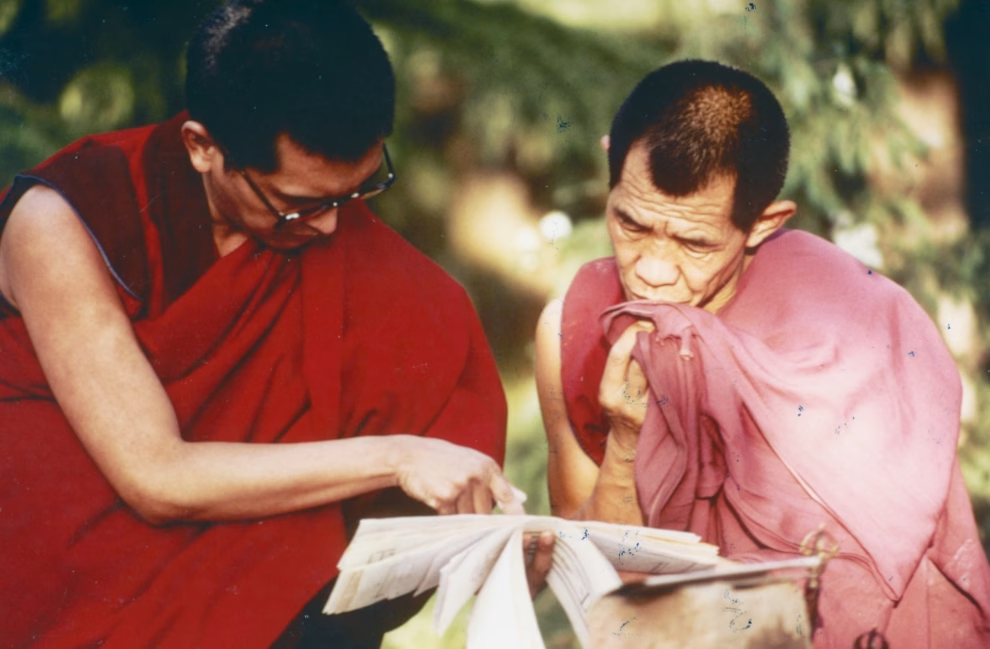
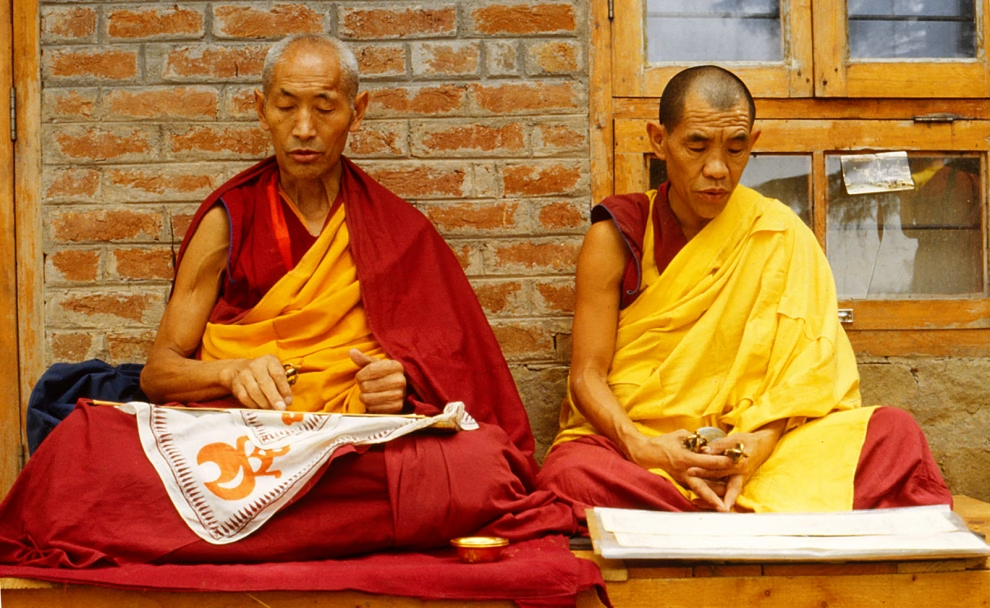
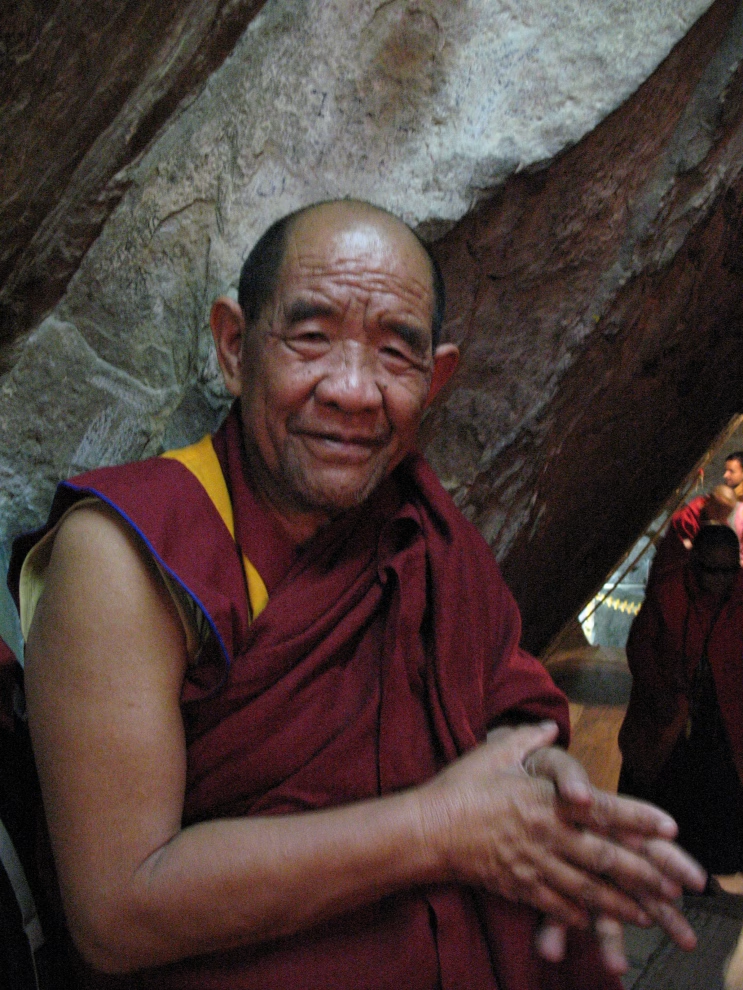
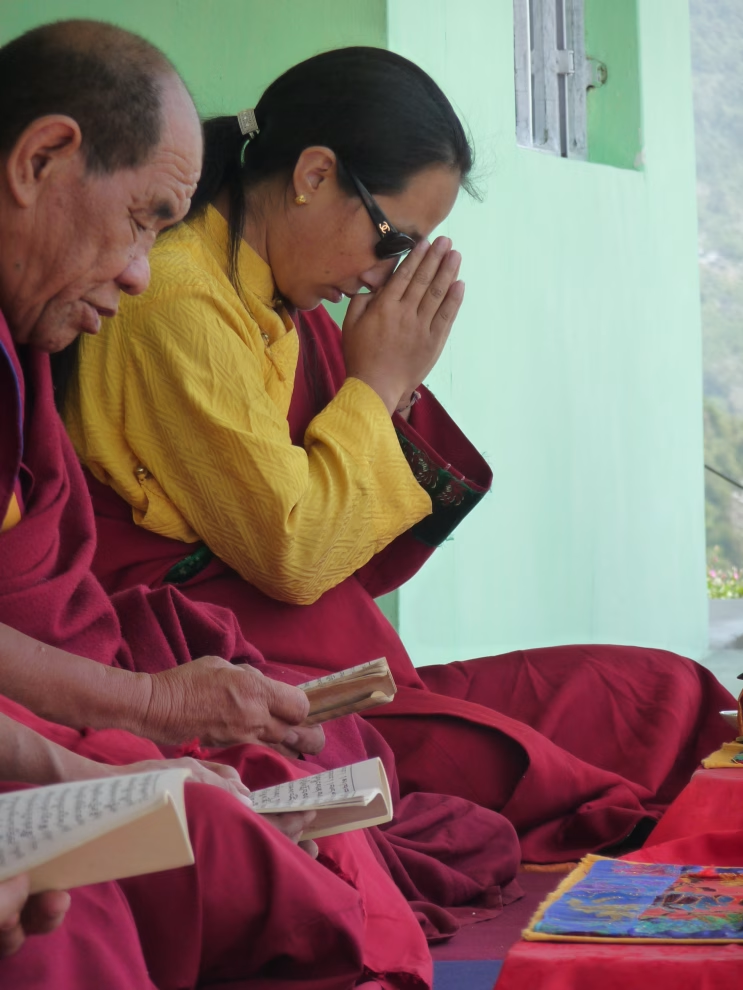
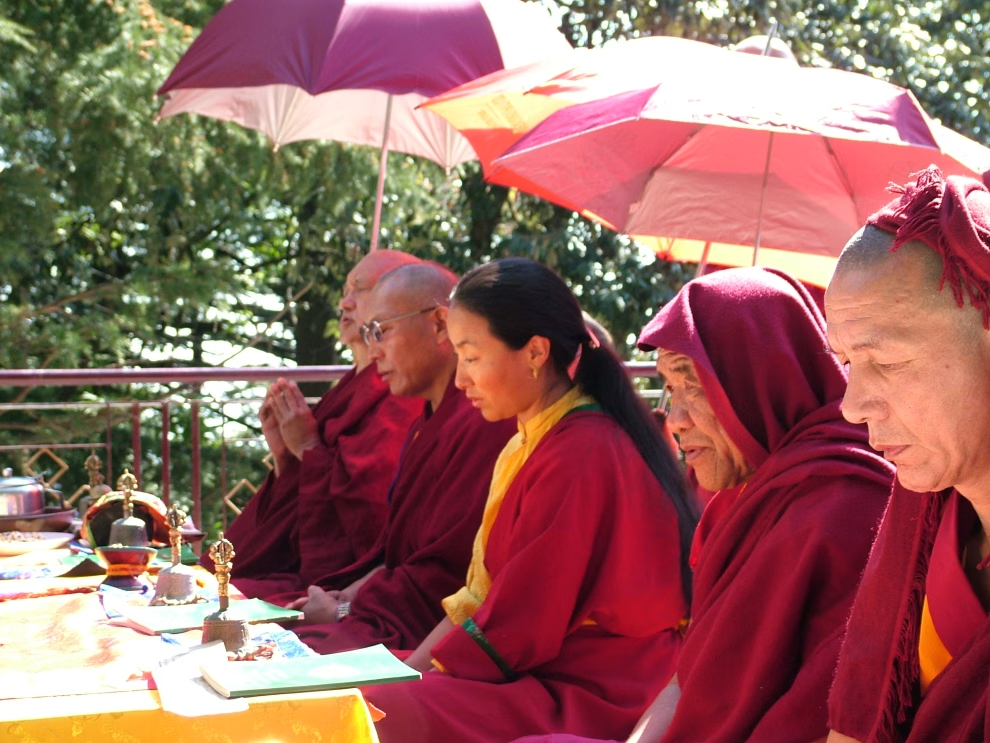
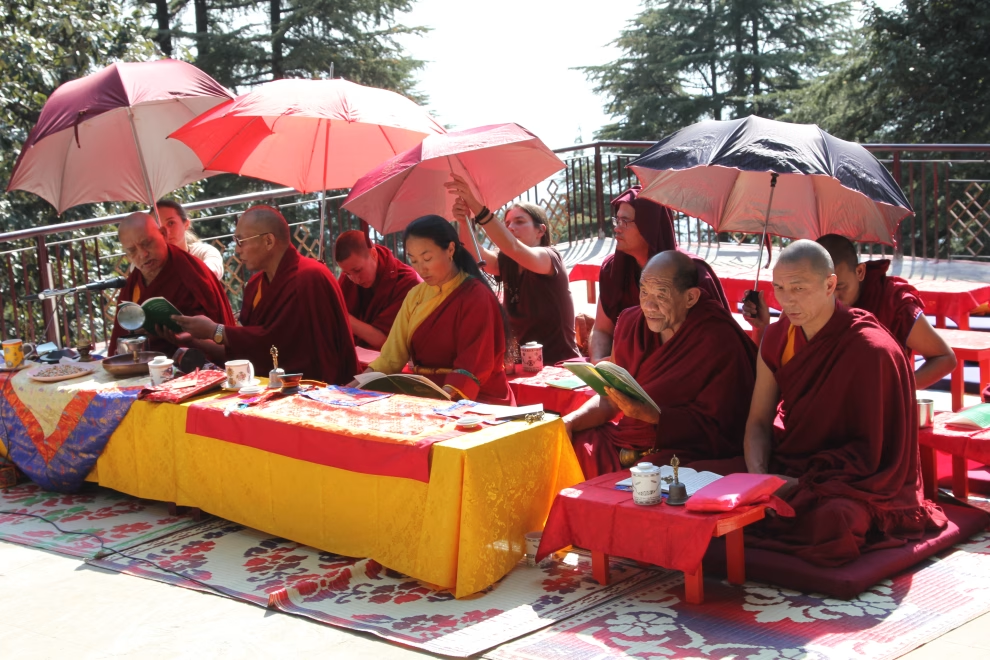
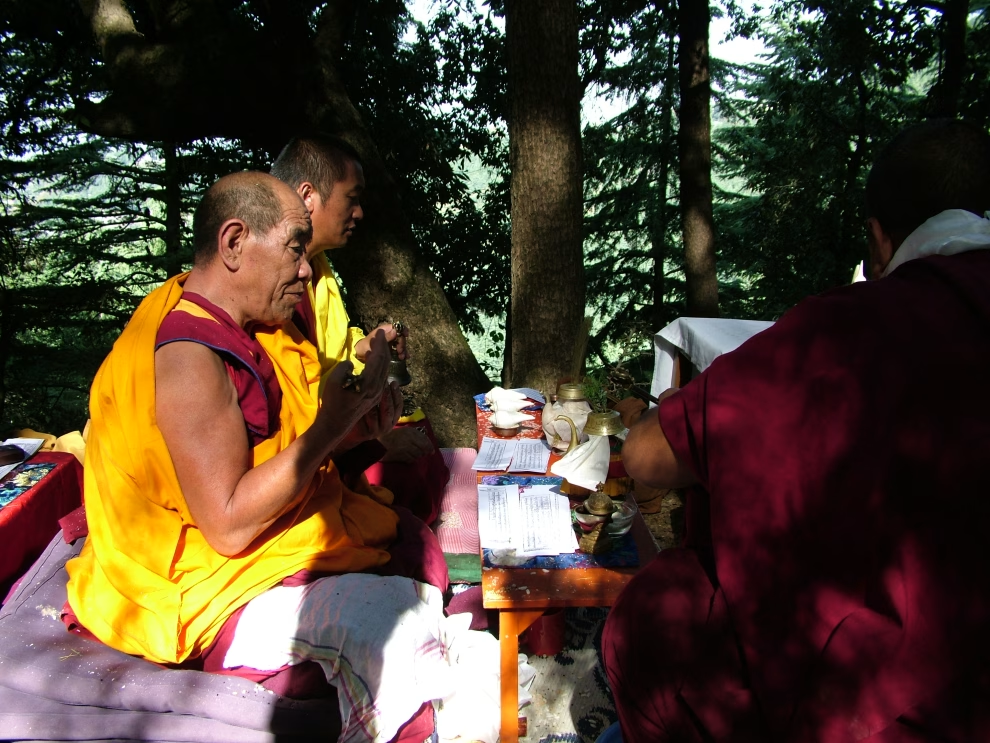
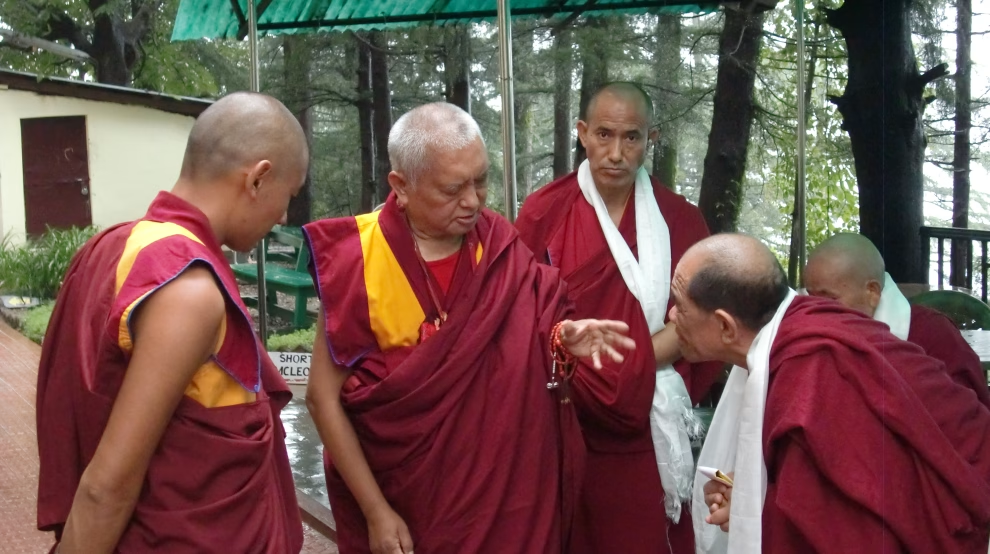
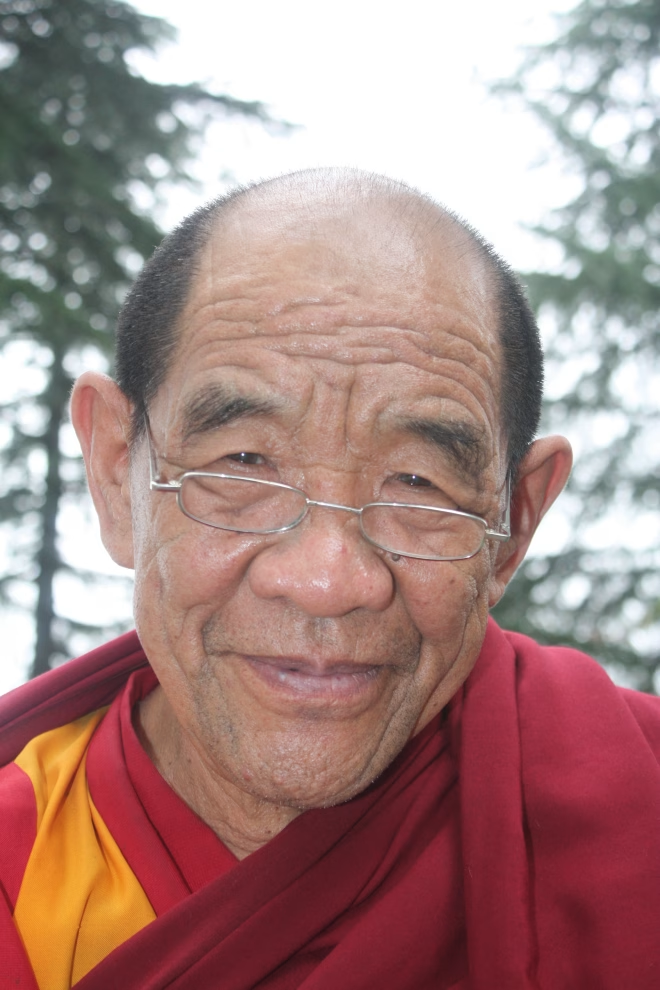
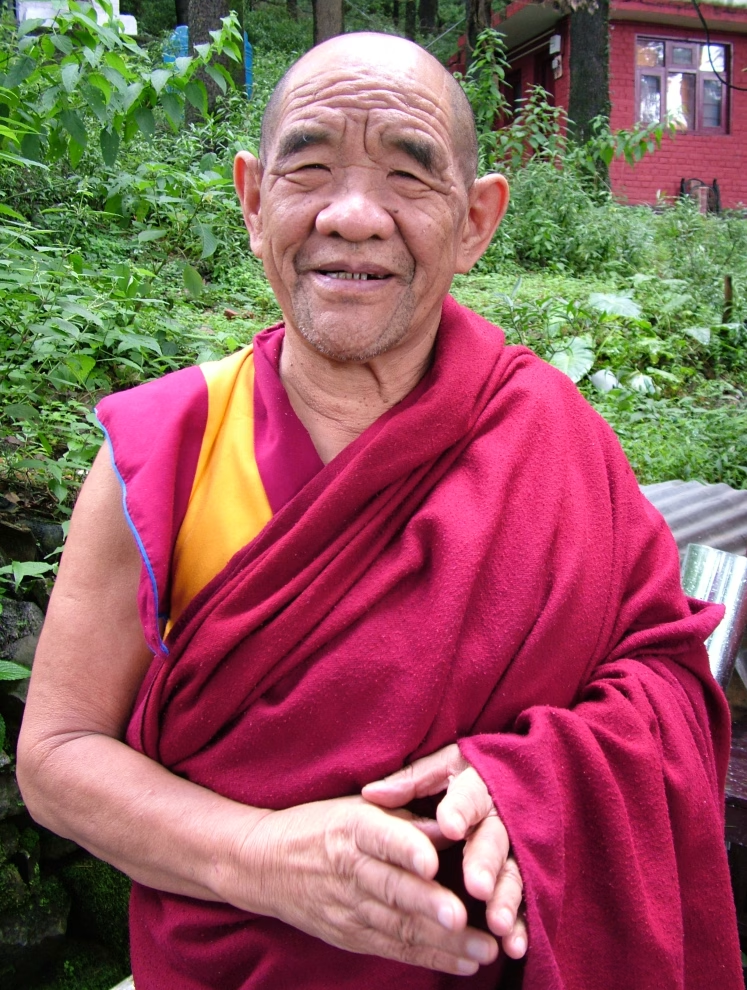
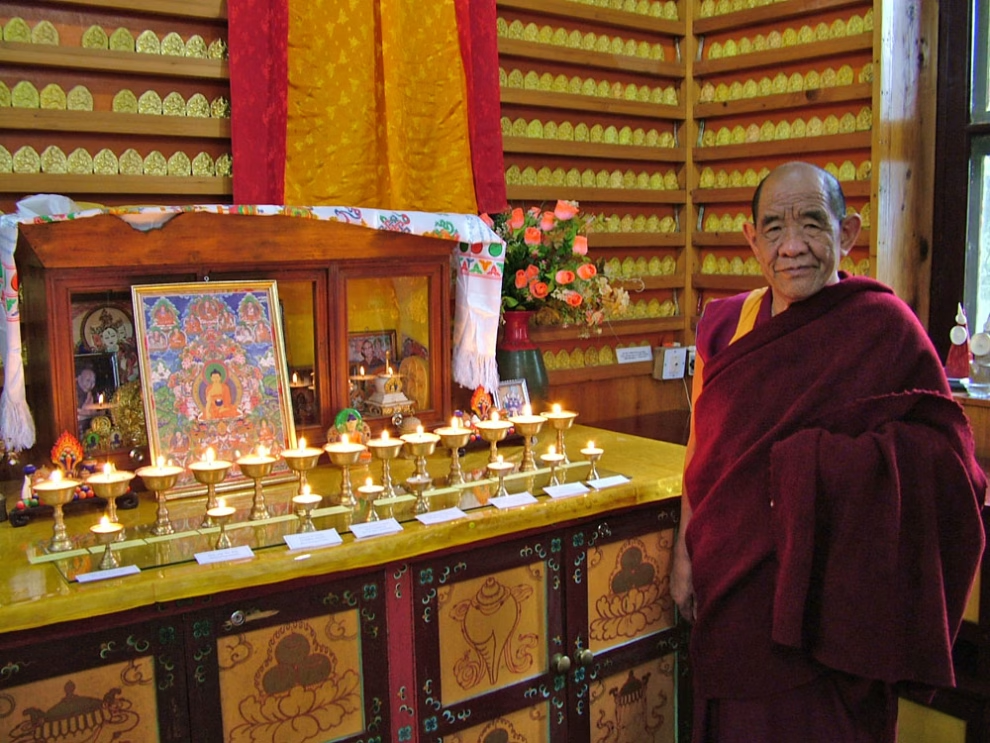
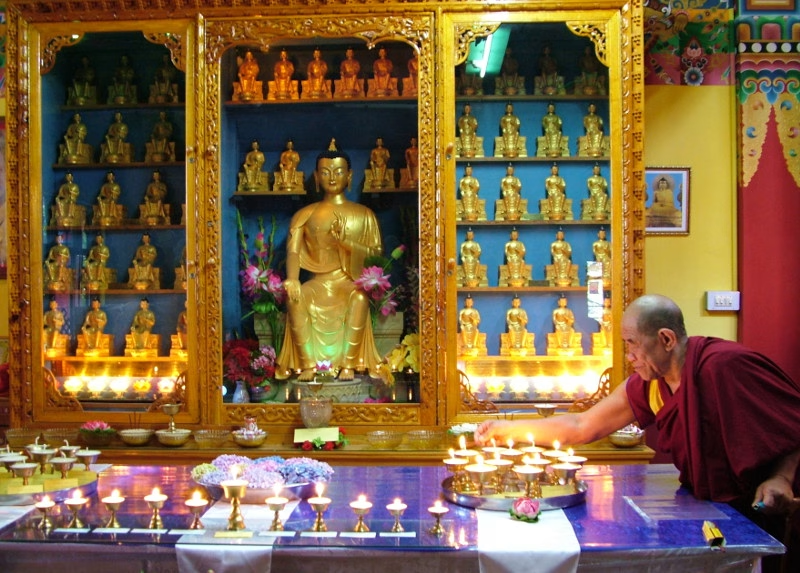
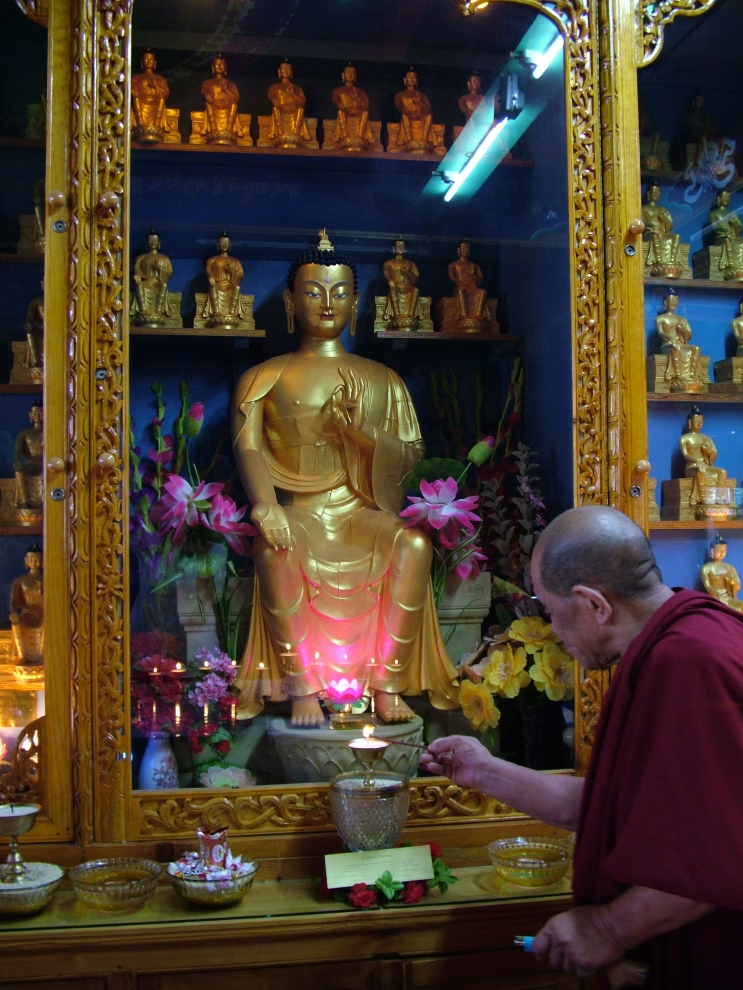
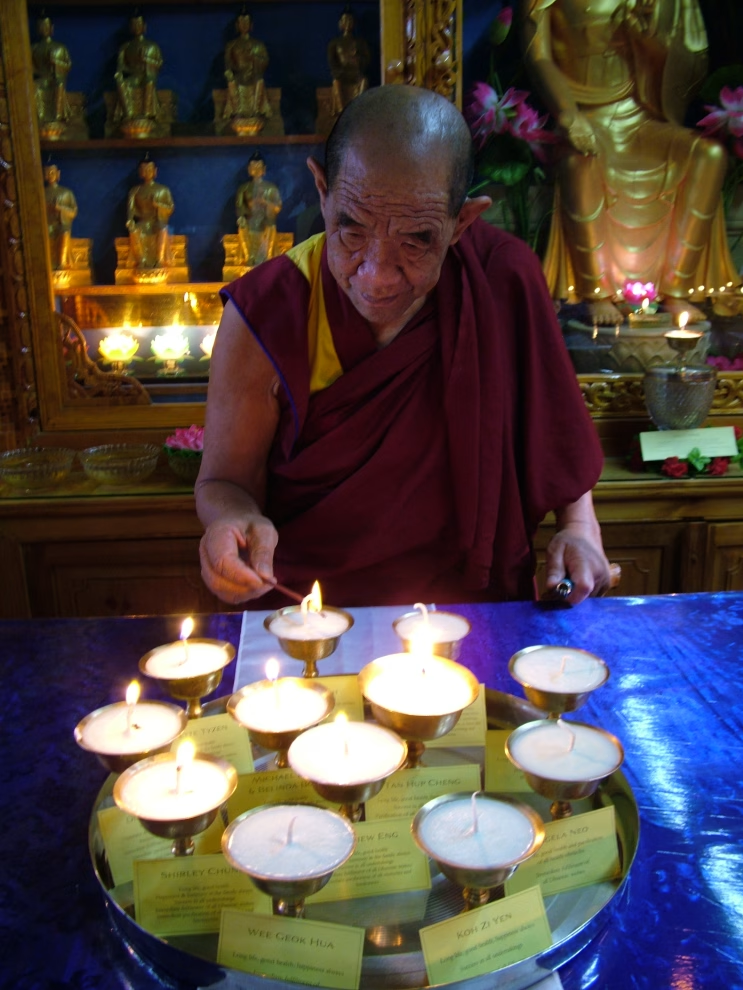
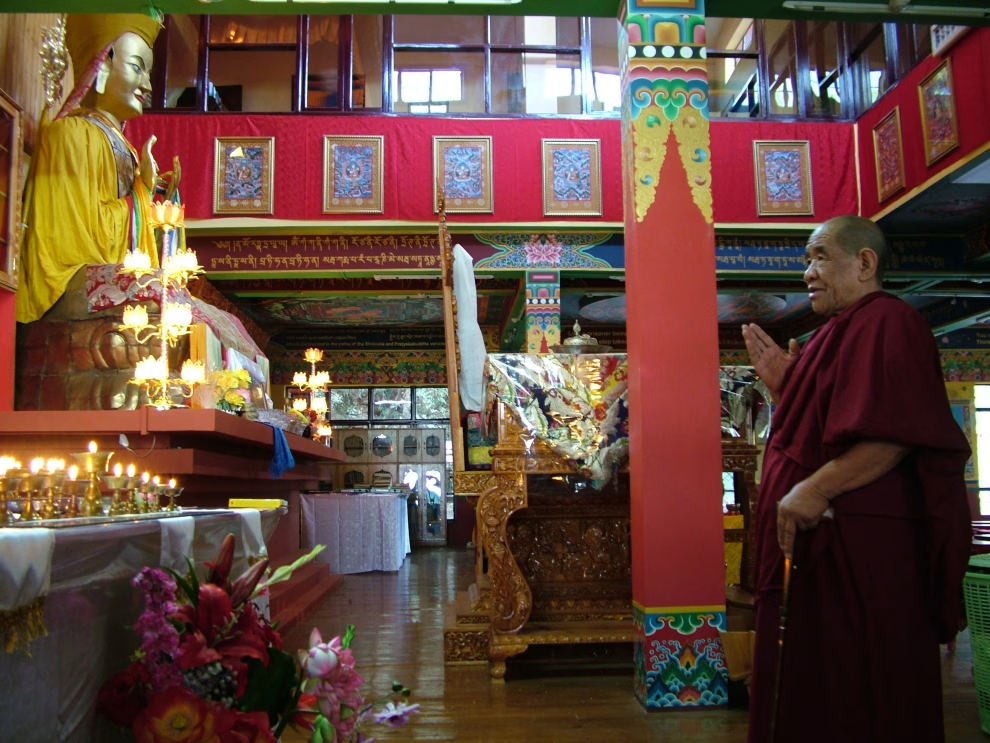
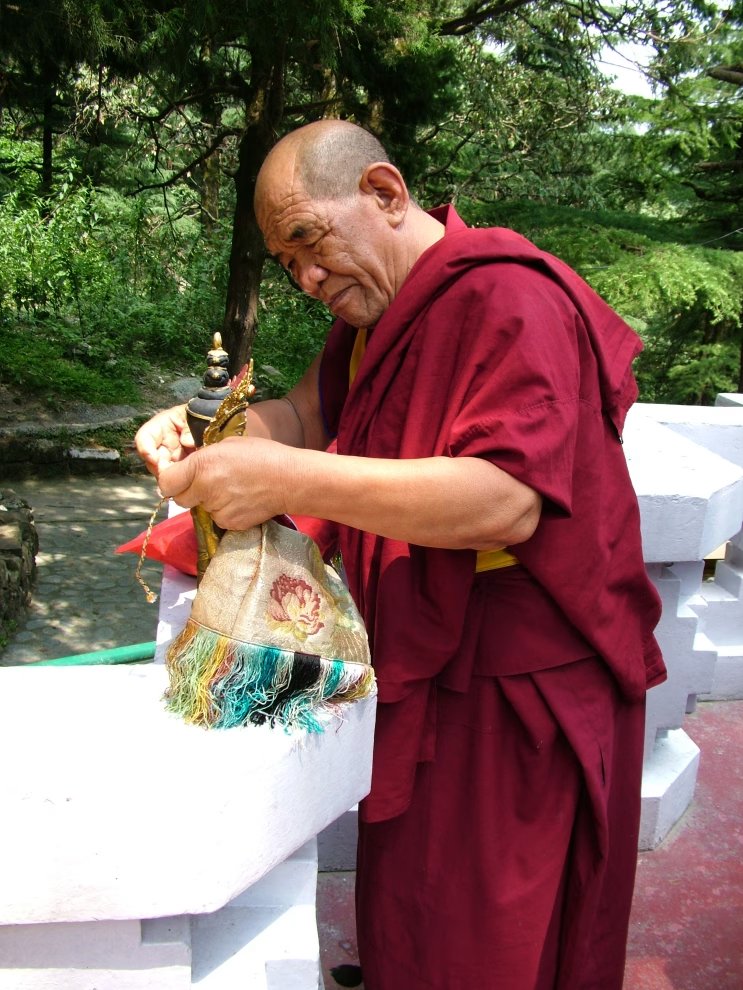
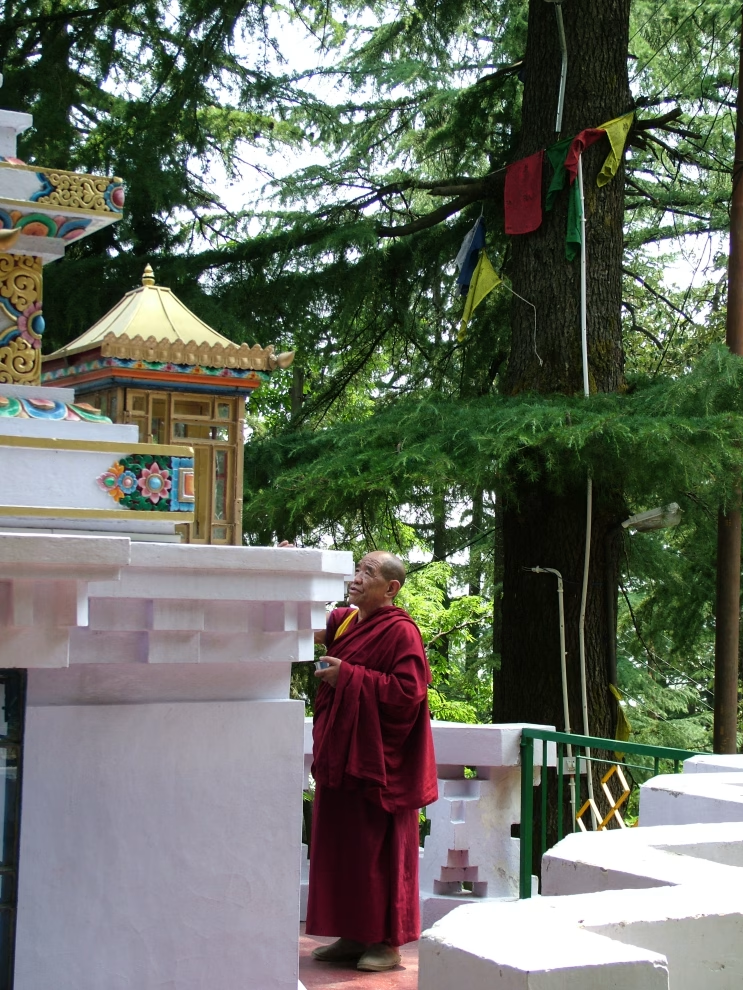
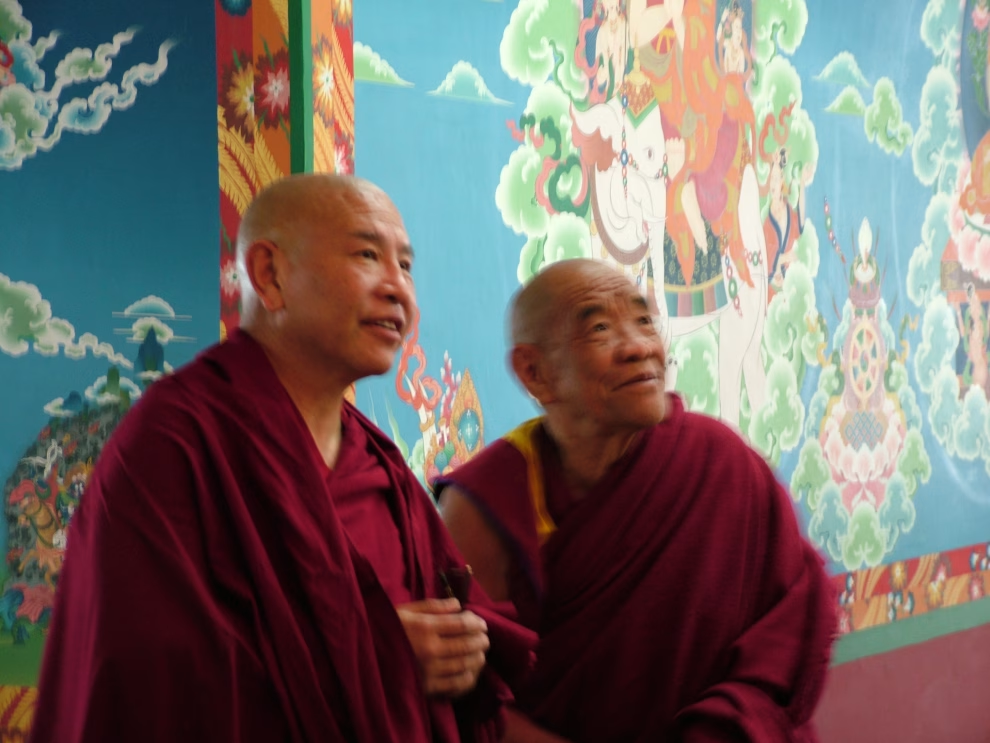
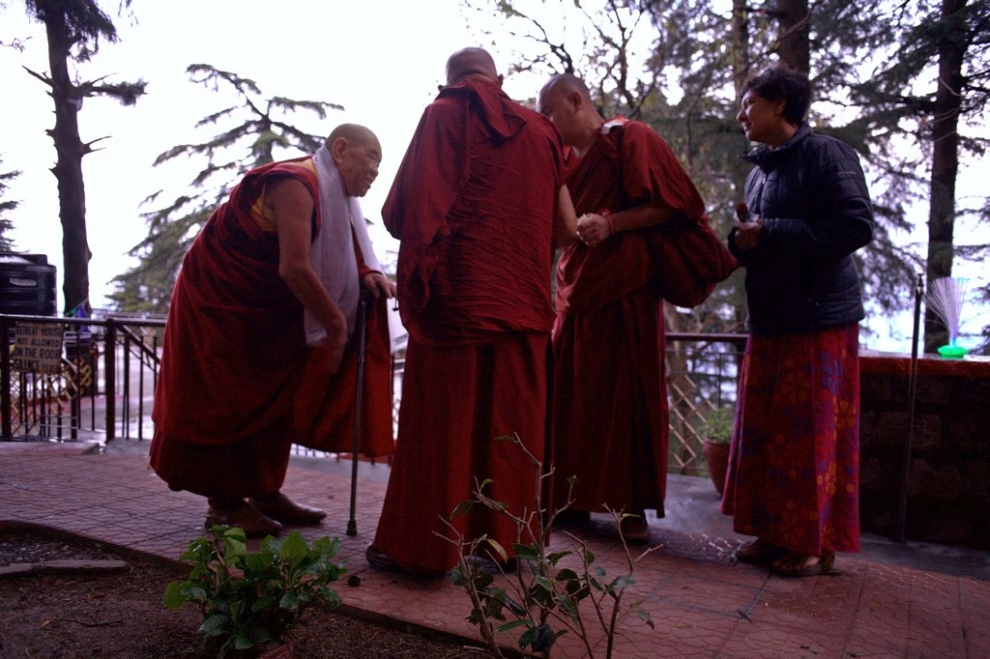
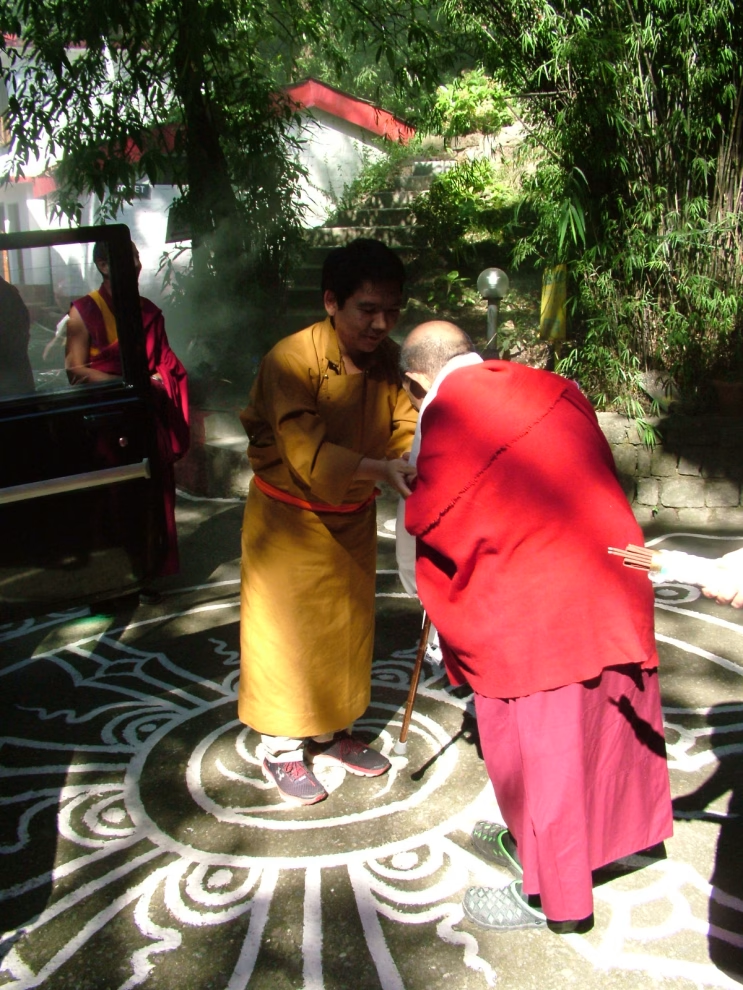
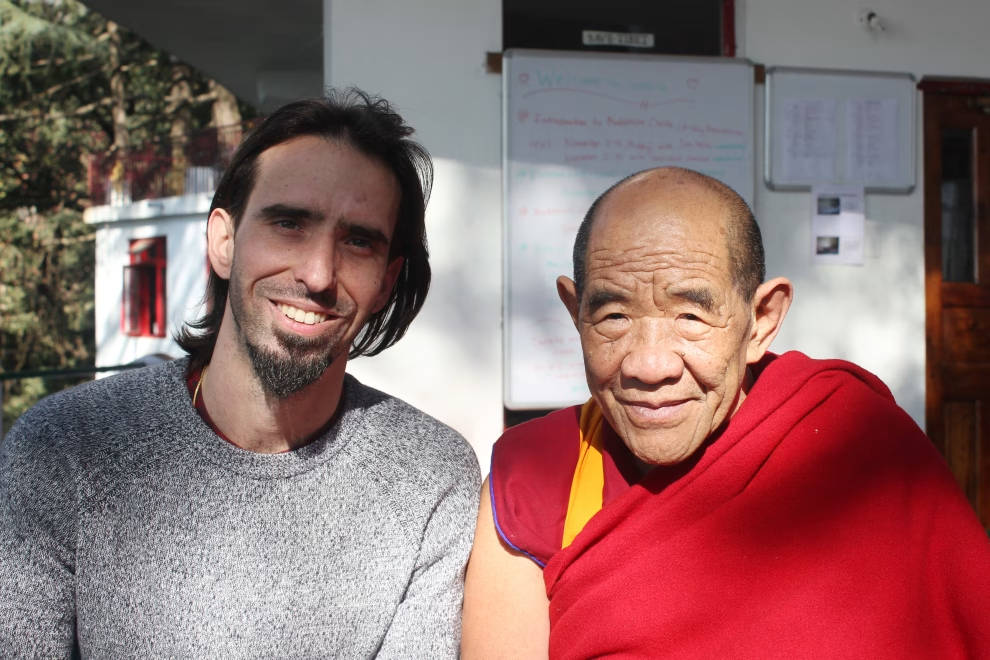
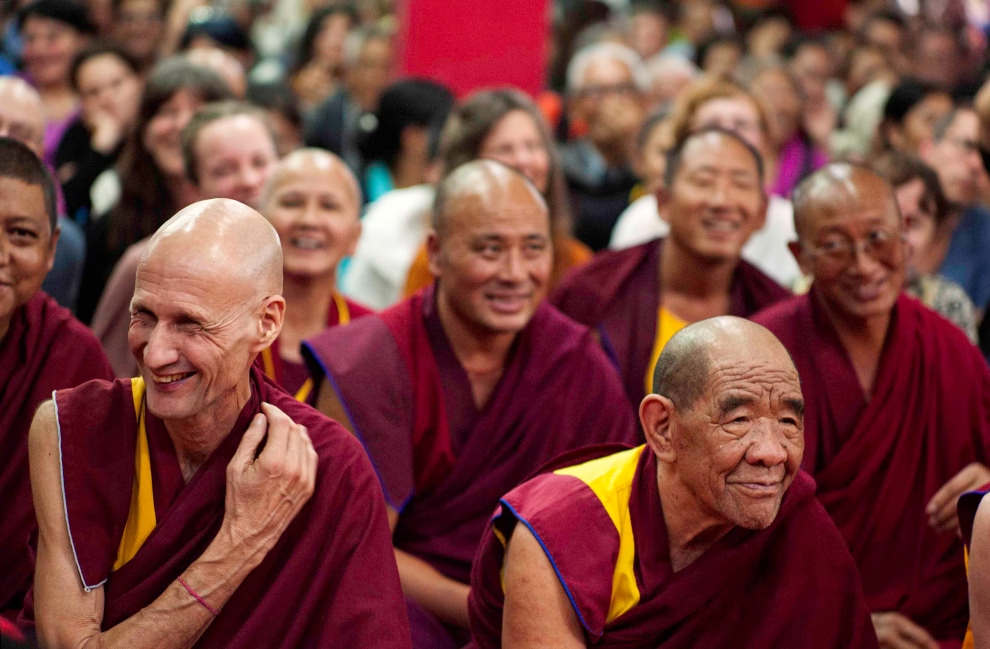
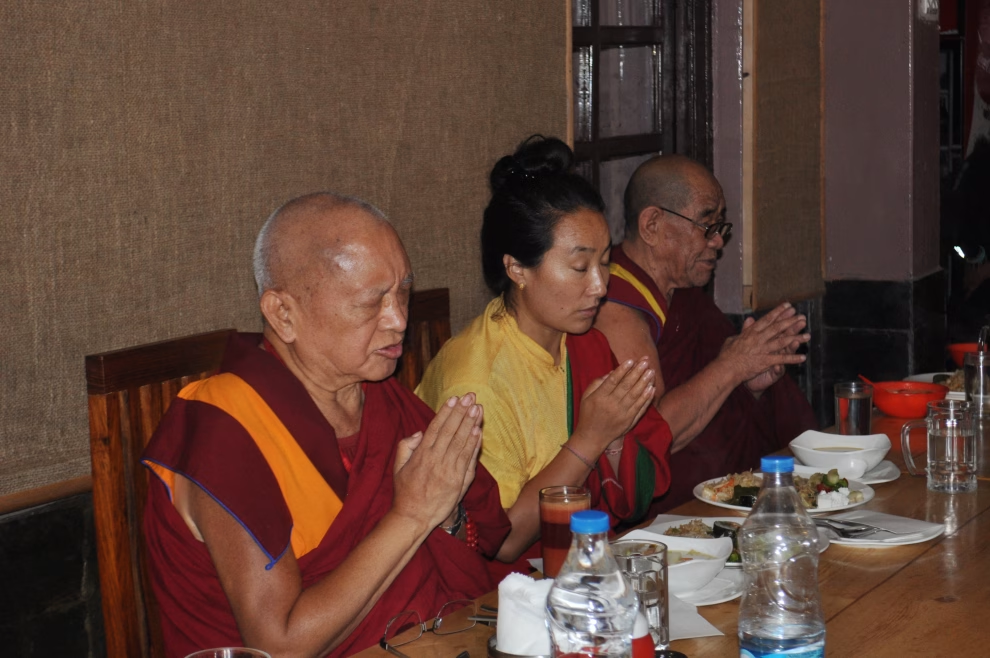
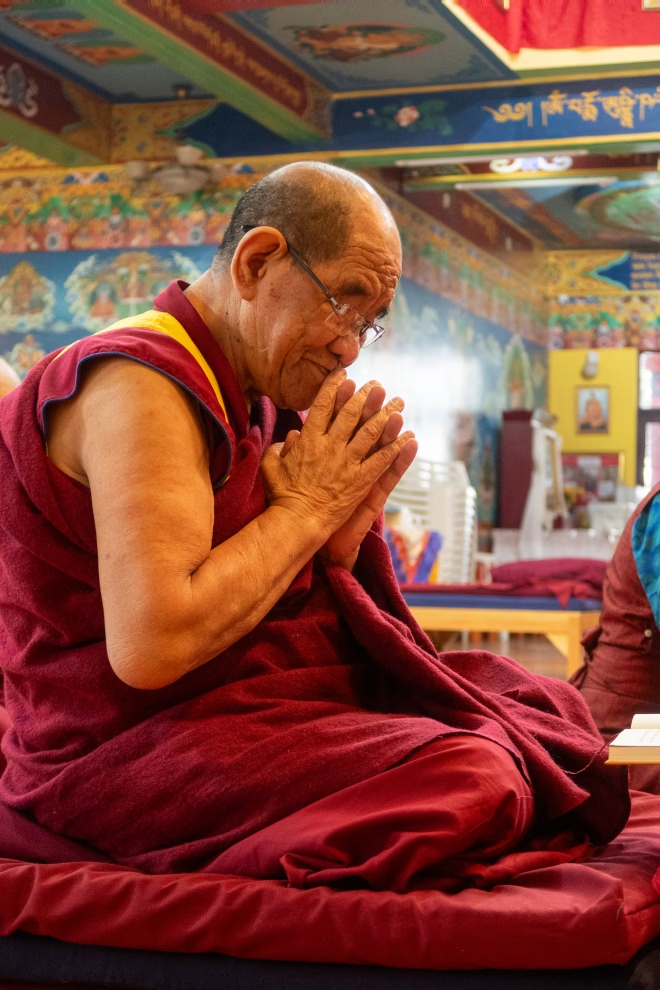
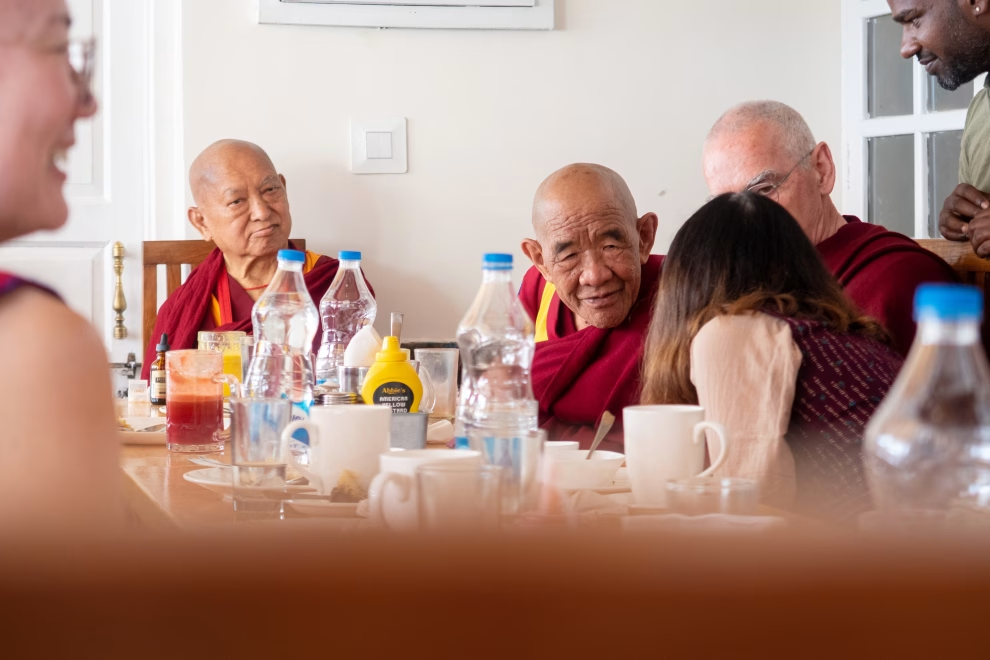
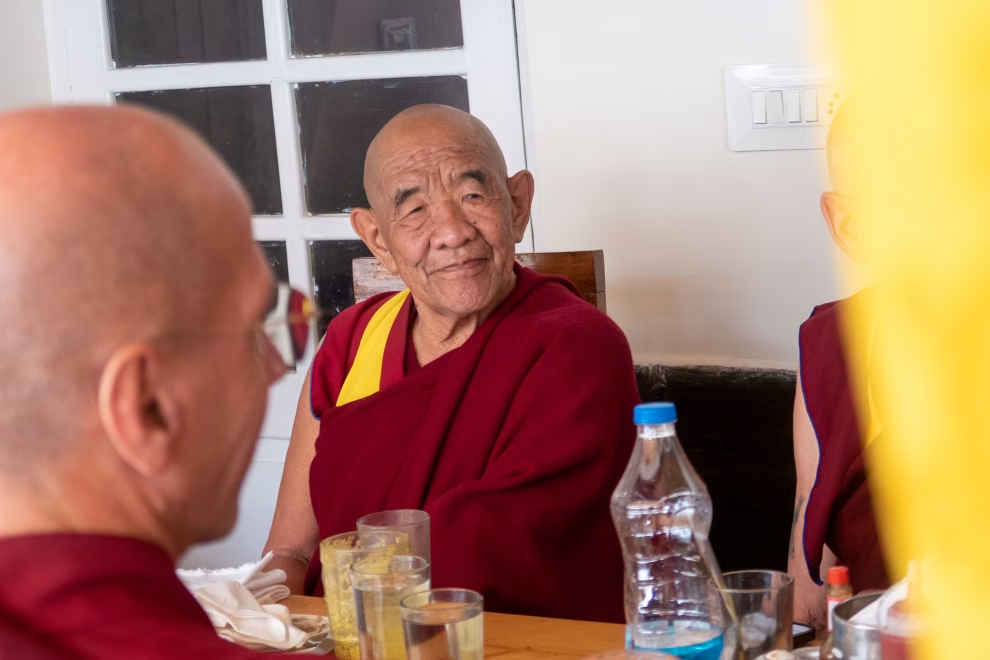
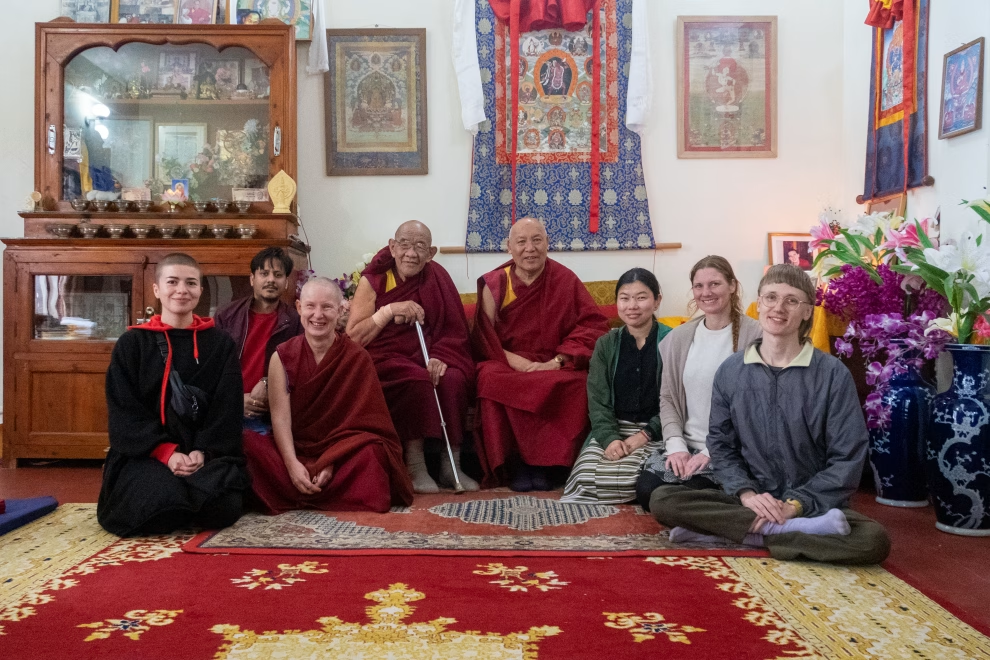
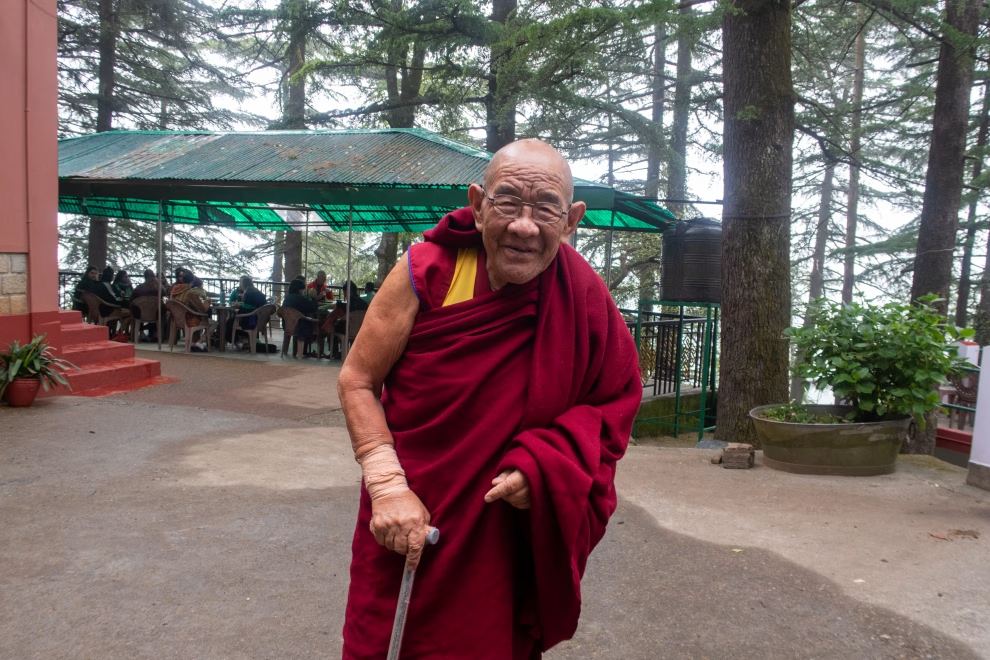
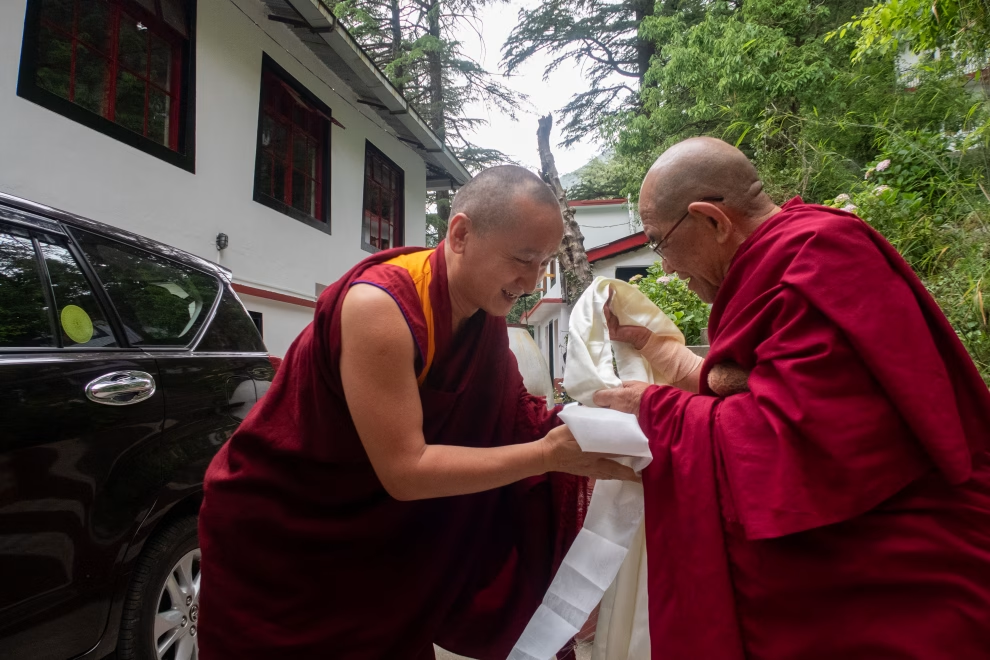
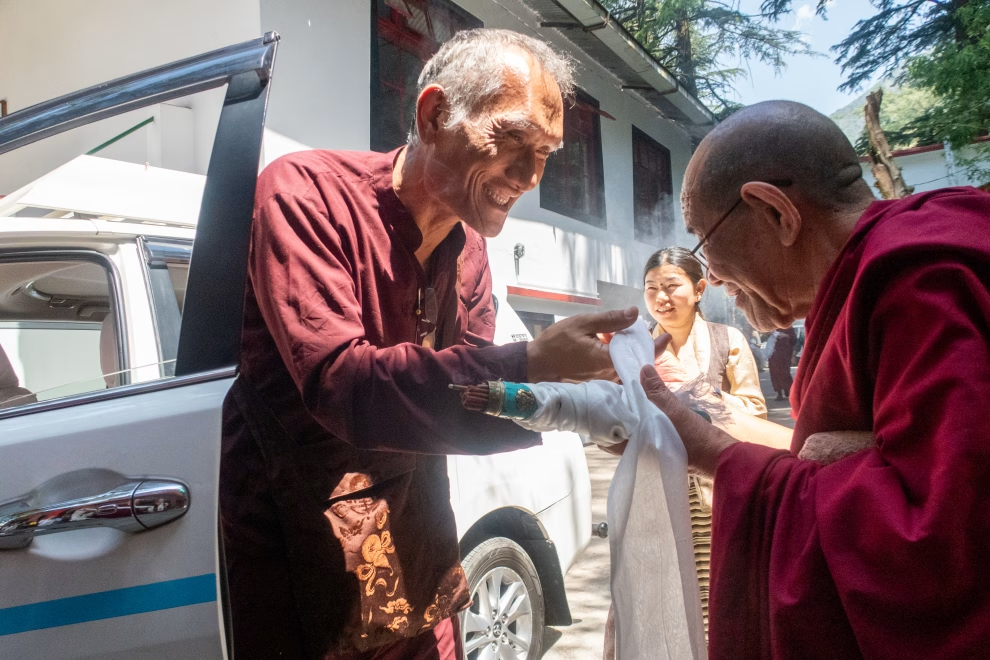
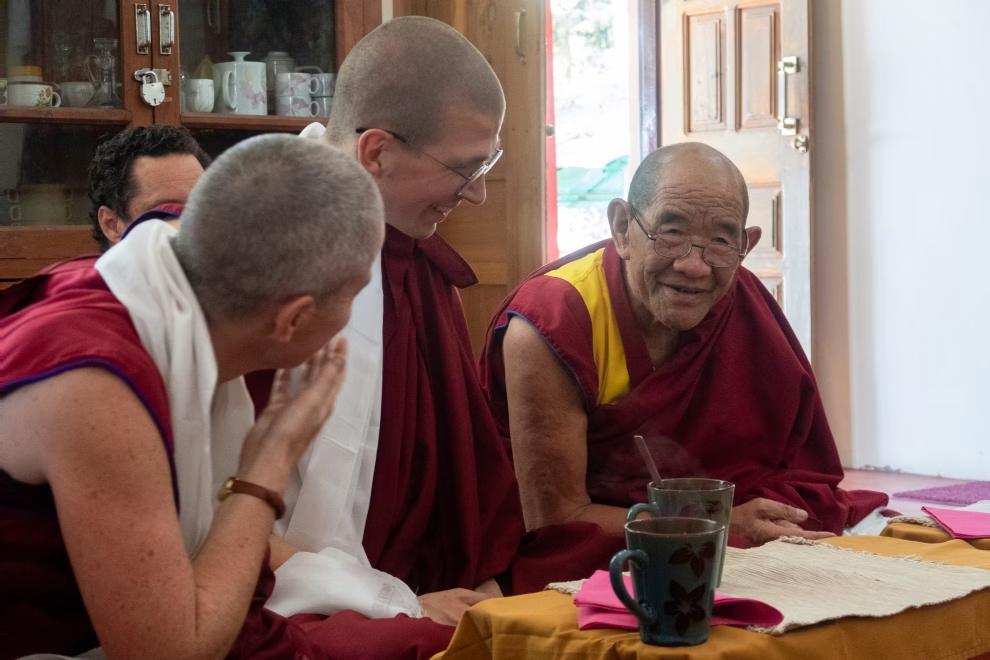
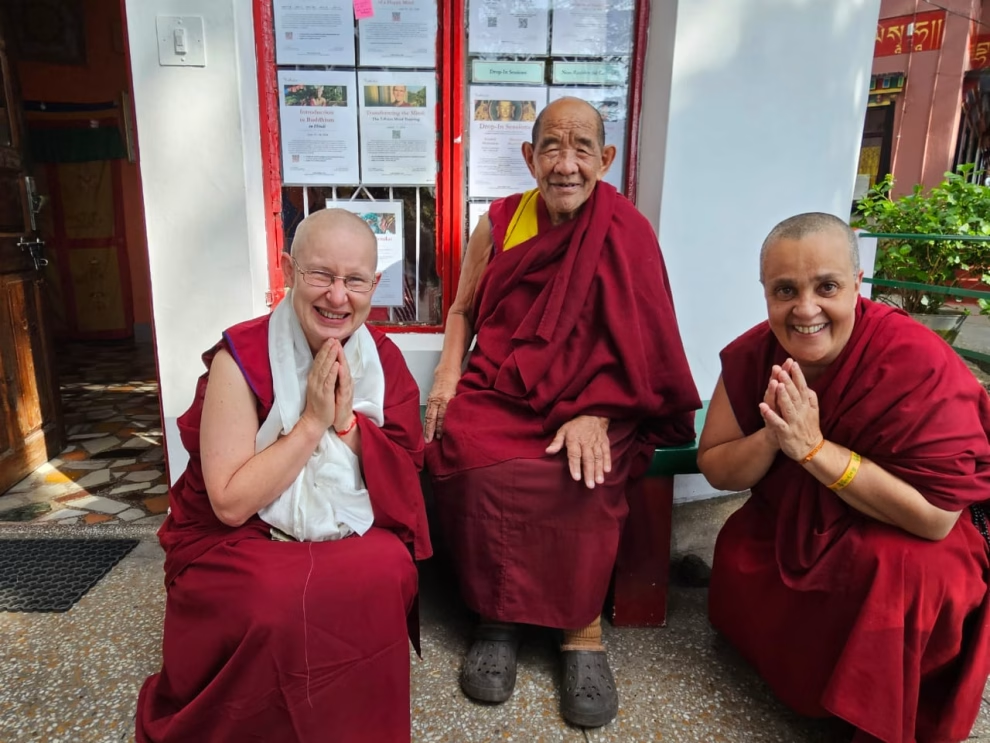
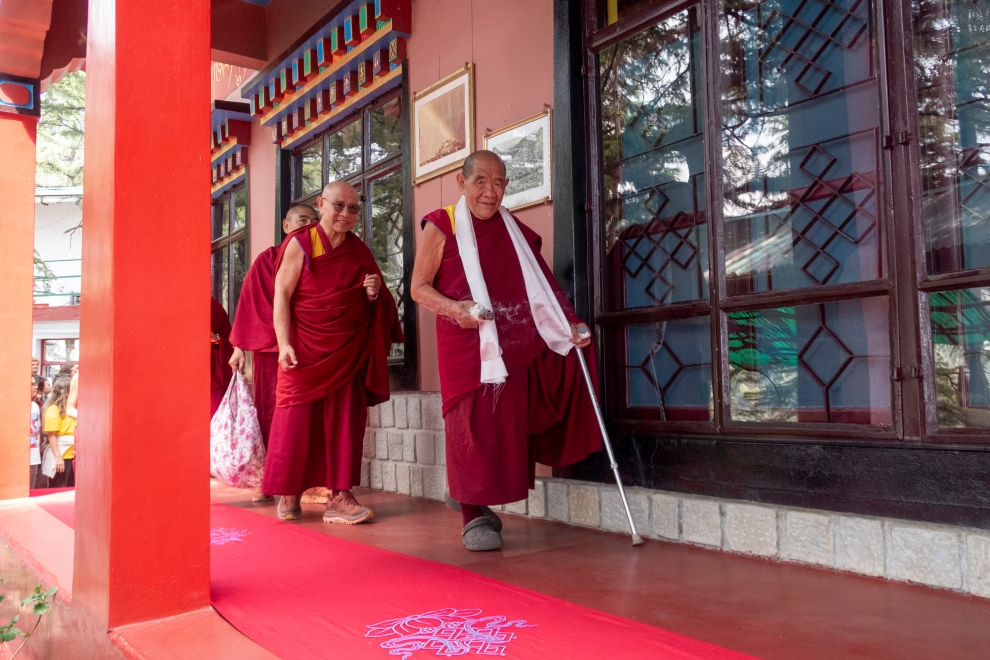
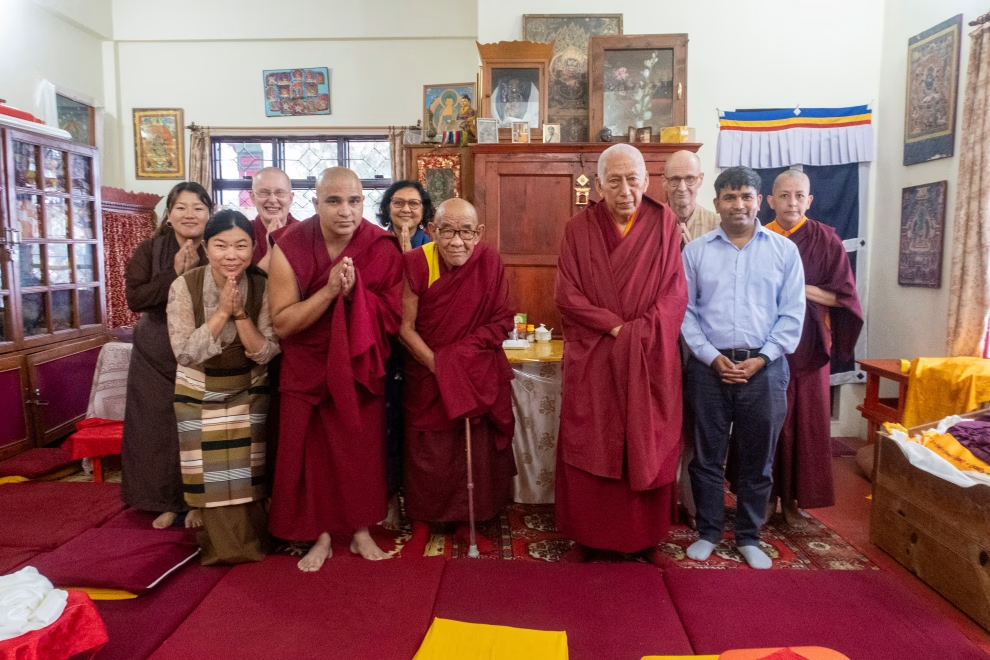
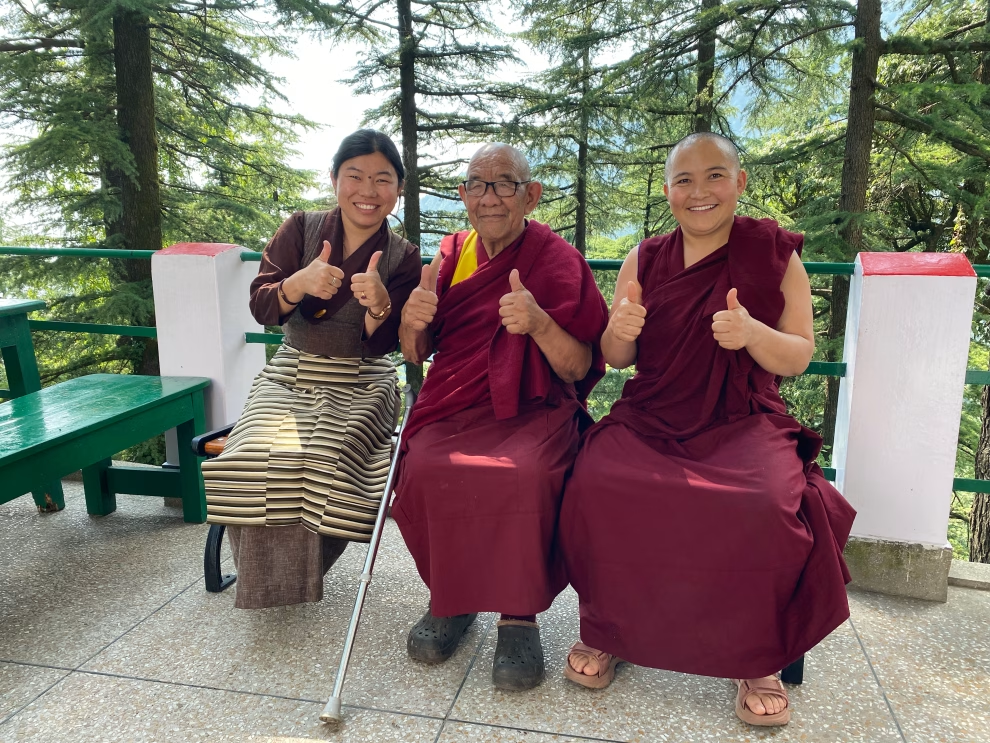
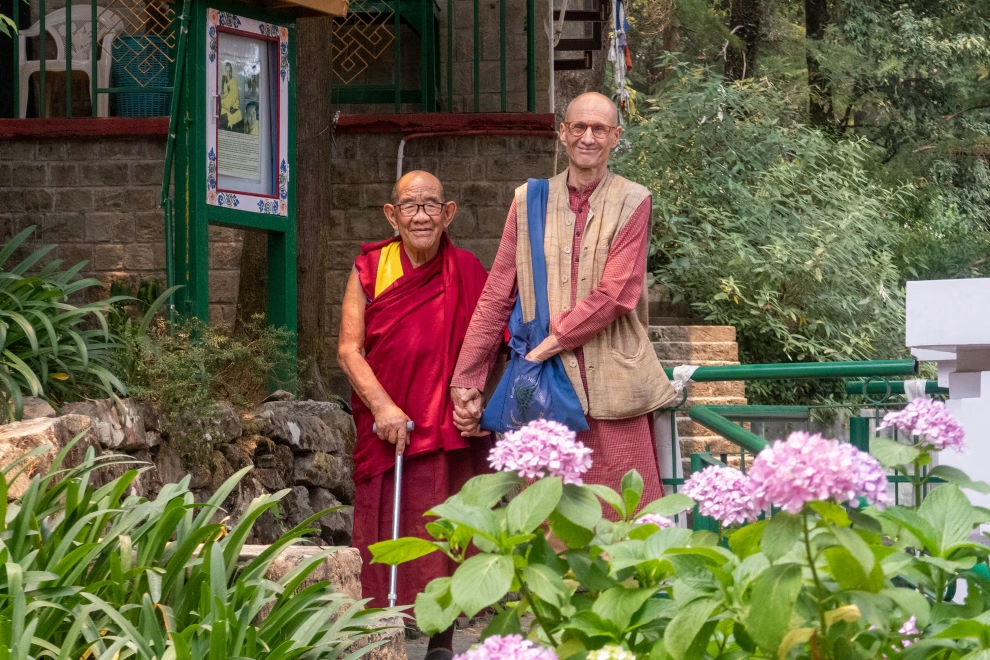
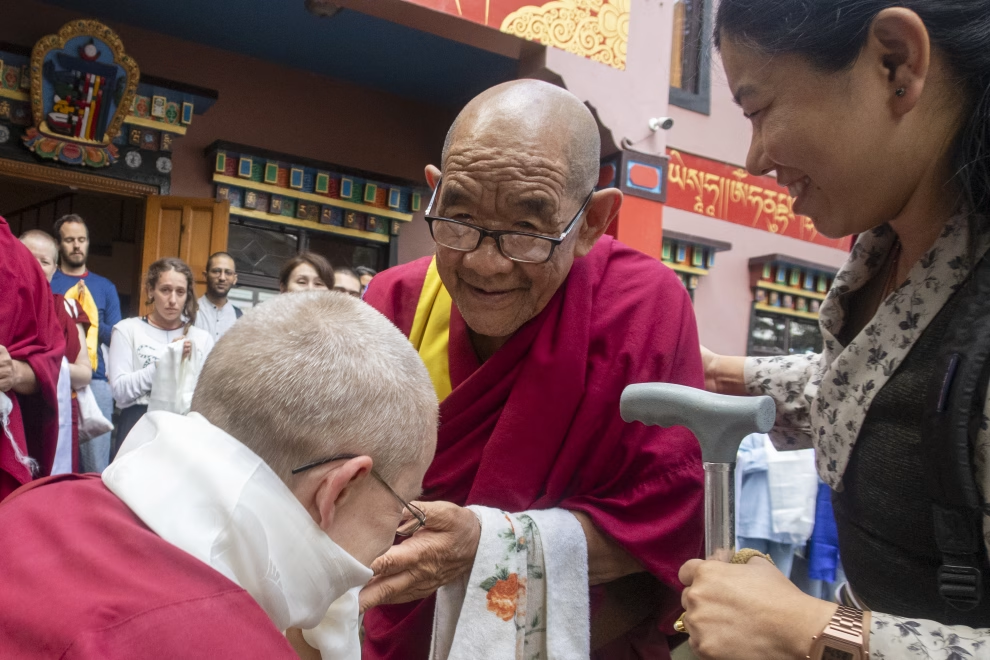
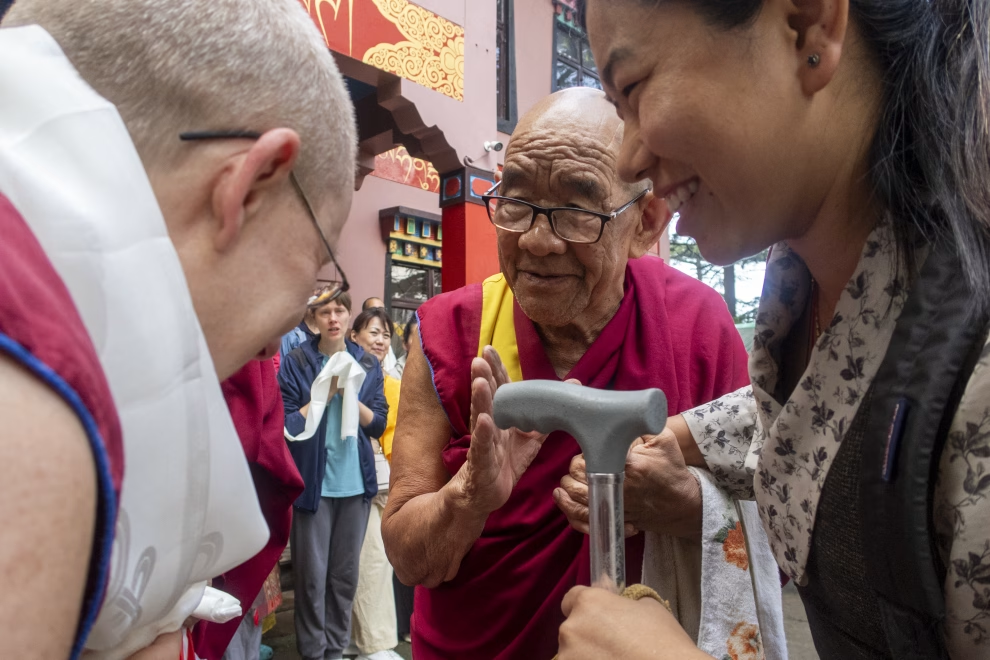
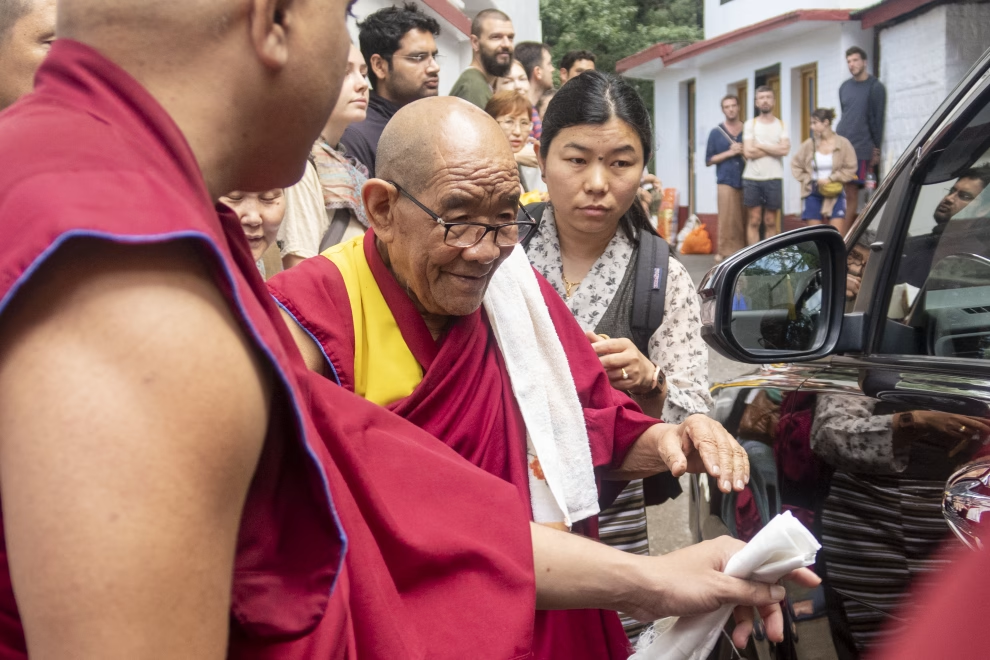
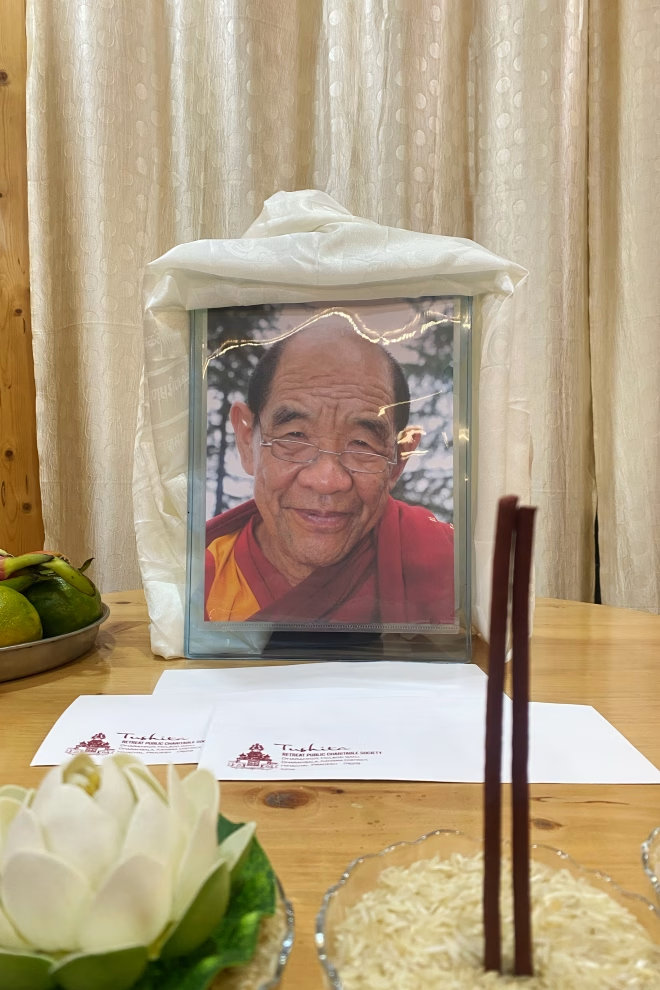
Gyudmed Ngarampa Venerable Thupten Dorje la, known as Tushita’s most precious Lama Gyupa la, was the most senior monk from Gyudmed Monastery and has been offering service at Tushita to all our precious gurus and sentient beings since Lama Yeshe’s time, so for almost 50 years!
Lama Yeshe requested Lama Gyupa la in late 1970s to assist the centre and retreatants with rituals and practices.
During all these many decades, Lama Gyupa la showed the utmost devotion to His Holiness the Dalai Lama, Lama Yeshe and Lama Zopa Rinpoche. Lama Gyupa la mentioned a few years ago that Gen la did prayers and practices for Lama Zopa Rinpoche’s stable health and long life every day without fail, in particular Medicine Buddha practice.
Those who had the great honour to meet Lama Gyupa la were always impressed by Lama Gyupa la’s deep humility and humble demeanour, Gen la’s sincerity, palpable warmth and compassion. Lama Gyupa la was a perfect example of that old generation escaping from Tibet, being a wholehearted dharma practitioner, content with a very simple lifestyle and only focusing on benefiting others.
We are deeply convinced Lama Gyupa la protected and is still protecting Tushita and its many thousands of students from India and around the world.
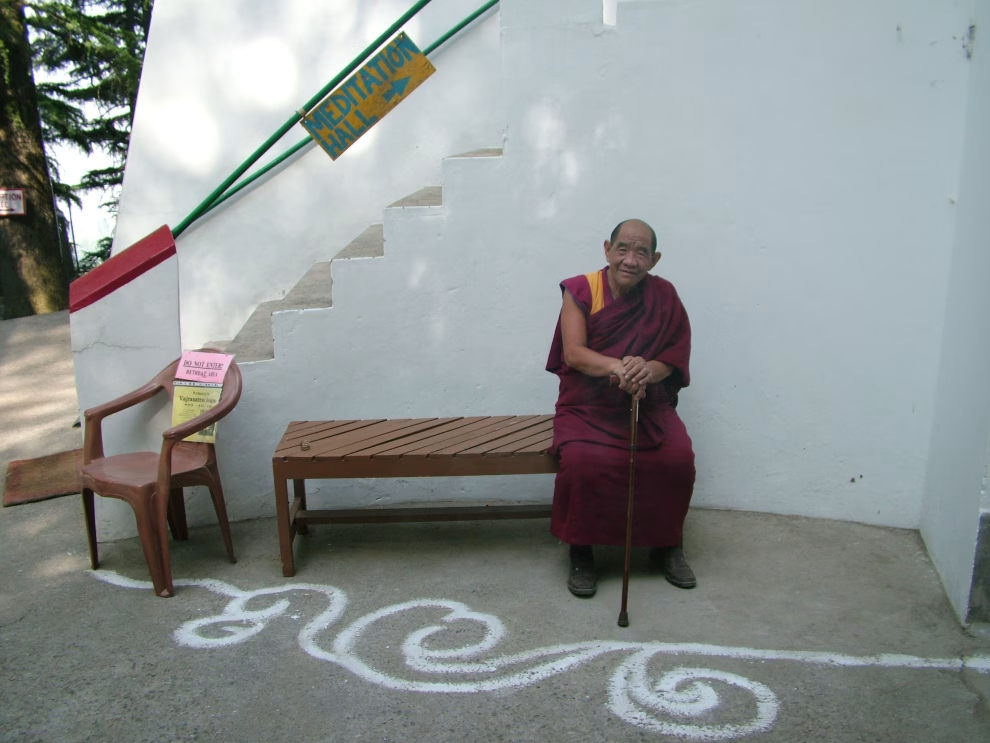
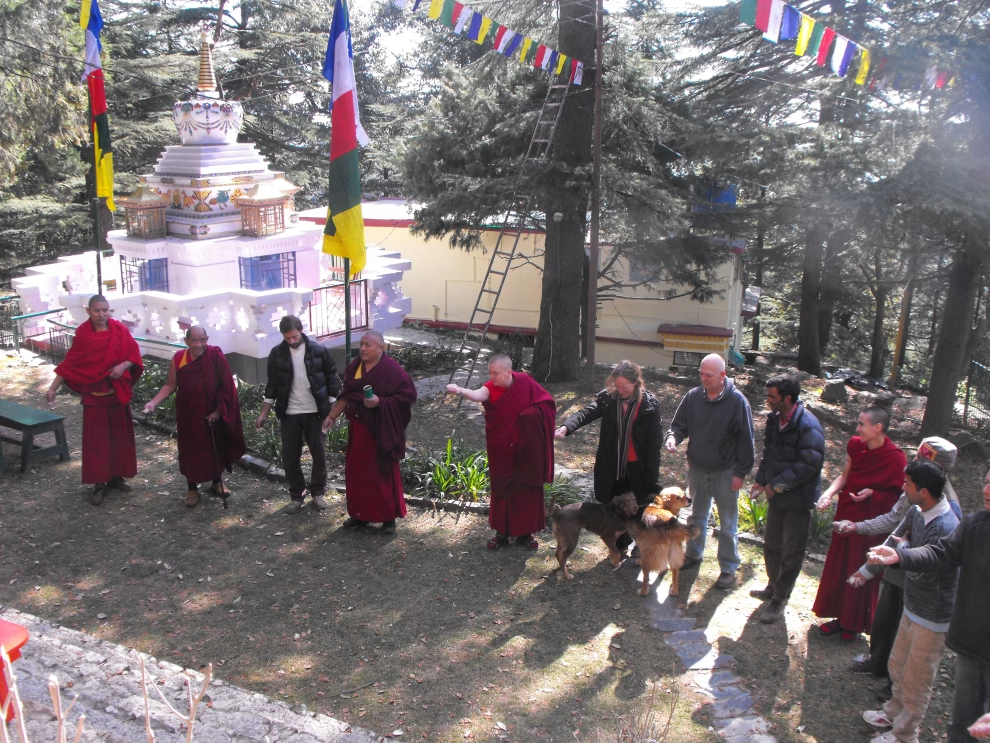
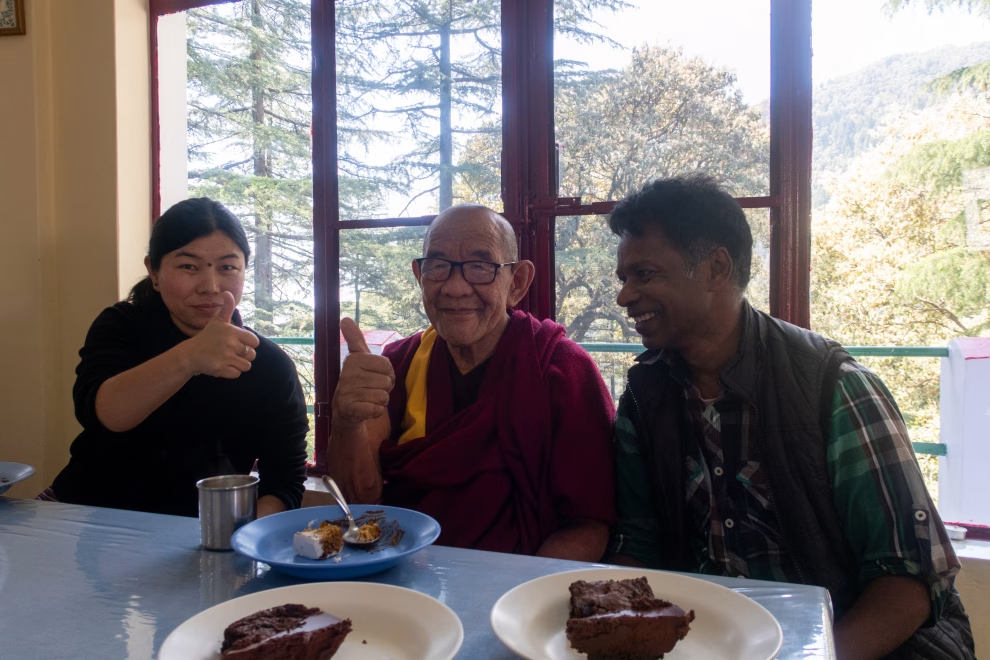
We remember Lama Gyupa la doing koras every evening around Tushita’s main gompa, enjoying afternoon chai with our local staff in the kitchen, offering his daily tormas to our dear monkey friends and taking care of the doggies and other animals, always smiling and making everybody feel happy.
Our precious Lama Gyupa la will be greatly missed! We cannot express how special Gen la was to us at Tushita. We had requested many times over the years for Lama Gyupa la to share his life story, which he always humbly declined. Three years ago Gen la finally kindly agreed – we were astonished when Gen la recounted with such clarity and emphasis the importance of his time as a Gyudmed monk in Tibet, the discipline and austerities with which they abided in and recounted stories of serving at Pabongkha Labrang. He spoke with extraordinary humilty as he delivered this historical account of the way things were in Tibet and we have the pleasure of sharing the first video recording below with you.
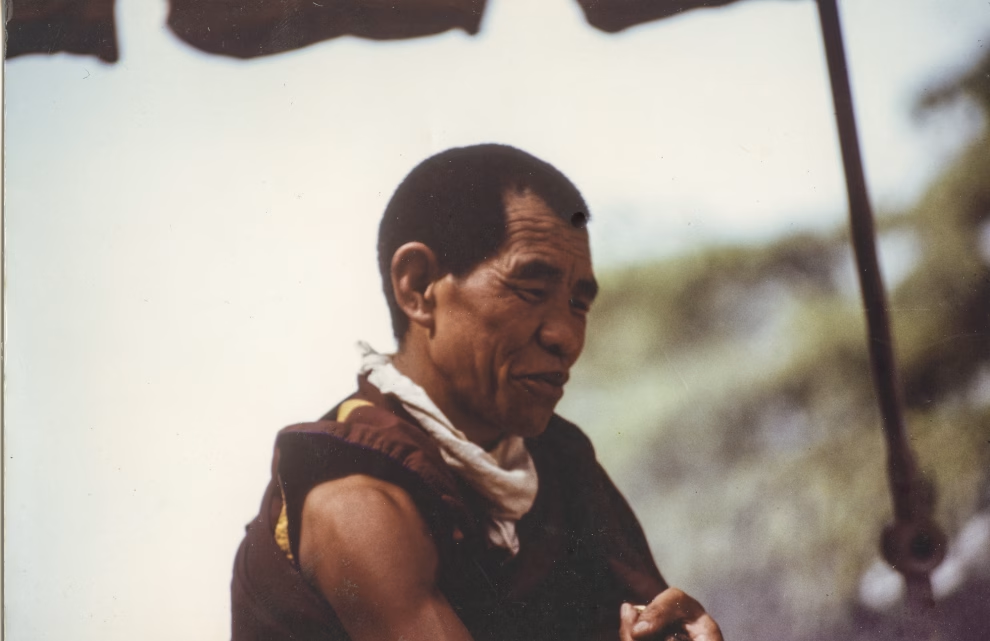
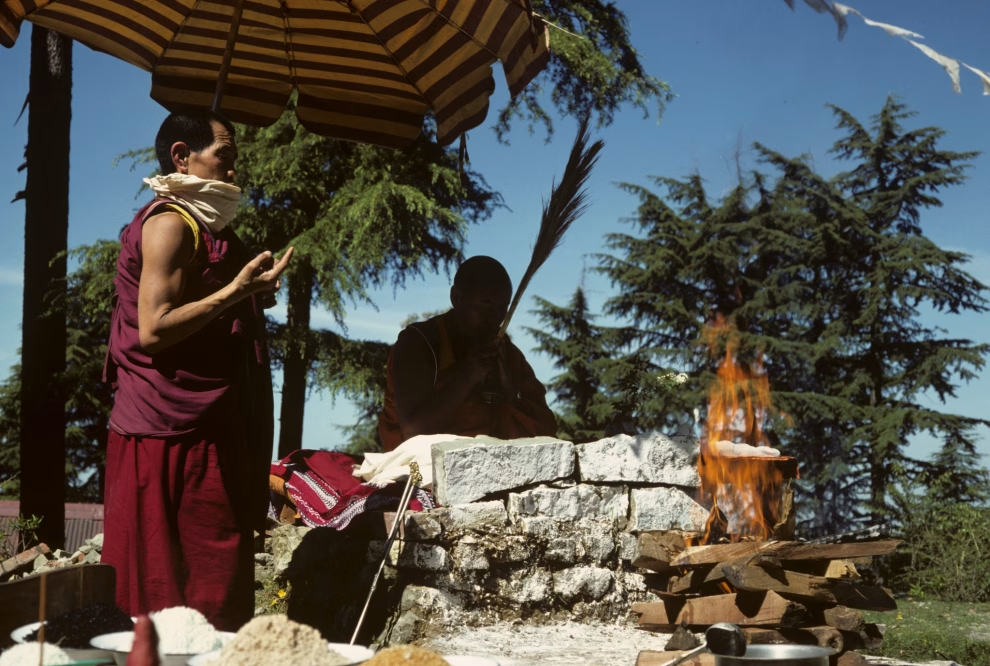
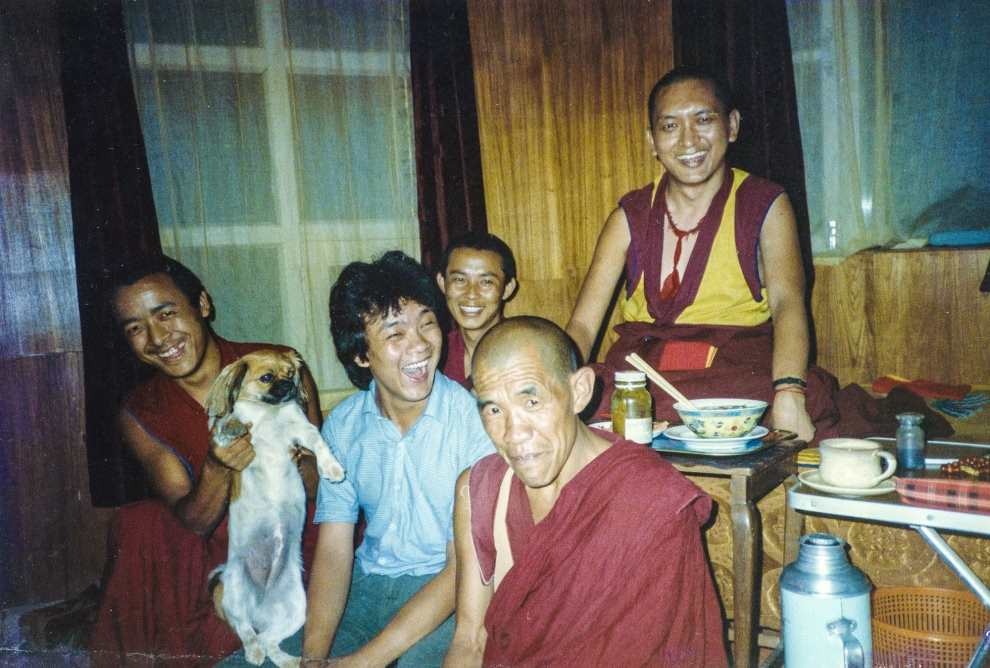
Gyudmed Ngarampa Venerable Thupten Dorje (Lama Gyupa la) at Tushita | 1982. Picture by LYWA
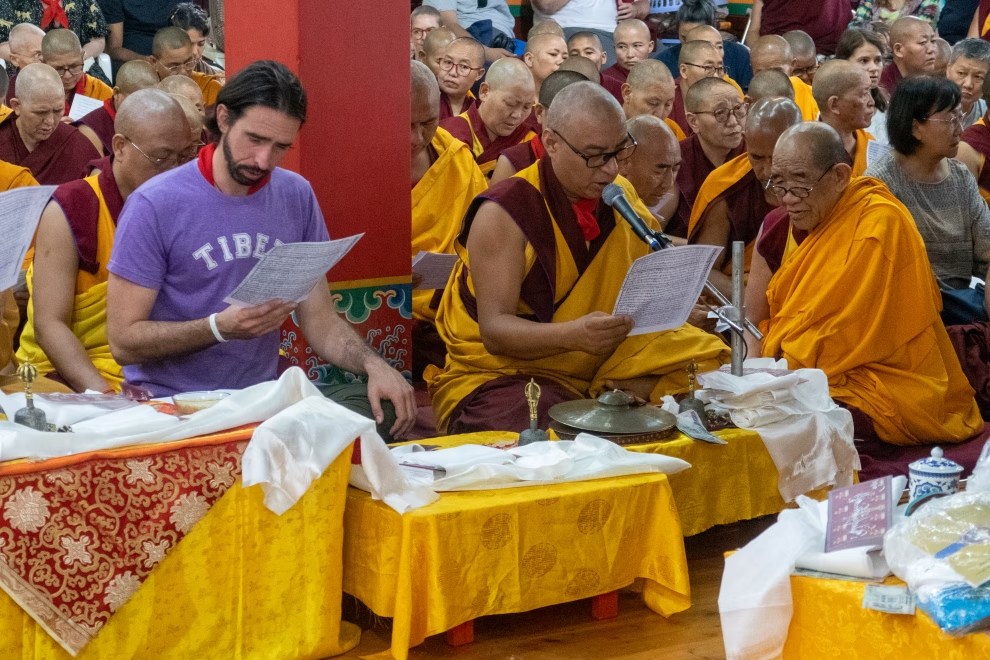
Lama Gyupa la passed away peacefully on the 11 March 2026 (23rd of the 1st Tibetan month in the Tibetan year 2153) at 10.47am and remained in thukdam (a state of meditative absorption after clinical death) for one week (11 – 17 March 2026), where Gen la’s holy body remained fresh even in the heat of South India. When it was clear that Gen la had ended his meditation, the cremation took place the next day on 18 March 2026.
Many prayers were being offered around the world for Lama Gyupa la!
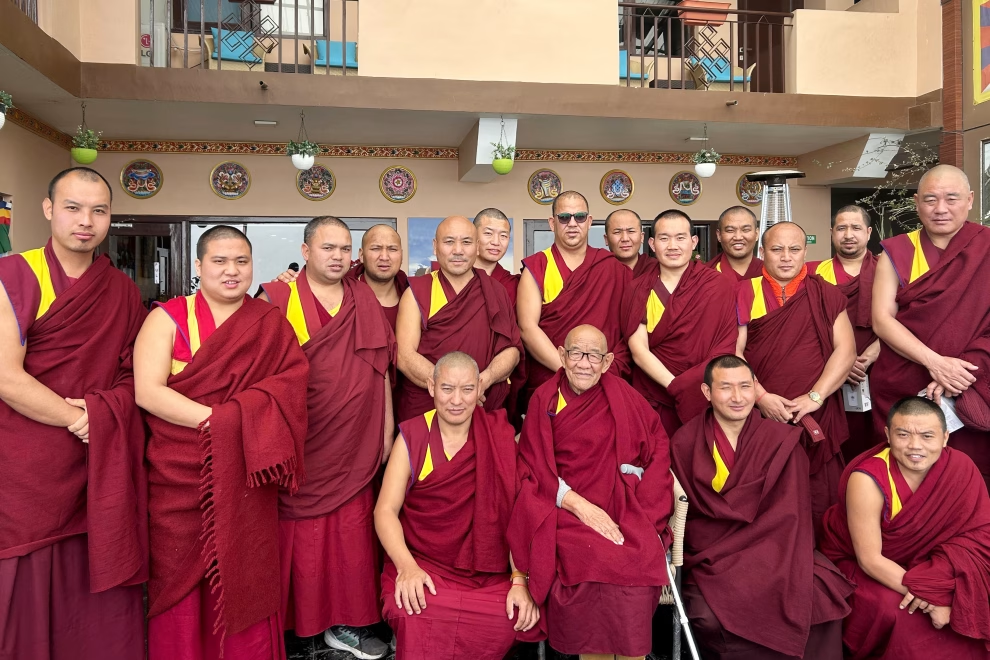
If you would like to offer something towards the many prayers we requested from His Holiness the Dalai Lama and our lamas and different monasteries like Gyudmed Monastery in South of India, 18 monks of Gyudmed branch in McLeod Ganj, Kopan Monastery and Nunnery, Namgyel Monastery, Institute of Buddhist Dialectics, 28 meditators around Trijang Rinpoche stupa, many Tushita Sangha and light offerings at Tushita, please contact us here or please REJOICE!
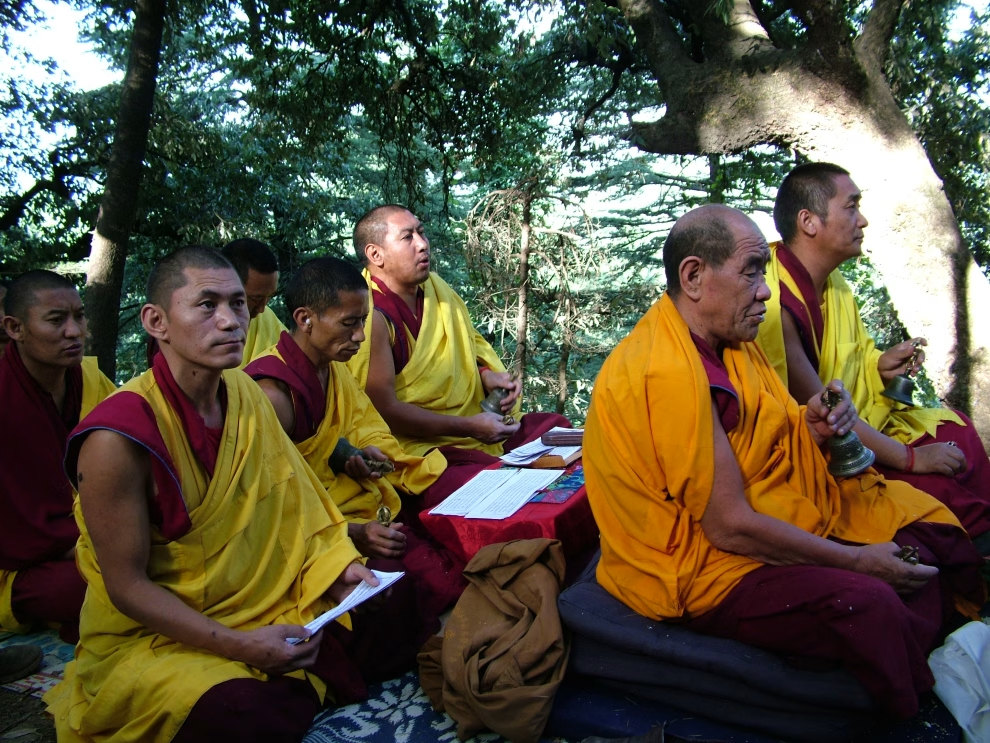
Our heartfelt gratitude especially to the Gyudmed monks of McLeod Ganj branch, who have been making weekly prayers at Tushita, which conclude on the 49th day, Tuesday 28 April 2026 with a Tsog offering.
We make heartfelt prayers for Lama Gyupa la to swiftly return to continue his work for the Dharma and sentient beings. May we continue to be connected with Gen la life after life!
Read a short biography of Lama Gyupa la in the following article from Tushita’s 2011 Autum Winter Newsletter:
Ven. Thubten Dorjee (“Old Lama Gyupa”)
The most senior member of our community is Venerable Thubten Dorjee, more commonly and affectionately known as “Old Lama Gyupa” (as he is an elder Gyumed monastery monk). We rely on Old Lama Gyupa to guide us Injies (non-Tibetans) on more traditional aspects of Tibetan Buddhist practice. Old Lama Gyupa doesn’t speak any English, but through an interpreter Old Lama Gyupa was so kind as to tell us something about his life and his experience of Tushita.
Thubten Dorjee was born in 1936 (making him one year younger than His Holiness the Dalai Lama) in the county of Mangkham in the province of Kham, Eastern Tibet. He was ordained when he was nine years old and had a happy childhood as a Monk at the Osel Gompa in Mangkham. Aged 19, he moved to the Capital City of Lhasa, and lived in monsteries there until the fateful year of 1959, when the Tibetan uprising against Chinese Communist occupation caused a huge number of Tibetans to flee to the freedom of India. Old Lama Gyupa also made the crossing over the Himalayas at this time, in a party of around 40 members. They walked, uncertain of their location or destination, for several months until they were finally told that they had arrived in Bhutan. Old Lama Gyupa immediately continued onward to India. He arrived when he was 23 years old and so has spent more than 50 years here, in exile from his homeland. For the first 20 years or so he lived in Gyumed Monasteries in Dalhousie (a few hours from Dharamsala) and Hunsur, South India. Lama Gyupa tells us that during his time in Hunsur, he mostly worked on a farm. He enjoyed it, but responding to a desire for more prolonged practice, he came to Dharamsala in 1978, where he met Lama Yeshe, with whom he developed a very strong heart connection.
Lama Yeshe offered him a hut at Tushita where he spent 4 years in retreat. After that, Lama Yeshe asked him to stay to attend to Lama’s room and the Gompa, and to help the non-monastic community with the more traditional elements of Tibetan Buddhist practice. At this time, Lama Yeshe instructed Lama Zopa Rinpoche to “keep Old Lama Gyupa close”, which Rinpoche has continued to do ever since Lama Yeshe’s death in 1984. Old Lama Gyupa says of Lama Zopa “very kind, shows me protection, much consideration”.
Old Lama Gyupa says that he has seen many changes at Tushita in his 24 years here (“Tushita was very small, now so big!”), but that he still considers Tushita his home; “very warm feeling here”.
I ask what Old Lama Gyupa thinks that Lama Yeshe would say if he saw Tushita now. He replies “Lama Yeshe would be very happy to see how much work is being done to benefit so many sentient beings, very happy”.
In March 2023 we spent two days with Lama Gyupa la listening to and recording his life story. Geshe Tenzin Legtsok translated from Tibetan to English. We are so grateful that Lama Gyupa la accepted our request to tell us his life story!
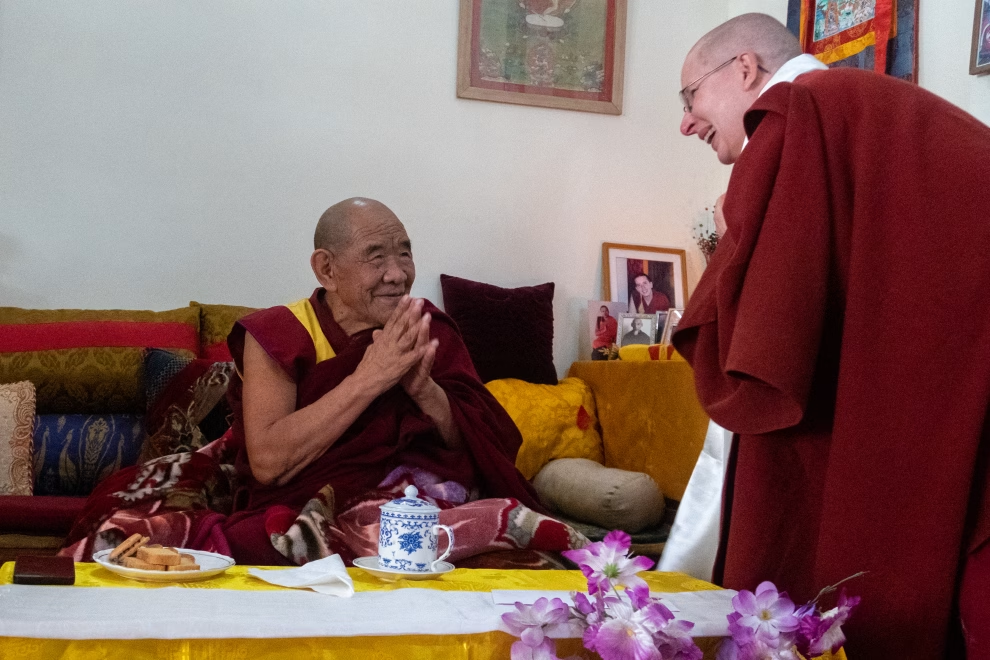
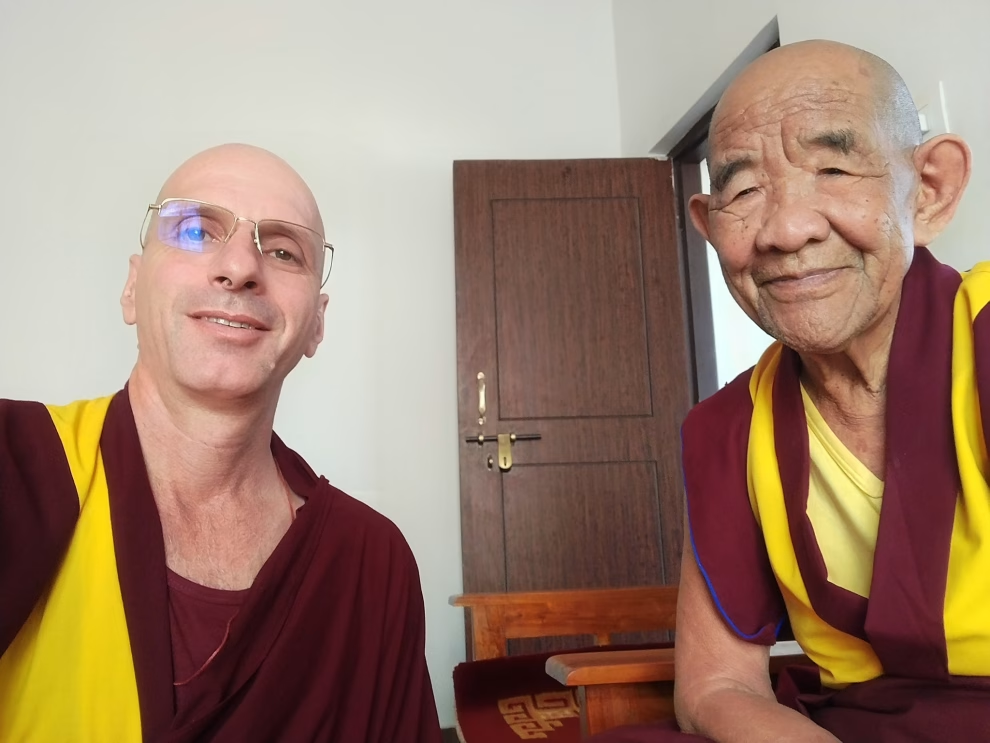
Lama Gyupa la and Venerable Kunphen in Lama Yeshe’s room at Tushita | 2023
We share with you the transcript of the translation of Lama Gyupa la’s interview. Please note that it is unedited and includes some back and forth clarification.
Video Transcript
Venerable Kunphen: Thank you so much! For many many years we have been requesting and we are so, so happy that Lama Gyupa la fulfilled our wish! We are so happy that Lama Gyupa la is with us and keeping this place safe for all of us protecting us.
If Lama Gyupa la can tell us about his life before Tushita… Where Lama Gyupa la is from, where he was born, his family.
Because we have known Lama Gyupa la for so many years for decades but we don’t know anything about Lama Gyupa la…
Venerable Legtsok: Oh, okay, sure, the secret history.
Venerable Kunphen: The secret history and then slowly slowly we can move it over to what happened when Lama Gyupa la came to India.
Venerable Legtsok: Okay.
Venerable Kunphen: Isn’t it?
Venerable Legtsok: Yeah, sure yeah, very good.
Okay. So, it’s below Chamdo. Chamdo is a city in Markam. From Chamdo you have to walk like eight or nine days down to get to where Genla was born. In Genla’s home area there’s a monastery named Osel Monastery. It’s the same as Osel Rinpoche.
And that’s where Genla was ordained when he was 9 years old in that monastery. Genla stayed in that monastery for nine years memorizing scripture, studying and memorizing scriptures. But that Gompa is a branch of Gyume monastery.
So if a young monk has memorized all the the text required to give for the memorization exam for the Gyume, then if their arms and legs are healthy, they’ll go to central Tibet but if they have some kind of deformity in the arms or legs like some illness then they just stay in that area and just stay in that local monastery.
Because Genla was healthy, his body was healthy, then he went to Lhasa, to Gyume Monastery so that was like 18 years old. So, during that nine years then I was asking Genla what kind of text did you have to memorize and he was saying it’s the eight great prayers, the King of Prayers and so forth. There’s eight prayers for dedication and then Namgyalma and Lion Face Dakini and other tea offering prayers and all the prayers that they do at the Monlam Chenmo, all those prayers and then also the self-generation of Yamantaka, Guhyasamaja, Heruka and then the protective prayers that are done every month like Palden Lhamo. One would give a memorization exam every year and then also within the year every month. I was saying well just to your teacher, the monthly one and he was saying no it’s to the abbot and the chant leader and the disciplinary of the monastery and then together at that time. Then the Lamas who have a labrang would offer food monthly. At a certain time I guess they would offer food to the whole congregation. And then that time the young monks would give a memorization exam every month. So once you’ve given all those memorization exams and the rabné, you know the blessing ceremony, and then all the self initiation ceremonies once you have given the memorization exams for all of those then you have to give to the abbot and the chant leader and the disciplinarian you have to kind of inform them that you want to go to Lhasa, to central Tibet, to the Gyume monastery to study there and you have to inform them like three times. It’s kind of a formal thing. I think you give them three messages on three different occasions. Those who are not physically fit, they have to give three times a message or inform them that they’re gonna stay there. Those who are physically fit, they have to inform three times that they are going to go to central Tibet.
In his monastery there are about 60, 70 monks who are not fully ordained but then there’s many who are fully ordained. There’s about 250 monks in total at this monastery at that time. Before the young monks who were going to Lhasa that year, Genla said that before they would leave for Lhasa, they would set out cushions and then people would bring sweet rice, milk and tea. And then the senior monks would advise the younger monks when you go to Lhasa, you should go to Gyume Monastery and the discipline is like this and follow all the rules and don’t run around, walk slowly, study well and then once you finish your studies, don’t just stay there for no reason come back to our monastery and your own country to help your own homeland. Genla’s father came with him as far as Chamdo.
That time the Chinese had already arrived in Chamdo. They had a big meeting with all the leaders of the different areas. They called people from all the different areas for a big meeting. Genla was saying at that time when he went from his home place to Chamdo he rode a horse. They rode horses but then also I didn’t understand completely but something about the Tibetans they would ride a horse but they didn’t have. They would just ride their own horse but at that time the Chinese were there so they gave money to buy the horses or something like that. Yeah. Yeah. The Chinese organized the system like that. The Chinese organized a system that you would just rent a horse for one day. You pay some money and then take a horse ride one day and then change horses and pay someone else some money and ride horse another day. They came like that.
The Chinese were telling them to hold meetings and then the Chinese would tell them oh you all come together and meet and then I don’t know what they’re talking about but then Genla was saying there were so many meetings. The Chinese were always telling people come for a meeting.
The Chinese were trying to change the power structure. I asked him what they talked about. He said I don’t really understand but it was the Chinese you know who were telling them, you have to come together and meet and then the Chinese are kind of telling people you don’t do this, do this and trying to take control of them. Oh, then Genla said from Chamdo, he went to Lhasa in a car, by vehicle, truck or something.
In Chamdo, Genla’s father requested someone else from their area to take him to Lhasa. That person took him to Lhasa and then Lhasa entrusted Genla with one big trader from their area.
And Genla stayed like three days with that trader but that person was sick for like three days. Then that person introduced Genla to one other monk in Gyume, a Gyume monk who was like a trader. There were trader monks who live in the monastery and introduced Genla to one trader monk at Gyume and asked him to take care of him and then Genla went and stayed with him because he wasn’t sick and then that monk introduced Genla to his first teacher in Gyume.
That time Genla said you can’t just enter Gyume just right away but there’s a fixed number of begging bowls that some I think some Mongolian leaders before they had established that there can only be 500 begging bowls at Gyume and 500 namjars [one of a Buddhist monk’s three robes], so there can only be in essence 500 monks who are part of Gyume and there can’t be more than that. So you have to wait until someone takes permission to leave Gyume and then they leave behind that begging bowl and then there’s an empty begging bowl that you can take possession of and then be part of Gyume. So there’s that kind of system. So you have to wait until someone leaves and then you join. But there’s other people waiting to join also. So the Genla that he was entrusted with said if you have any acquaintances then you know talk to them I think to figure out how to get a begging bowl. So the senior monk that Genla was entrusted towards, he’s like 92 now. He lives in Potala here. So he doesn’t come out. He just stays in his room there.
Genla was saying he’s in charge of all the work. I was like oh, what work? All the work of the Potala. He says no, all of the Tibetan people. He’s in charge. And then he was saying sometimes Lama Zopa Rinpoche will say go to.. so he’s junior to us. I was like you’re talking about His Holiness. He’s like no, he’s below His Holiness. His Holiness is above, he’s below but he’s some very senior monk there. Lama Zopa Rinpoche sometimes says go and talk to him or give him this message or something.
Genla was saying you have to wait, while you’re waiting for one of these begging bowls to be freed up, you have to kind of be prepared at any time to give a memorization exam, to enter Gyume monastery if a space becomes free. So Genla was waiting first with his own teacher looking after him and then there was a wealthy family then a space opened up that he could go there. So Genla was saying at that time all the aristocrats in Lhasa would have an offering room where they have the altar and text and stuff. So it was customary for them to keep a monk in residence who would put out the offerings all the time and then make prayers and memorize scripture, whatever scripture they were memorizing and then the family would look after that person. So that kind of an opportunity opened up. So Genla moved in with one family. So he was saying he waited like that for like a year, for a place to open up at Gyume monastery. So he gets the home of one sponsor. Genla was saying, before, in Gyume monastery there’s five Khamtsen [house groups/houses], there’s Amdo Khamtsen, Trehor Khamtsen, Tsawa Khamtsen, Gyalrang Khamtsen, Serkong Khamtsen.There’s those five. Each comes and has a certain number of begging bowls, seats basically. And he was waiting for one of those to open up but he waited three years total. One year he stayed with the benefactor and then two years he stayed at the Pabongkha Labrang. Genla knew Pabongkha Labrang and one of their monks got a place in Gyume, so went. Then they needed someone to take that monk’s place at Pabongkha Labrang. Genla spoke to them and then they said, “Okay, we can send him.” I was saying, “Oh, Genla, you are a very big person. He knows Pabongkha Rinpoche. He’s head of all the Tibetans. He’s like no, he’s not that big a person. He was just saying it was customary for all the aristocrats to have a monk staying in their house. So when a place opened up at Pabongkha Labrang, his Gen la requested them, I have a student who’s waiting to enter Gyume so can you keep him and they said yeah, come. But they would have like hundreds of sets of water bowls to be offered every day. Monks would do that and memorize whatever scripture they’re memorizing, the way to enter Gyume.So the families like to have monks who came from far away who came from distant regions to Lhasa. Then they would have those monks stay in the house. All those aristocrats who were like representatives in the Tibetan government at that time or wealthy people, wealthy traders and so forth. Then they would keep poor monks in their homes to do those things.
Genla says he stayed one year with a benefactor family, two years at Pabongkha Labrang and then a begging bowl opened up. One day he just received a message saying okay begging bowl is free then you have to go and give an exam. He said giving an exam is very difficult. It’s not an easy thing. First you have to give an exam to the Khamtsen-Gen [teacher of the house group]. Genla entered Tsawa Khamtsen in Gyume. First you have to give it to theKhamtsen-Gen and if you pass that then you give it to the Lama Umze [main chant leader] who is like second to the abbott at Gyume. Then you have to give it to theLama Umze. Then if you pass that, you’re allowed to enter the monastery. But first you have to give the monthly like protector prayers. Give that and then give the Guhyasamaja and all the three deities, all the self generation, all the self initiations, two volumes of scripture. It’s a lot. Can you imagine? Two volumes of scripture you have to memorise.
Genla said if you don’t pass, it’s very difficult for your teacher. It’ll come back to your teacher. It’s bad for their reputation. Genla said before he gave the exam, his teacher would always take memorization exams to make sure he’s ready. I asked him how did it go for you? And he said I was ready because otherwise my teacher wouldn’t let me give the exam. Because his teacher would always take memorizations. Then once you pass the memorization exam, you start at the lowest rank in the monastery, which means you’re the tea server. You’re one of the monks who serves tea. You start off doing that and then you have more memorization exams and then gradually go up and you do other work. So, you’re a tea server and you do other work in the monastery. Genla is saying that when you’re doing that lowest position, tea serving and other work, you have to give more and more memorization exams like the Guhyasamaja root tantra and other texts you have to gradually give. You have to give a whole series of memorization exams. Until you’ve given all of those, you’re not allowed to take Gelong [full] ordination. You have to do all that before taking Gelong ordination. they won’t believe you. Once he was able to enter Gyume then he had to give a message to the Pabongkha Labrang managers that I’ve entered Gyume so I’m taking permission to leave my place at the Pabongkha Labrang I had to let them know because there’s many other monks waiting to get that kind of seat and so they would search for another monk to take that seat. But he’s saying in Pabongkha Labrang there’s so much gold and silver, everything is covered with gold and silver and all the statues have gold and silver ornaments. They won’t just believe anyone to be able to come in Labrang and work there. First, they sort of just give the person some minial work and check them out, see if they can trust them or not. They won’t easily trust anyone to come there because there’s so much preciousness.
Genla was saying the manager of the Pabongkha Labrang from whom he took permission was alive until not that long ago he passed away. When Genla said I’m going to move to Gyume, he informed them, then he moved to Gyume but then he had to find a place to stay and I was saying well didn’t Gyume give you a place to stay. He was like no way, it’s not like now where they have rooms, you have to find your own place to stay. I said well, didn’t your Genla help you to find a place to stay and he said no my Genla had many students and he didn’t have many rooms but he had many students so he had one small room but if you accept another student then he’d have to tell that student to leave right. The rooms were so small. Genla had to find his own place to stay. He looked around and couldn’t find a place. So he went back to the manager of Pabongkha Labrang and asked if they had a place where he could stay. He said they very kindly gave him a room because they had built a new building at that time. So generally for monks to get a room in that building they would have to deposit money to be able to get a room but Genla didn’t have any money but the manager very kindly said you can stay here in one of these new rooms. He said it was a very good room but he had a roommate that was another monk staying there. So they stayed together in that room. Genla was saying from the time Sherab Sengge established Gyume, the tradition was that the monks would stay at different benefactors’ homes and they would have their robes and their begging bowl and their texts and they would go to Gyume.
From the time of Sherab Sengge, the founder of Gyume, the monks would mostly just stay in different benefactor’s homes and then the benefactor would for a month or whatever give them food and then they would just stay in the benefactor’s home and meditate. But I was saying, wouldn’t they come together at the Gyume to do prayers? And he was like, no, no, they just stay in the benefactor’s homes and meditate. So, I don’t know.
So, it’s not individual monks, it’s like all the monks together from Lobsang Sherab Sengge’s time. All the Gyume monks together would stay at a benefactor’s home. So they only had one temple in Lhasa but to stay in Lhasa was difficult. Usually all the 500 Gyume monks together, very wealthy benefactors would have a big temple or something,so they would go and stay at a benefactor’s house outside of Lhasa around central Tibet and go and stay at one benefactor’s house for like a month and mostly meditate and have teachings and do prayers together, Then they’d go to another benefactor’s house, another benefactor’s house. And so I was saying, well, because Genla kept saying that they carry their food and their clothes mostly, but I was saying like their bedding and then Genla was saying, no, they weren’t allowed to have bedding because they wouldn’t lay down like Lama Zopa Rinpoche never lays down. He said you’d have your dingwa and your three robes and your begging bowl and maybe some scriptures and that’s it. You wouldn’t lay down. You just stay sitting and you sleep on your seat. I remember I talked about this with Genla years ago. You would for years just sleep on your dingwa just sitting cross-legged.
Genla said his roommate at Pabongkha Labrang told him, you should just give the room back. You don’t have to stay here very much because you’re going to be going around all the time, you won’t stay in Lhasa. Genla said, yeah, it was true. I only stayed at Lhasa for maybe 10 days at a time. Most of the time you’d be carrying your things and going to different places, staying at a benefactor’s home. All your possessions like your dagam [Monk’s overcoat]. They’d have a dagamto stay warm. Your dagam, your three robes, some scripture, your tshogpor [ceremonial bowl], your wooden bowl. So there’s a special Gyume one, your begging bowl. They would take all those things in a kind of a backpack and all the Gyume monks together will go. The Gyume monks are not allowed to take a horse or ride in a car. You have to walk carrying things.
Because I remember in Denma Locho Rinpoche’s biography, he says when he went to Gyume then you can’t wear shoes even if it’s winter and it’s cold or whatever. I was asking Genla, do you know when you walk on the road to another place you can wear shoes but then once you arrive and you’re staying for 10-15 days, a month in one benefactor’s place then you can’t wear shoes that time. Genla is saying no, you can’t. When you walk from one place to another, you can wear shoes but once you arrive at the benefactor’s home then you take your shoes off and you can’t wear them while you’re there. I was saying even when you go outside to go to the bathroom or something. Genla said no, you can’t, no shoes. Also he was saying you can’t just eat anytime you want. You can eat only, Genla said, in the morning up to noon and then after you finish your noon meal, you have to bait your eating bowl then you wrap it up in a white cloth and tie it and then they stamp it with a seal. They put a seal on it and they hang it up with all the other begging bowls. And so you can’t touch it until the next morning. They tie it up and seal it. Until the next morning it’s sealed. You can’t even touch it, so you have to spend most of the time meditating. Most of the time you spend meditating.
Gelongs have a vow that they can’t take food without the blessing of giving and taking. That’s one of the Gelong vows. Actually, they’re not allowed to take any food without first doing the ritual of giving and taking where someone who’s not a Gelong has to offer them the food. So, they would practice that. Now, no one practices it or very few monks practice, but they would all practice that because Gelong themselves, can’t take their bowl, tsampa or their allotted amount of tsampa in it. So, then they can’t just go take it themselves. So, the Getsuls [novice monks] would get up and they would take all the begging bowls down and give them out to each of the Gelongs. And they would do this. It’s a very simple, little ritual of giving and taking. So theGetsuls would give out the begging bowls to each of the Gelong and then they’d unwrap and they’d be allotted each like a portion of tsampa and then they can eat. Yeah, Gyumes are famous for strong Vinaya, but I didn’t know it was like that. When the Getsuls would offer the Gelongs the tsampa, they wouldn’t just walk along a dump samba. They have to offer to each one with both hands. It’s kind of a ritualized way to one Gelong then the other. And the Gelongs themselves can’t just go take tsampa or take something. They have to wait for the Getsuls to come and give it to them. And the tea as well they offer with both hands. They have to offer with great respect to each other. They offer to one then offer to the next then offer to the next. Every morning they would eat twice; one breakfast then lunch and then tsampa with tea. But before they eat each monk would have to make a torma, a little torma and you put it there and then offer the torma to the Buddha, Dharma, Sangha, protectors and so forth. You offer torma first and then you eat and then lunch time. There’s a special name for the torma. He was saying that similarly at lunch time you’re supposed to have some leftover food and offer to the pretas. It’s kind of like that. But before you eat. You’d offer to the four, the different yidams and the four great kings. You’d have little pieces for each of them to offer. I don’t know. It’s hard to understand without seeing. The chambo [dough ball] is called when you put some dough here and then squeeze it with your fingers. In the morning when they make the chambo, there’ll be a little coming out of the end. That represents the food for the offering for the evening. But then after you finish eating because you don’t offer one in the evening then you have to press it in from the ends and kind of tuck it in so there’s nothing showing here to represent that there’s going to be no more offering like in the evening. That’s all I understand as well. If you have questions, I don’t know, maybe there’s other things we could probably spend all day just on. I was saying now in South India do they practice like that? They still do this thing. I was saying now they serve dinner at the Gyume monastery and he was saying but not in the puja. They won’t do in the puja. In the puja they’ll serve breakfast food and tea in the morning and lunch but not at dinner time. But after the puja lets out, the monastery has a communal kitchen. If you take in your room, you can take.
So for four years Genla lived like that, going to different benefactor’s houses for the Gyume monks.
Genla stayed in central Tibet like that for seven years. Three years at the Pabongkha and the benefactor’s house and then four years in Gyume. It was 1959. It was about 1951-52.
Venerable Kunphen: So now he is 25. He is about His Holiness age, right? 35.
Venerable Legtsok: So then the wall is 18 years before that. So from 1952 so it would have been like 34. His Holiness is 35, no? Yeah. Yeah. Genla says His Holiness is one year older than him. So, Genla must be 36.
How did you come to Tibet? About 15 days before His Holiness came to India. At that time Kyabje Trijang Rinpoche said to the Gyume monks you should go over by Ganden in the direction from Lhasa in the direction of Ganden. There’s one place where they would regularly have assemblies every year, the Gyume monks. They went there. Trijang Rinpochetold them and they were there for like 15 days. Genla said then one evening the Gyume disciplinarian told them His Holiness has arrived in India now so you should all go towards the area in Tibet called Lhoka. It’s a southern area of Tibet near the border with Nepal. From Lhoka there’s one road that goes to Bhutan, one to Mount Tawang. So it’s like that area, Mount Tawang, Bhutan, kind of a border area. They all took some tsampa and their own belongings and went.
Among the Gyume monks, there’s this division between the new monks. It’s the new monks in the first six years of having entered Gyume. They’re the ones that have to go for this kind of like an aesthetic practice going around to different places. Once you’re more senior than that, you’ve done that for six years, then you just stay in Lhasa. So the senior Gyume monks would just stay in Lhasa and just do their practice there. But it’s the younger monks in the first six years of having entered Gyume, they would do this kind of rounds to different places carrying all their possessions and not laying down. Genla was in his fourth year. He was saying there’s about 200 of those junior monks. He said they went all together, 200 together to Lhoka.
It’s the Tibetan army. 200 of them went to this Lhoka area and then they met the Tibetan Chushi Gangdruk. There are four rivers and six mountains. It’s called the four rivers six mountains group. Have you heard of it? You used to hear of it in Dharamshala. They had an organization. It used to be kind of Chushi Gangdruk. So it’s like the Tibetan military basically organization. So they’re the ones who protected the way for His Holiness when His Holiness was leaving. They cleared the way to make sure there’s no Chinese and they were the main group fighting against the Chinese. Their group met them and said only the older ones can go. The younger ones have to stay and fight to join the army. Genla was quite young. From their group about a hundred of them joined the army, the Tibetan army. About a hundred of them were the very old ones. Genla and some other young ones went to one big monastery and they did Palden Lhamo, prayers, practice. They said you stay at this monastery and you do Palden Lhamo practices. It’s not okay if everyone just leaves. The ones who are basically able-bodied to fight, they have to stay and fight.
They had a bunch of thangkas. Gyume had a lot of thangkas, very precious thangkas. Some had been painted by Lama Tsongkhapa or had some signature or something and so they had to carry those wherever they went. In order to carry those, I guess, they needed a certain number of monks. So Genla was among those monks. That time he was a Gelong, already taken Gelong ordination. Of the 200 people only 50 were allowed to stay at the monastery because they told the Tibetan army that we have all these precious thangkas now. If all of us fight in the army then they will be destroyed and they’ll be lost. Then they said okay, well, the 50 who can stay at the gompa give them all to them. Like 250 went to fight and only 50 were allowed to stay at the gompa.
Venerable Kunphen: And nobody crossed the border?
Venerable Legtsok: No, now that’s coming because Genla is here. Genla crossed.
Venerable Kunphen: So when they started walking the 200 miles, did everybody want to go out? I mean, that must have been so confusing.
Venerable Legtsok: No, no. Mostly they thought they’re all going to come back.
They thought they would just go a little ways away to like Lhoka and then come back.
So then the 150 that went to fight in the army their thangkas they left with the 50 who stayed at the gompa. Then the thangkas they put together and bundles of some I don’t know five or 10 and then some carried the thangkas some carried the cooking pots and everything. Those 50 monks had to carry mainly the thangkas and some possessions of those other monks. They stayed at that monastery for like seven days and then I was saying well then when did you go to India? So he said yeah there are a lot of people coming through going to India and they knew His Holiness had come to India at that time. Then they just decided okay well we all have to go to India. From the 50 at the monastery they arrived in Bhutan and then they came to Buxa whereas the 150 who went into the military also all went to India. That’s what I was saying to Genla like but don’t they have to stay and fight he’s like no they already knew this is a lost cause at that point. So all the soldiers also went to India. That’s why I’m like I don’t get it. But they went to India and they ended up in Mussoorie…some place in India. There is a different border area anyway they went that way, too. So they also all came to India. They came through Bhutan and then went to Buxa. Genla stayed like five or six months in Buxa.
Then some Lamas met together and decided all the Gyuto and Gyume monks should go to Dalhousie. They sent them all to Dalhousie and some monks from other monasteries. There were about 200 Gyume monks that ended up in Dalhousie. Genla was saying of Gyume monks there were about 200 that ended up in Gyume. Of the Gyuto monks, there weren’t so many because they were in Lhasa at that time. So only the young, fit ones, some of them could come. But I was asking about what about the other 300 senior Gyume monks who would have been in Lhasa. He said of those only about 15 or 20 were able to come to Dalhousie. I don’t know. Some of them stayed in Lhasa or they went to their own countries, went to their own areas of Tibet. Some were put in prison by the Chinese. So there’s one branch of Gyuto called Palri. It’s near Kalimpong. It’s close to Kalimpong. So that’s one branch of Gyuto. The Gyuto monks who were there also were able to come to Dalhousie. So there are maybe 100 monks from Gyuto and 200 from Gyume. There’s some monks from Sera, Drepung, Ganden, and a few monks from Dalhousie. Because there’s one famous Lama, Trehor Kyorpen Rinpoche. You often hear Lama Zopa Rinpoche speak about him. He was in Dalhousie with his students. So I was asking him if he was there? He was saying yeah yeah, he was there but you wouldn’t see him very often except when he would like to go to the toilet or eat then his attendants would lock the door of his room because he would just stay meditating all the time in retreat so he wouldn’t see very much but he was there. They did carpet weaving because they had no benefactors, no means of sustenance. So they would make Tibetan carpets for like five, six years instead of just making Tibetan carpets and selling them for. I was saying Genla’s probably very skilled at making carpets.
Venerable Kunphen: So, who fed them in Buxa?Who were the benefactors?
Venerable Legtsok: It was the Indian government. I can ask but it was the Indian government. Rice, dhal, flour, oil they were giving. The US government also, I think, was helping. No, no, US government. Yeah. So the Indian government. There’s no Tibetan government to help.
Then the younger, not the senior monks wouldn’t leave carpets. The younger monks would leave carpets and they’d sell the carpets and get food. He’s saying they all live crowded together in rooms. So you didn’t have your own room or anything. You just have your own bed to sit on to sleep on right next to one another.
Venerable Kunphen: So this was a few hundred monks. So where did they live?
Venerable Legtsok: But they are not all in one place. No. And they’re saying there’s no temple. They would have little pujas together but it wouldn’t be all the monks together in one because they had no temple they just have some rooms and all the dens together in their room.
Venerable Kunphen: The Indian government gave them buildings or did they build?
Venerable Legtsok: The Indian government would give them buildings. They couldn’t just build their own house. The Indian government would allow them buildings to stay in. In the place where Genla was staying, there were 17 people in one room and I think at night you’d like to roll out your bedding and in the daytime you roll it up and put it away. After 13 years in Dalhousie, Genla went to the Hunsur settlement. It was 13 years in Dalhousie. The first five or six years he was weaving carpets. After the first five six years just weaving carpets then they would mostly do pujas and stuff but occasionally when a lot of work came then they would also help weave carpets. Towards the end of that 13 years His Holiness gave instructions to all the monks that you should resume the kind of activities you were doing in Tibet. The kind of study and practice that you were doing in Tibet should resume in exile. His Holiness gave that instruction. So then they stopped weaving carpets and more focused on just doing the rituals they were doing before in Tibet.
Then they went to Hunsur, to this new refugee settlement land in Hunsur. There were about 200 Gyume monks from Tibet and then about 20 or 30 who had newly joined Gyume from India. Tibetans in India who had newly joined. They’re about 230 monks together. They went to the Hunsur settlement and they had to plant fields. Genla was at the Gyume planting fields and had to plow the field then plant the seeds then water it then weed it and harvest the crop and it was like a lot of work for a few years he was doing that in Gyume and then he was sent by Gyume to the settlement in Bylakuppe to do pujas for the lay people. To do pujas for the lay people at the new settlement in Bylakuppe. He did that for like two years then went back to Hunsur for a bit. And then there’s this place called 80 acres for lack of a better word. A yuka is like a measurement of land in India, an acre, a hectare or something. There’s a settlement a little bit aways from Gyume in the Hunsur area. Genla was sent there to plant fields for one year. That was for Gyume’s land in that place. Genla was sent there to plant fields and take care of the crops. But for two or three years they got no crop. Because it didn’t rain for some time then they didn’t get crops for two or three years. Two years. For two or three years, because it didn’t rain they didn’t get any crops. Then the Gyume monastery sent him to Dhramshala to do pujas.
Genla after two or three years farming that land and there was no rain then they sent him and one monk who was senior to him and some junior monks from Gyume, they sent to Dharamshala to doshabten [ritual to remove obstacles]. There are eight of them altogether. Genla was saying before when they were in Dalhousie, Gyume had monks in Dharamshala, Kalimpong and Bomdila and some other places who would regularly do shabtens. But then when they were given that land in Hunsur, all the Gyume monks thought they needed them all to establish the place in Hunsur, plant fields and make buildings and establish the new monastery in Hunsur. All the Gyume monks had all gone down there. After this time of not getting any crops from the fields then they sent some monks to do again do shabten to those different places to raise money for the monastery. When Genla and other Gyume monks, one senior and some junior monks first came to Dharamshala, they didn’t have any place to stay so they first borrowed a place to stay in the Nyungne temple. Yeah, I thought it’s down there.
I’ve never been there, but below Serkong’s house, somewhere down that little path.
They first stayed there for like two months and then one merchant like a Tibetan trader had some very small house to stay which she said they could rent. So they rented it for like 25 rupees a month. Genla was saying they couldn’t get very many good gigs like doing shabten. Because there were groups of monks from other monasteries who’d been in Dharamsala doing shabtens from before and they’d been getting all the good work so to say. So then the Genla and the Gyume monks employed for lack of a better word. You don’t say employed, but what do you say? I don’t know. They only got requests to read scripture instead of doing things like pujas, protective pujas. So for two years they did that in Dharamshala. They would do puja from 6:00 in the morning till 6:00 in the evening every day and they would really recite a lot, recite all day long and so many benefactors were very impressed and so gradually they got a lot of benefactors.
His Holiness gave instructions that time for all the lay people in Dharamshala not to give food for the monks doing shabtenin the evening. They wouldn’t have food in the evening but they would buy Amul butter [indian brand of butter] and one Amul butter would last like 15 days. He said the senior monk would have a little food in the evening. They would use one Amul butter for like 15 days to make a butter tea.
They bought that place where the Gyume monks stay now at the end of two years of doing pujas. They’d saved off about 20,000 rupees. There’s one area in Amdo. This man from this area had a house and he owned that land. So then they bought it. He sold it to them for 20,000 rupees. There was a house with the land. So they bought that then. That time 20,000 rupees worth of silver would be about gyama chönga [15 pounds/~7 Kg].They gave that Amdo [monk]..he’s a monk actually from the monastery in Amdo of Lama Tsongkhapa,Chöje Döndrup Rinchen, he is Lama Tsongkhapa’sfirst teacher from when he’s very young. From when he was four years old, he was the one who gave Lama Tsongkhapa Getsul vows, and gave him his first initiations in Amdo. So that monk was from Lama Tsongkhapa ‘s teacher’s monastery. He wanted to make a statue of Chöje Döndrup Rinchen. With that 20,000 rupees he sent it to Lhasa or something and some monks went and brought silver back. They bought silver from some Indians. There’s a statue casting place here. There was then where some Tibetans would cast. So they cast that statue.
Venerable Kunphen: I thought the money, the 20,000 was for the building.
Venerable Legtsok: It was, but then Amdo guy used that money that he got from selling the building to buy silver to cast a statue of Chöje Döndrup Rinchen.
It’s not easy being a translator – I’m learning. Hahaha. You see?
Venerable Kunphen: Do you want some butter tea?
Venerable Legtsok: Yes, I actually do. Yeah, I think I need butter tea.
So then that Gen had that silver brought here, a statue cast. He wanted to offer it back to his gompa in Amdo. He with some other monks brought it to Lhasa. But then he died in Lhasa. Some other monks brought the statue to Amdo and offered it to that gompa.
At the end of that two years, that’s the two years Genla was doing shabten, he met Lama Yeshe and Lama Zopa Rinpoche because there was that time there was an old building you remember right and Genla was saying it was so dark inside there was just one corner room where Lama Zopa Rinpoche stayed and the nice room whereTrijang Rinpochestayed. It was like over there. Yeah, it was right there in that corner. Oh, that’s why you have that corner thing, right? I have never been there. It’s like a bathroom. There was a corridor in the middle, but I thought Lama Yeshe’s room was on the other side. It was this side.
Venerable Kunphen: There was a small room over there where sometimes the monks used.
Venerable Legtsok: I remember there was a nice patio there. There’s a photo of it with a nice painting of the four brothers.
Venerable Kunphen: No, Shakyamuni Buddha on the other side.
Venerable Legtsok: I think so. I don’t remember.
I was asking Genla didn’t you ever come to do pujas here during those two years? Didn’t Tushita ever hire monks to come to pujas. He says, “No, no, they would never hire anyone to come to pujas.” And then I was asking, “Well, Genla, during those two years, didn’t you see any foreign monks and nuns around?” Like, you must have thought it’s very strange. And he said, “No, there weren’t that many around those days. There were some around but not many. But Genla was saying that time Namgyal monks stayed here before. There were many little houses that the Namgyal monks have built for themselves out of those oil tins. They used to take those big rectangular oil tins. They would take those and flatten them out and then use as shooting to build little huts. So there were little huts all around that the Namgyal monks had used. And Genla was hoping he could get one of those to do retreat in because there are many huts. Genla came and asked Lama Yeshe and Lama Zopa Rinpoche if he could have a place here to do retreat. He met Lama Yeshe and asked for a place to do retreat. Lama Yeshe immediately said yes, you can do retreat here. You can have a place to do retreat. But that time he didn’t have any money, right? Because they’d used all their money to buy the land down. Then Genla went down to Hunsur in Gyume to take permission to do retreat. That time the current Ganden Tripa was Lama Umze at Gyume at that time. I was saying you don’t have to ask permission from the abbot. He was saying no, you ask permission from the Lama Umze. He’s the second in charge in Gyume. He’s saying that the Lama Umze is in charge of both worldly and dharma affairs. So you ask him and he gave permission, the current Ganden Tripa. That time Gen Jampa Wangdu was staying, where some other monks stay now above Dharamkot on the mountain side. He was staying up there.
Gen Losang DargyeI was talking about today who would always walk up asked Gen Jampa Wangdu who was friends with Lama Yeshe to ask Lama Yeshe if he could have a place to stay.
But Genla had asked first. Lama Yeshe said first give a place to Genla and then to the Sera Ngapa [the drummer of Sera Monastery]. Sera Ngapa that’s what they called him. The first place the Genla stayed is about where the Vajrasattva Gompa is now. Genla was saying it was just those oil cans flattened out and then some scrap pieces of wood kind of put together. It was like that.
Lama Yeshe said he could stay here but before that there was one lama. So this lama who lives down here, what’s his name? In the big house.(Pangdon) Palden Rinpoche (?) It’s his previous life. So at that time his previous life gave the transmission of the Kangyur, Tengyur and Lama Tsongkhapa’s collected works over nine months at the main temple. Genla and (Trayab?) Dokdu Rinpochewho gave those big Heruka initiations in the south that [Lama Zopa] Rinpoche sponsored just earlier this year [2023] in August. They stayed together in one room. TheDialectics School Gen Lobsang Gyatso had rooms and he said monks attending the teachings can stay. If you have money you should give one rupee a day. If you don’t have money then just forget it. Then they could stay there. Some benefactors would sometimes, as they do at teachings, offer tea; sometimes there would be tsampa.
Genla said his Genla was staying in the Potala at that time, but his Genla didn’t help him out directly, but there was a woman at the TCV, Ama Tashi Delek (?), the owner of the Nyungne Lhakhang (?), Genla met her and she gave Genla some pieces of wood to build a meditation box for him to stay in. Then she asked him, “Don’t you have any other acquaintances that can help you out?” And he said, “Yeah, there’s this one Gen in the Potala.” And she says, “What? You know him?”. Something like that right? But then I got lost. I don’t know what the.. Phodrang was right here then. I don’t know what else Genla said. I didn’t understand. His Holiness had moved to the new Phodrangwhere it is now. Before it was up here, right?
Venerable Kunphen: But I think very short time, maybe one year.
Yeah. I think at the same time Namgyal was here. Before Genla came because when Genla came Lama Yeshe and Lama Zopa Rinpoche were already here so the Phodrang must have already moved down.
Venerable Kunphen: But that must have been the early 60s.
Venerable Legtsok: Yeah, it must have been. That’s true. Genla is not saying his Gen is there. He’s saying down in the Phodrang with His Holiness.
Correct me if I’m wrong because I’m not sure I understand everything.
Genla had asked for this benefactor Amatashi to help him with food and stuff like that. She talked to Jetsun Pema and Jetsun Pema said, “Oh, he can have the TCV, just like rice and dhal and oil and stuff.” She was sending over here and then Genla, very discreetly, in his own little hut there, would have a wood fire and black pots but he wouldn’t wash the pots outside because he didn’t want anyone to see that he’s like making his own food. So he would just wash the pots inside and have a fire. But Lama Yeshe saw every day someone’s smoke’s coming from the hut. There was a fire in the hut and he asked what that person doing and then gradually found out Genla was making his own food. Then he said no, you can have food with us, the Tushita food. The Genla started having Tushita food. But then Lama Yeshe was doing retreats and rituals so he asked Genla to make tormas and help out with other things. Genla started doing that. He said Lama Zopa Rinpoche that time would just meditate all the time. That’s all he does just being in his room meditating all the time. But Lama Yeshe would always have many texts set out around his room and he would not sleep at night. He would sleep a little bit in the afternoon after lunch because his heart was weak. But he would stay up all night long just reading different scriptures that were laid out. Lama Yeshe, in the afternoon about two o’clock or so, from then on he would stay quietly in his room and he would have a note written and post it outside like if you don’t have any work, don’t come here. One over there and one over there he would put and he would just stay quietly in his room like all night reading.
Gen Jampa Wangdu would come to visit Lama Yeshe and he would see the sign with the letters written outside; he would just turn it around and then go inside. He said sometimes in the middle of the night Lama Yeshe would call him to make tormas or do different tsog, rituals in the middle of the night. Sometimes Lama Yeshe would call him to make tormas and help with that. I was asking, didn’t he ask Sera Ngapa, the other monk to come do that? He said no because he hadn’t really studied how to make tormas because at Sera they’re not even allowed to have vajra and bell. They have to keep it secret. He didn’t really know about those things. Genla stayed in retreat doing three sessions a day but in between he would also do work like making tormas and helping with different rituals, Lama Yeshe, Lama Zopa Rinpoche.
Genla stayed in retreat for four years like that. He said at one point he got very sick on one side. He got a big sore or something on one side. He was so weak he had to tie a zen around him and tie it in front and just kind of hold like that to be able to sit up. Then one day Lama Yeshe said he had signs of like impending death. Lama Yeshe had Genla on a big piece of white cloth, make the mandalas measure out and draw the mandalas for the later three activities, for the peaceful increasing and powerful activities. He had them draw the mandalas for those on a piece of cloth. Then there was the first dharma celebration. That time Lobsang Nyima who’d come with Lama Yeshe and Lama Zopa from Tibet and had helped him buildLawudoMonastery. Lama Yeshe asked him to come and entrusted the management of Tushita to him. Lobsang Nyima had some other kind of work he wanted to do instead. He requested permission to be excused and went down to Dharamshala. Max was looking after Tushita. Lama Yeshe asked Lobsang Nyima to be the manager and he excused himself and then went down. Did you know this? After that Max looked after Tushita for like two years. Lobsang Nyima was this one who came from Tibet with Lama Yeshe and Lama Zopa Rinpoche. Lama Yeshe asked him to look after Tushita. He looked after for like two years or so and then he had some other work. So he excused himself and went down to Dharamshala. That time Lama Yeshe and Lama Zopa would give for the expenses of Tushita. Some of them they would cover. Max was very wealthy, so he would cover some and Ani Jampa Chokyi would cover some of the expenses. Geshe Tsering was director for like six months but he had one foreign nun together helping him. For six or seven months he was the director of Pombo (?). Then the first dharma celebration, this big celebration, was at the time Geshe Tsering was director. In the first dharma celebration there were 200 monks and nuns coming and it’s a big thing. At the beginning when it first started Geshe Tsering was in charge but then Lama Yeshe demoted him and put Roger in charge instead and I said why and he said because it’s 200 monks and nuns coming. It’s a big project. Geshe Tsering can’t handle it, can he? So then he put Roger in charge. He says Geshe Tsering doesn’t know how to do it, right?
During the first summer dharma celebration there are mostly Serkong Tsenshab Rinpoche, Zong Rinpocheand Ling Rinpoche. Zong Rinpoche gave the Guhyasamaja initiation,Nyaldrolma (?) initiation and of two different lineages of Chöd, one of the Chöd lineage initiations and completion stage commentary of Guhyasamaja. Ling Rinpoche gave solitary Yamantaka initiation. No commentary, just initiation. He says after Zong Rinpoche gave Guhyasamaja commentary, they altogether did a Guhyasamaja approximation retreat. That time there was a big temple over there like a gathering place to gather together. Yeah, I was saying during our time it wasn’t there but he said that’s where the Namgyal monks would hold pujas before. That’s just the old temple that was there. Yeah. And then there was a temple, right? Yeah. Yeah. So in that temple they did Guhyasamaja retreat. The monks and nuns would stay here and lay people would stay down in Mcleod Ganj during the retreat.
Genla is saying that Charok Lama first came to be Lama Zopa Rinpoche’s attendant but he was like 20 years old.
Venerable Kunphen: Which Charok Lama are we talking about?
Venerable Legtsok: I don’t know. That’s what I can’t understand because it doesn’t make any sense.
Venerable Kunphen: Person calledChodrag (?)who was a Kopan monk and then he was director here and now he is in Germany. Tsundue just referred to him. He said you don’t know. He is in Germany.
Venerable Legtsok: Genla is saying then he was director for like six months or so after Roger. Yeah, he’s saying there’s two Charok Lamas. There’s an older one and a younger one.
Venerable Kunphen: This is the Charok Lama we know now. The reincarnation. Charok Lama from Lama Zopa Rinpoche, from Lawudo.
Venerable Legtsok: That’s one of them. Yeah, but it’s not the reincarnation, not the previous life of the one we know. He’s the smaller Lama. It was a greater Lama. I mean in Tibet you say larger and smaller. I don’t know what it means. It’s like in terms of seniority, in terms of being a monk. So it’s not the reincarnation of the previous one we know. It’s the more senior one who came to be Lama Zopa Rinpoche’s attendant. That time he’s like 20 years old and then he was the director of Tushita for like six, seven months. Then he went back to Nepal, Kopan.
After that there was one Lama who was really good at making electrical wires and fixing things and whatever needed fixing he was really skilled at doing that. He stayed for six months or so but then he disrobed and went to the west somewhere maybe America. I am not sure. Gelek Gyatso. He’s a Kopan monk. Electricity or anything he’s very good at. I think he made something in Genla’s room. It’s the one who built all the buildings at Kopan. Remember that Lama when we were new for like the first after we became ordained like first 10 years he’s the one that built where the restaurant is, that huge building and many all the good buildings at Kopan. He was the first one. He was the Lama at Kopan. He got a degree in architecture or something and then he just rode with one of the Kopan nuns and went to live in Singapore or something like that.
Venerable Kunphen: Lama Lhundrup referred to him as a bodhisattva.
Venerable Legtsok: Oh really, yeah, him. He was here for like six months. A director. That’s what Genla is saying.
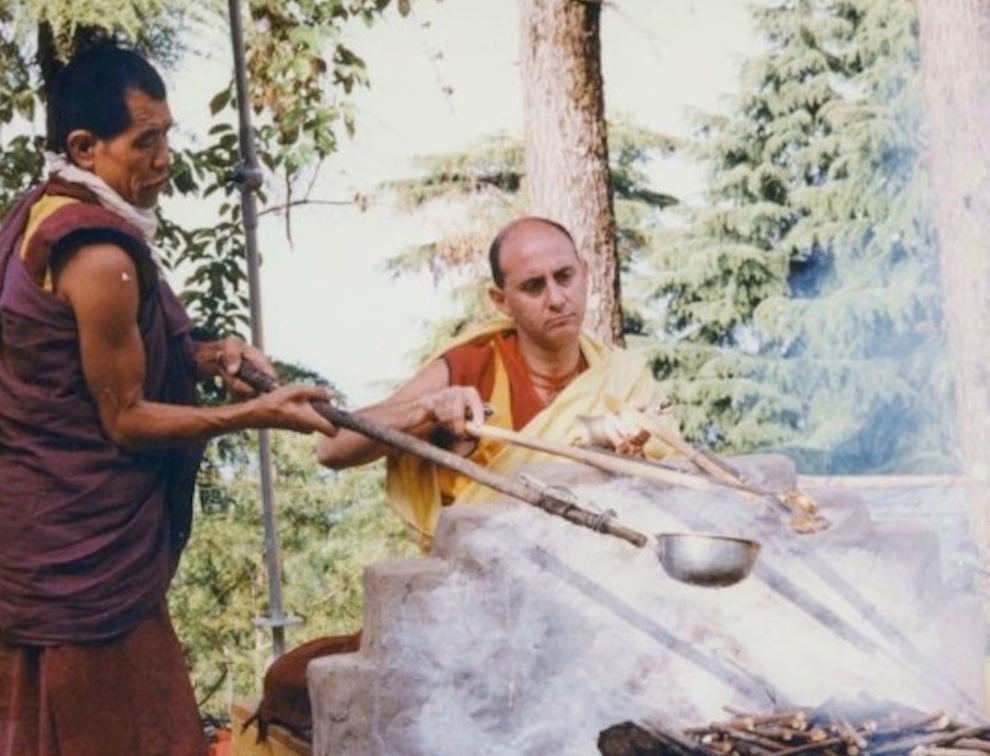
At the end of that Guhyasamaja retreat they did a huge fire puja. Lama Zopa Rinpoche was sitting on the throne putting the substances in. He was saying they burned probably like three big cans of ghee. Lama Zopa Rinpoche kept saying, “Bring more. Bring more. Bring more.” They put so much ghee on the fire. He said it was running down like water. Rinpoche kept saying like, “Put more. Put more.” Then those 200 people, the foreigners, they all went to pilgrimage around all the places in India. Pero was in charge of leading them all around, to the pilgrimage places.
Venerable Kunphen: We had retreat hut up here behind the fire puja.
Pero and Jampa Thogme (?) each had a retreat hut up there. Jampa Thogme, theItalian monk.
Venerable Kunphen: There were two Italians.
Venerable Legtsok: Yeah, he’s the other one. And then PeterKedge.He’s English, right? Is he American?
Then Lama Yeshe did a Hayagriva retreat. For the fire puja they had to get like 100 kilos of tsampa and make into some kind of tormas for the Hayagriva retreat. So that time there was just one storey. Right now there’s two storeys and there was a parking place for cars or something. They cleaned that out and then they put all these tsampa balls for the fire puja. They stored them there. When they had the actual fire puja, they put all those in the fire.
Venerable Kunphen: Two storeys or one storey? The accommodation.
Venerable Legtsok: No, no. Before this building was just one storey, right?
Venerable Kunphen: It was always just one storey.
Venerable Legtsok: Yeah, I know. But now it’s two or three storeys, right? But then it was just one storey. And he’s saying that it was a parking place outside. I don’t remember that.
Venerable Kunphen: This didn’t exist, no? This way to the chai shopdidn’t exist. I think they all went via…
Venerable Legtsok: Oh, really? Genla was saying the parking place was somewhere down below. I don’t understand that.
Around that time Lama Yeshe showed the aspect of being a little ill. Then he did that fire puja. That time Tenpa Choden, the manager, was Lama Yeshe’s driver and there was another Kopan monk named Thubten Monlamwho was Lama Yeshe’s attendant. When Lama Yeshe showed the aspect of being ill, it was Thubten Monlamwho was his attendant who went with him to America. Lama Zopa Rinpoche invited Lama Yeshe to come to America at that time. It was around the same time that he offered this extensive fire puja and also showed the aspect of being ill. Lama Yeshe went to America and Thubten Monlamwas his attendant. Then he passed away in America. It’s kind of like out of thanks for being Lama Yeshe’s attendant in that last part of his life, Lama Zopa Rinpoche told Thubten Monlamlike okay you can just go and do whatever you want and kind of helped him stay in America. He wanted to stay in the US, I think. And it seemed like Lama Zopa Rinpoche helped him kind of just stay in America and gave him a kind of exception from having to go back to Kopan or something. Lama Zopa Rinpoche knew about that white cloth that Lama Yeshe had that mandalas measured out and drawn on before. After Lama Yeshe passed away, Lama Zopa Rinpoche said bring that to America. They put Lama Yeshe’s holy body on that and then offered it to fire. Lama Yeshe went. He took it along with him. Lama Zopa Rinpoche says when Lama Yeshe went to America, he brought that with him. Genla says, “Before Lama Yeshe left for America, there was already a premonition, a sign that he was going to pass away because there was some building over here that it broke and part of the building it kind of collapsed. It broke. That was like a kind of sign that Lama Yeshe was already going to pass away. That time Lama Yeshe went to America, Genla was still staying in retreat, doing retreat and acting as an attendant. Genla is saying Lama Zopa Rinpoche was not like Lama Yeshe. Whatever you did, he wouldn’t say anything. He would be just like yeah, whatever. But Lama Yeshe was very direct. If he torma wasn’t right or something wasn’t right, he would like directly kind of scold a little bit. Lama Yeshe wasn’t also someone who would think something about someone and just kind of hold it back. Whatever he thought about, he would just tell the person straight away, right? Genla’s saying Lama Yeshe would only be concerned about his own Lamas, his own teachers and the Kopan monks and nuns and His Holiness. Those are the three things he’s concerned about. Genla was saying Lama Yeshe deep in his mind he was a very good person. He always felt like he’s very kind, good person but outwardly he would give Genla a lot of scolding. You know what I’m saying? He got a lot of like scolding and I was saying about what and he’s like oh, no need to say. Genla was saying before there were a lot of monks and nuns staying in retreat here. There were a lot of little houses and people doing retreat like Guhyasamaja, Yamantaka, Heruka, Vajrayogini, doing different retreats for a month or two and Vajrasattva retreat. A lot of people doing Vajrasattva retreat. I was asking how many. I don’t know. Genla wasn’t really saying or for how long was it like that? But Genla wasn’t saying.
Venerable Kunphen: He was supposed to live with Paro Rinpoche (?) upstairs where I’m staying.
Venerable Legtsok: Oh, really?
Venerable Kunphen: That’s why the nice furniture, the like pinkish.
Venerable Legtsok: Oh, The previous Paro Rinpoche?
Venerable Kunphen: No, this Paro Rinpoche. He was supposed to live here but his brother lived here. I never got the story right.
Venerable Legtsok: Genla was saying before Wangmo didn’t have much money, it was quite difficult for her. But then her mother passed away and she received the inheritance and then she was able to build that house. But I was saying this because I remember Wangmo told me when Lama Yeshe passed away she was in a sealed retreat. She was supposed to be on a strict three-year retreat.
Venerable Kunphen: In the Mandala (Magazine) there is a picture of Lama Yeshe looking into the camera and turning the key in front of Wangmo’s house. Locking her in. She was supposed to be in a three-year Vajrayogini retreat.
Venerable Legtsok: Yeah, I know. She told me.
Venerable Kunphen: But she never finished.
Venerable Legtsok: No, because when Lama Yeshe passed away, she told me she was so heartbroken. She stopped. She was regretting that. But I was asking Genla about that when Wangmo was here, she built the house, right? He was saying, “Yeah, she built that house.”
Genla’s saying, yeah, Wangmo built the house and then Lama Yeshe locked her in and Lama Yeshe kept the key. And then there was a place to pass food through, people passing food.
Venerable Kunphen: I was wondering because now it is dinner time if we can continue tomorrow morning.
Venerable Legtsok: Sure. Yeah, it’s fine with me.
Venerable Kunphen: When are you leaving? The day after?
Venerable Legtsok: Yeah.
Venerable Kunphen: You wanna do it in the morning? You are quite busy. Could we do like this again at 3 or you are busy?
Venerable Legtsok: I could. Yeah. Sure.
Venerable Kunphen: Because in the morning we run around.
Venerable Legtsok: Okay, sure. Genla said yeah, okay.
Venerable Kunphen: Yeah. Then we continue tomorrow.
Venerable Legtsok: Genla was saying before, I don’t know what we’re going to talk about. I don’t have much to say.
Venerable Kunphen: Amazing, amazing! So inspiring, no?
Venerable Legtsok: Yeah!
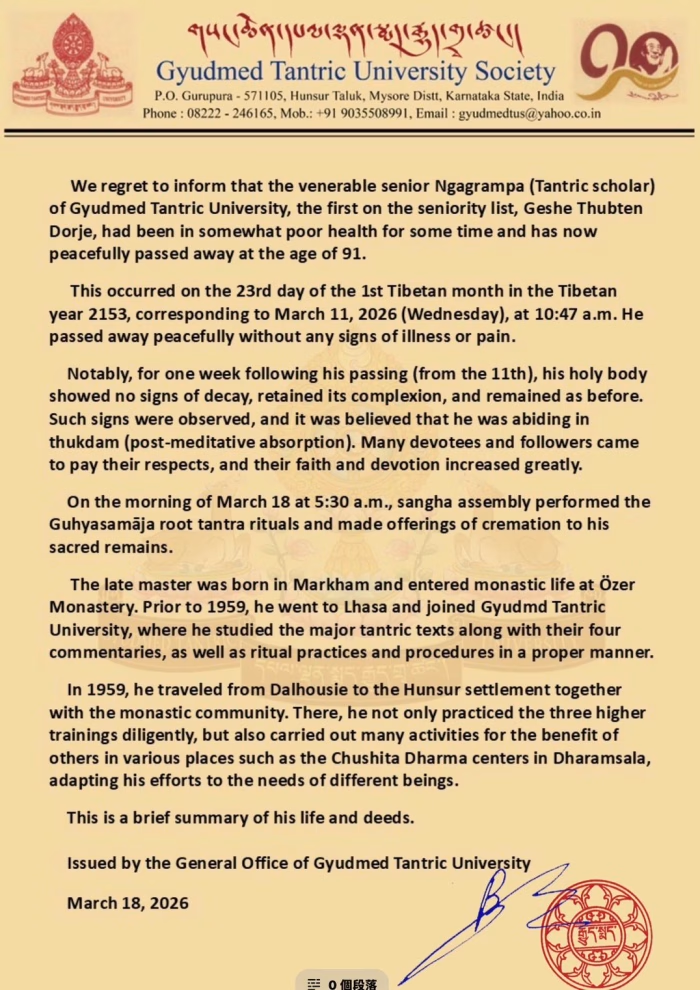
Statement Issued by Gyudmed Tantric University Regarding Lama Gyupa’s Life, Deeds and Death, 2026
We regret to inform that the venerable senior Ngagrampa (Tantric scholar) of Gyudmed Tantric University, the first on the seniority list, Geshe Thubten Dorje, had been in somewhat poor health for some time and has now peacefully passed away at the age of 91.
This occurred on the 23rd day of the 1st Tibetan month in the Tibetan year 2153, corresponding to March 11, 2026 (Wednesday), at 10:47 a.m. He passed away peacefully without any signs of illness or pain.
Notably, for one week following his passing (from the 11th), his holy body showed no signs of decay, retained its complexion, and remained as before.
Such signs were observed, and it was believed that he was abiding in thukdam (post-meditative absorption). Many devotees and followers came to pay their respects, and their faith and devotion increased greatly.
On the morning of March 18 at 5:30 a.m., sangha assembly performed the Guhyasamãja root tantra rituals and made offerings of cremation to his sacred remains.
The late master was born in Markham and entered monastic life at Özer Monastery. Prior to 1959, he went to Lhasa and joined Gyudmd Tantric University, where he studied the major tantric texts along with their four commentaries, as well as ritual practices and procedures in a proper manner.
In 1959, he traveled from Dalhousie to the Hunsur settlement together with the monastic community. There, he not only practiced the three higher trainings diligently, but also carried out many activities for the benefit of others in various places such as the Tushita Dharma center in Dharamsala, adapting his efforts to the needs of different beings.
This is a brief summary of his life and deeds.
– Issued by the General Office of Gyudmed Tantric University March 18, 2026
A Collection of Pictures of Lama Gyupa la
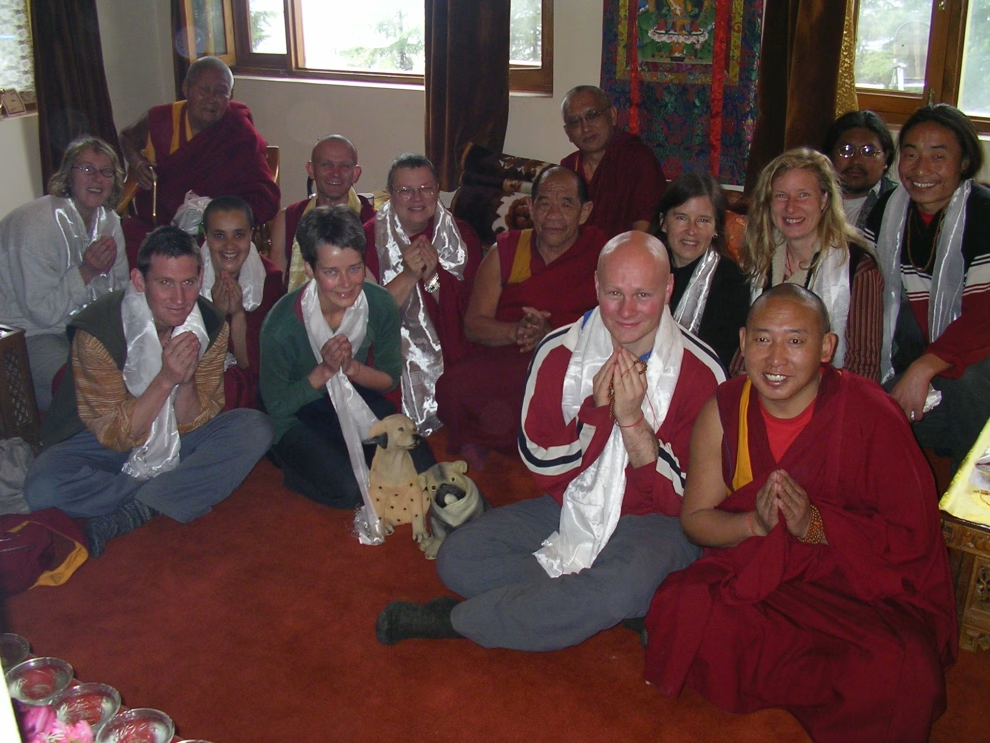
Please rejoice in Lama Gyupa la’s life and deeds and enjoy this collection of pictures of him taken in the last almost 50 years, with other very special and holy beings, here at Tushita!
1982
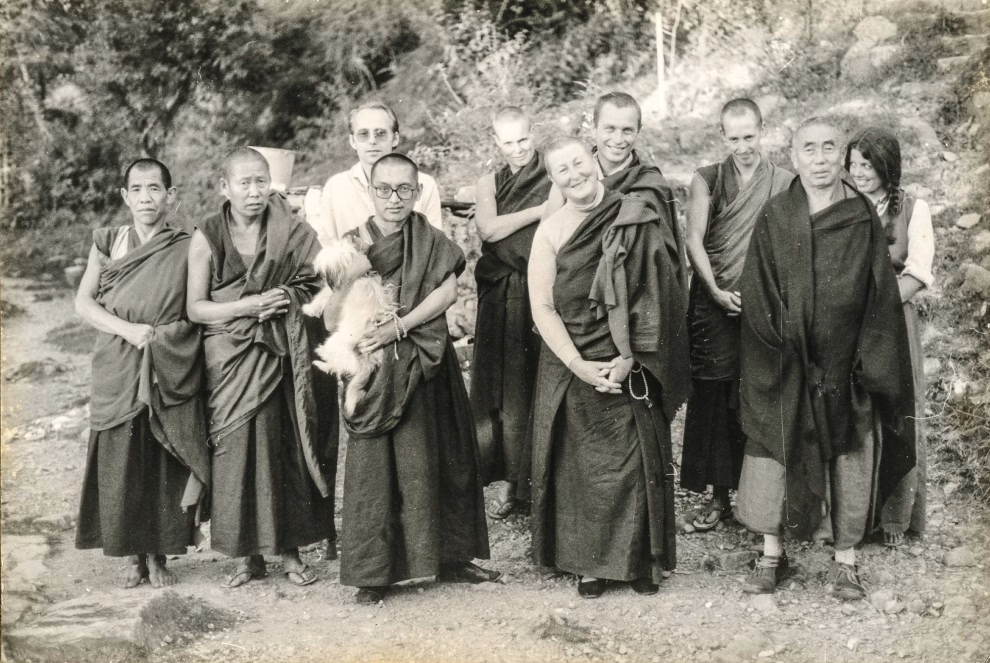
Lama Gyupa la (left) assisting Lama Yashe (right) doing a fire offering puja at the end of First Enlightened Experience Celebration at Tushita | 1982. Picture by Nicholas RibushLama Gyupa (left) and Lama Zopa Rinpoche (right) | 1982. Picture by Nicholas RibushLama Zopa Rinpoche (left) and Lama Gyupa (right) | 1982. Picture by Nicholas RibushLama Gyupa la (right) at Tushita | 1982. Picture by Ina van DeldenLama Gyupa la & Nicholas Ribush | 1982. Picture by Nicholas Ribush
1983
Lama Gyupa la, Geshe Tsering, Uldis Balodis, Rinpoche holding Dzogchen, Vens Ingeborg Sandborg (Yeshe Chodron), Ani Margo, Max Redlich (Gelek), Frank Brock, Geshe Lama Konchog, Maureen O’Malley | 1983Ven Pemba, Charok Lama Tenzin Dorje, Tenpa Chodon, Lama Gyupa la, Lama Zopa Rinpoche | 1983
1997
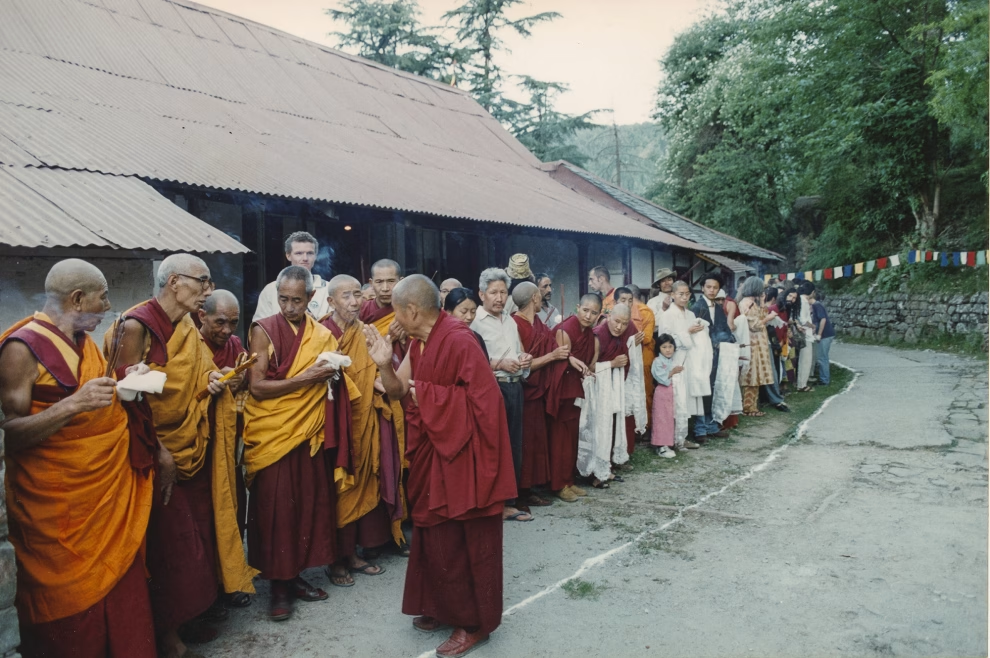
Lama Gyupa la (3rd from the left), sangha and lay students waiting for His Holiness the Dalai Lama to come to Tushita | 1997. Picture by LYWA
2005
Lama Gyupa la attending a puja led by Lama Zopa Rinpoche at Tushita | March 2005Lama Zopa Rinpoche with Tushita team and Lama Gyupa la (middle, right in front of Lama Zopa Rinpoche) | 2005
2009
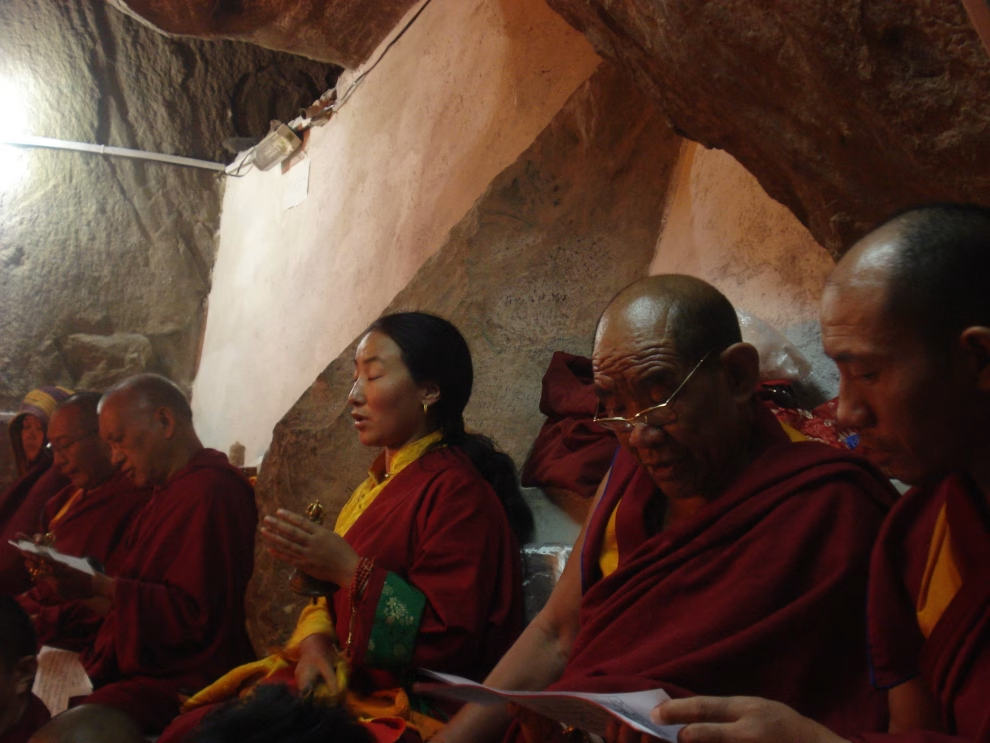
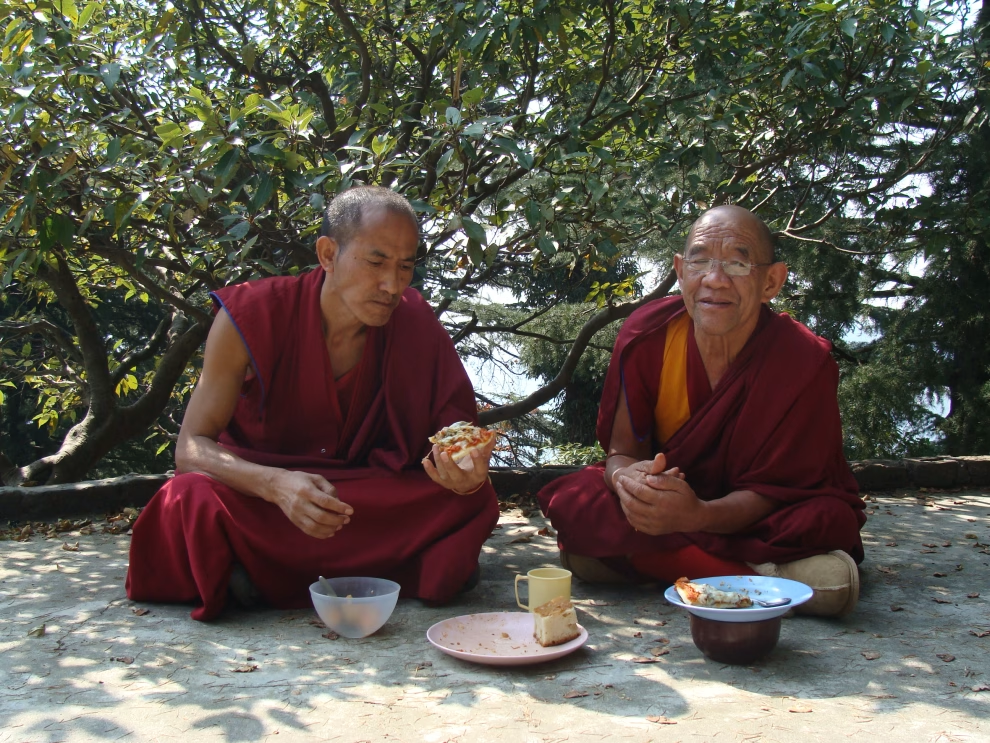
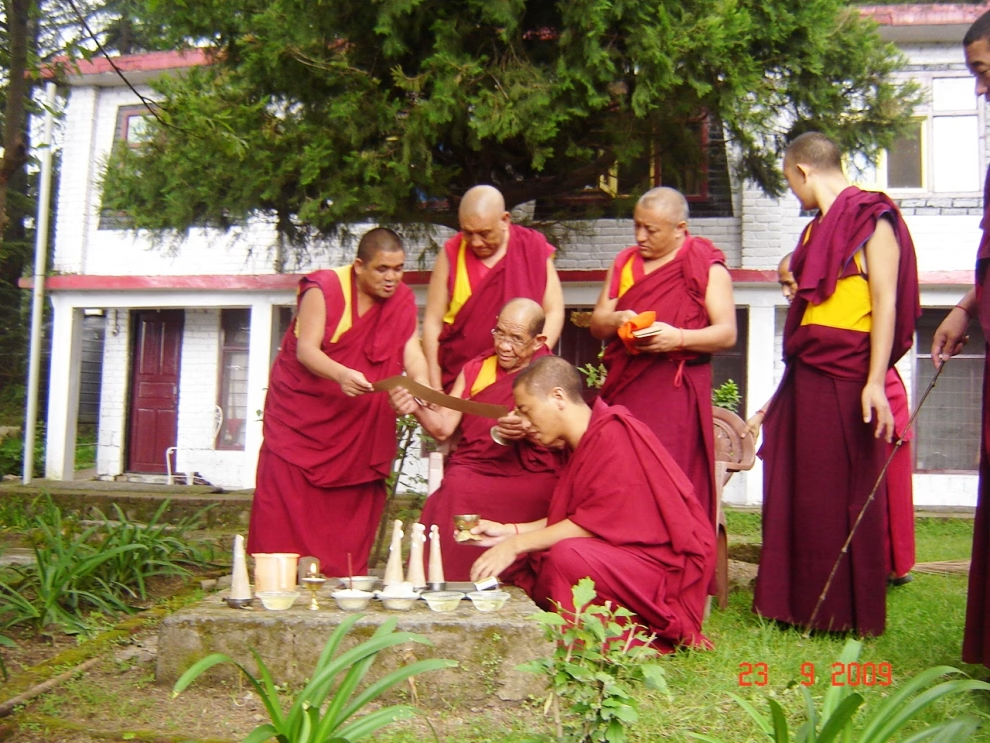
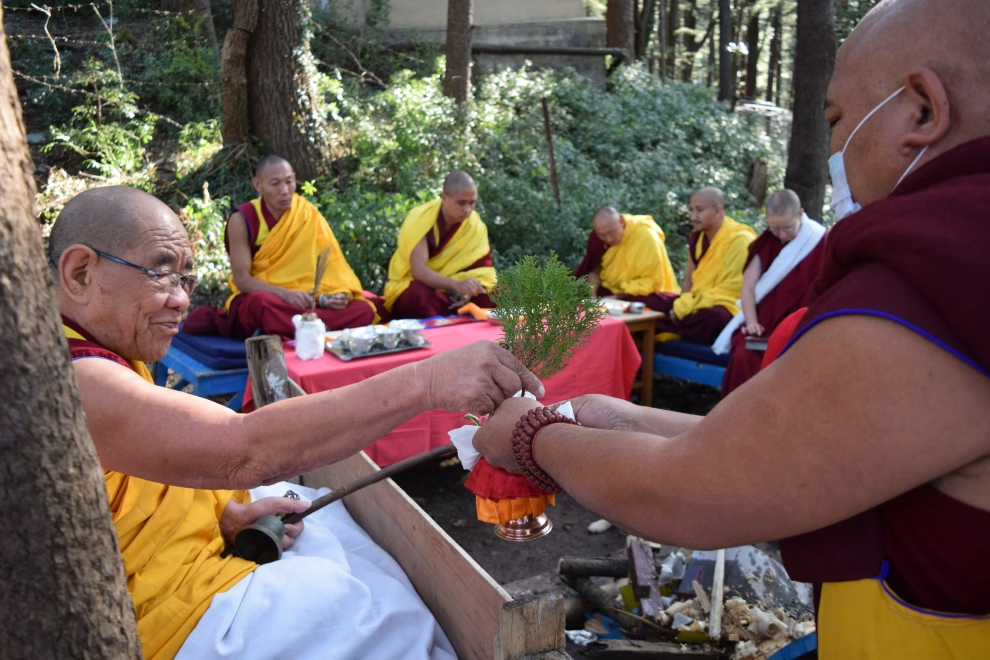
Dagri Rinpoche, Lama Zopa Rinpoche, Khandro Rinpoche and Lama Gyupa la attending a puja during a pilgrimage to Tso Pema, at Guru Rinpoche Caves, with Tushita team | April 2009Lama Gyupa la | April 2009Lama Gyupa la (right) during a Tushita picnic lunch | 2009Burying Wealth Vases | September 2009
2010
During Lama Zopa Rinpoche’s Departure from Tushita | August 2010During Lama Zopa Rinpoche’s Departure from Tushita | August 2010
2011
Lama Gyupa la and Khandro Rinpoche | 2011Lama Gyupa la and Khandro la | 2011Lama Zopa Rinpoche, Dagri Rinpoche, Khandro Rinpoche, Lama Gyupa la during an Incense Puja at Tushita | November 2011Incense Puja at Tushita | November 2011. Picture by Venerable Holly
2012
Geshe Choklyi’s Cremation | May 2012Geshe Choklyi’s Cremation | May 2012Lama Gyupa la waiting for Denma Locho Rinpoche to arrive at Tushita | May 2012Incense Puja with Khadro la, Lama Zopa Rinpoche & Lama Gyupa la at Tushita | 2012
2013
Prayer Flags Ceremony with Lama Gyupa la (second from the left) | 2013Lama Zopa Rinpoche and Lama Gyupa la | August 2013Lama Gyupa la | 2013
2014
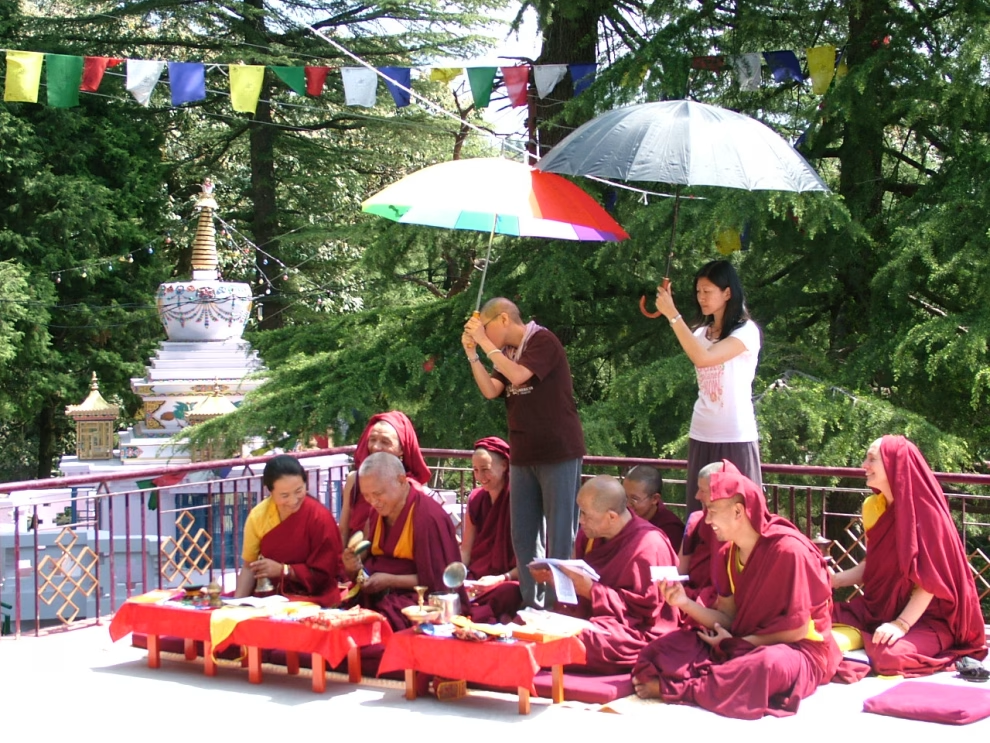
Butterlamp Offerings | May 2014Lama Gyupa making butterlamps offerings on Saka Dawa | 2014
Lama Yeshe Stupa’s Statues | June 2014
Jhado Rinpoche and Lama Gyupa at Tushita | 2014
2015
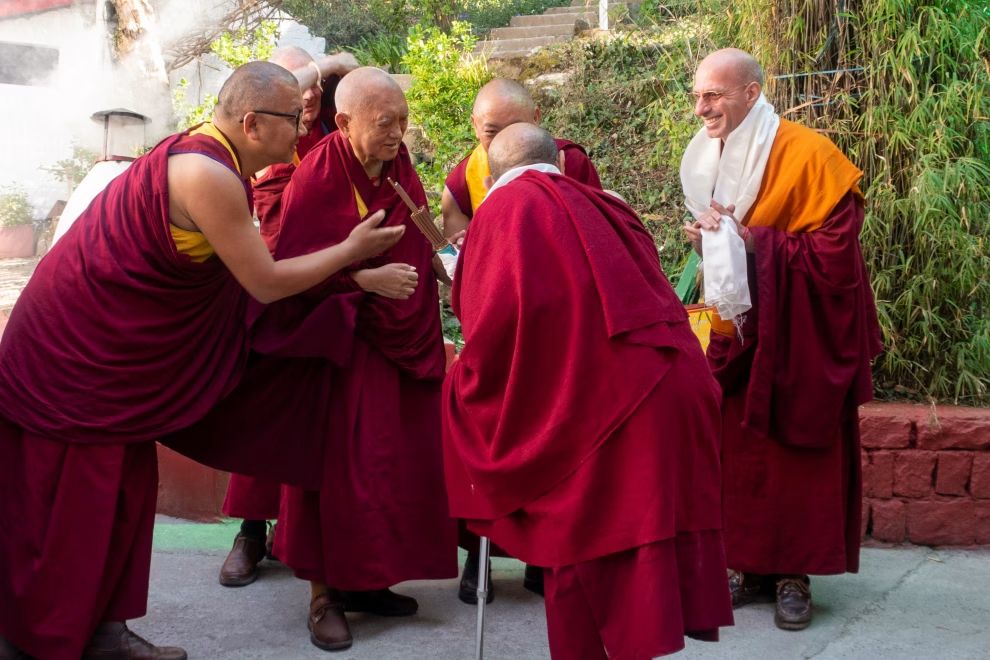
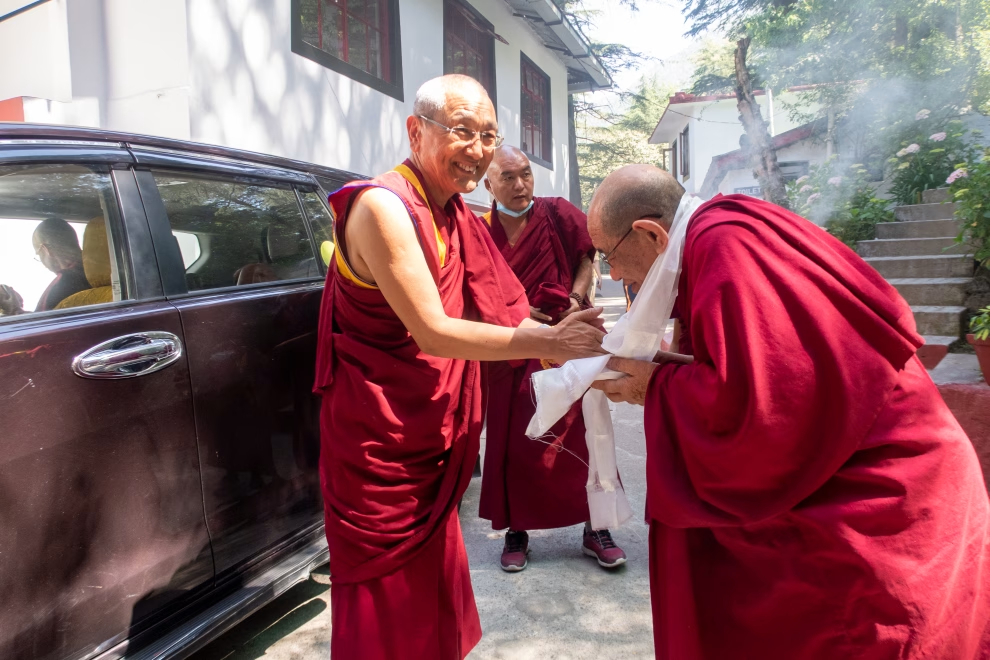
Lama Gyupa la talking to Lama Zopa Rinpoche | March 2015Lama Gyupa la welcoming Serkong Tsenshab Rinpoche at Tushita | September 2015
2016
Lama Tenzin Ösel Hita Torres and Lama Gyupa la at Tushita | 2016
2017
Venerable Kabir Saxena and Lama Gyupa la attending Amitayus Long Life Initiation confered by His Eminence Ling Rinpoche at Tushita | 2017
2018
Lama Zopa Rinpoche, Khadro la and Lama Gyupa la | 2018Lama Zopa Rinpoche, Khadro la, Lama Gyupa la and Tushita team | 2018
2019
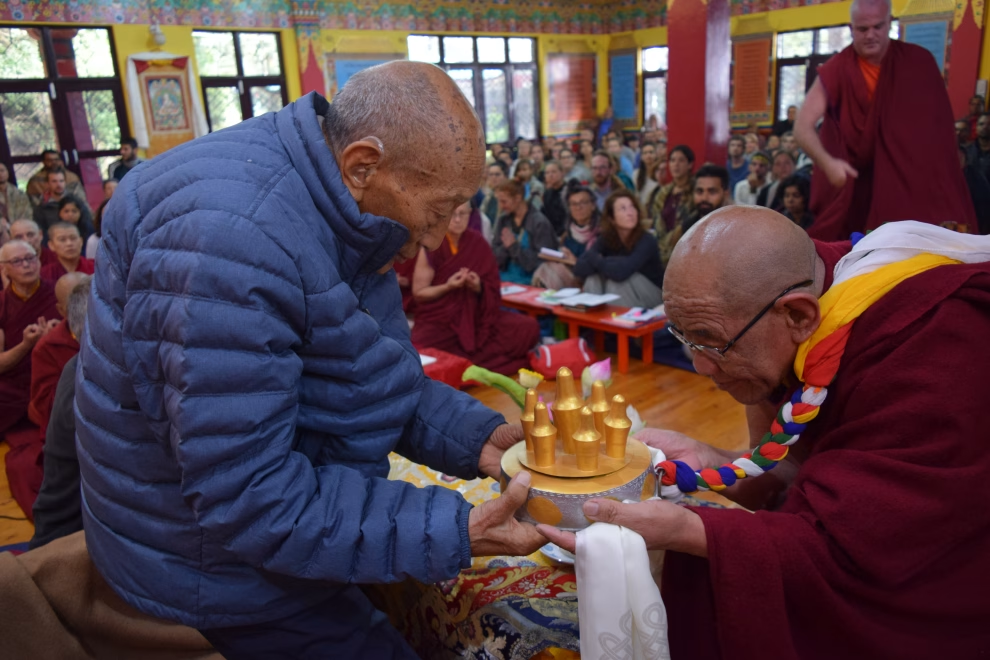
Lama Gyupa la Offering Mandala to Khyongla Rato Rinpoche | 2019Namgyel Puja to place Wealth Vase | 2019
2020
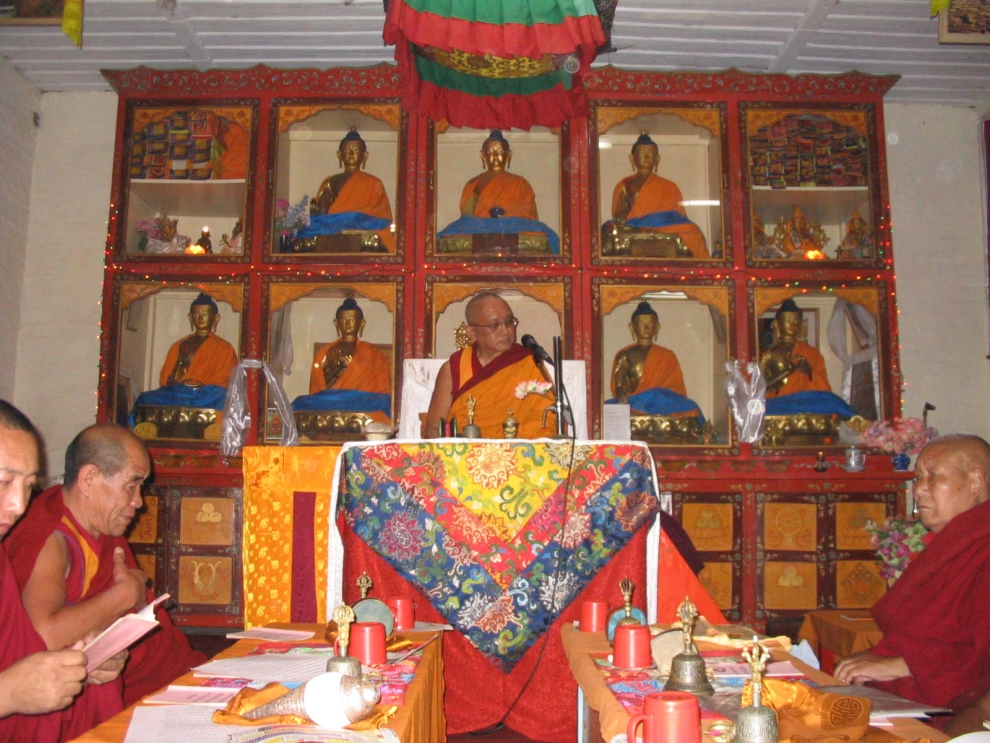
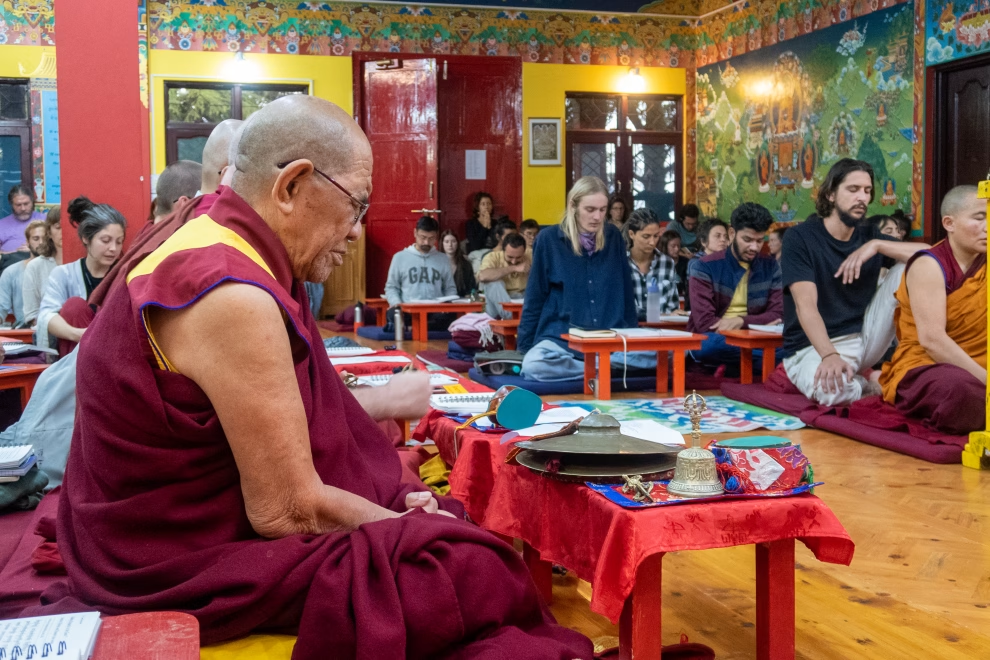
Lama Gyupa during Fire Puja after Vajrayogini Enabling Action Retreat | 2020Lama Gyupa during Medicine Buddha Puja | 2020
2022
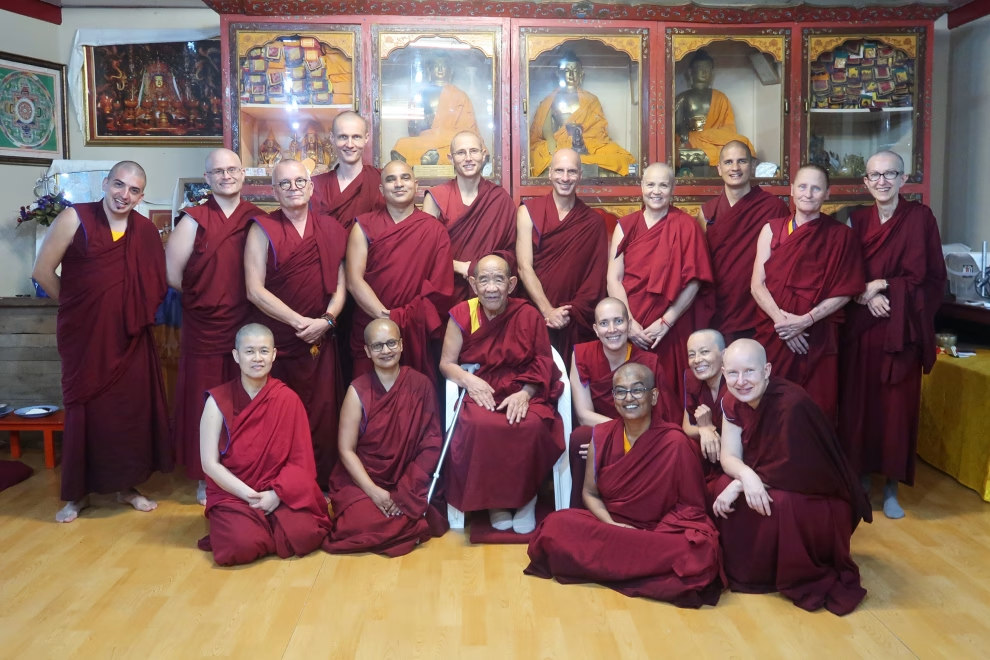
Lama Gyupa la (centre, on the chair) with Sangha | 2022
2023
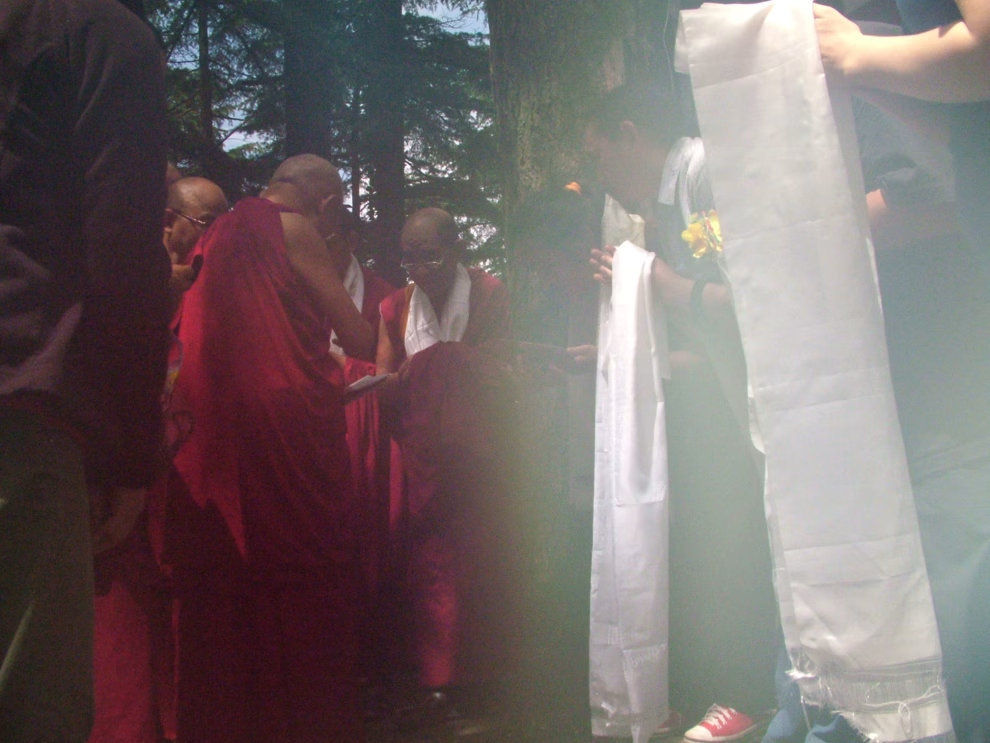
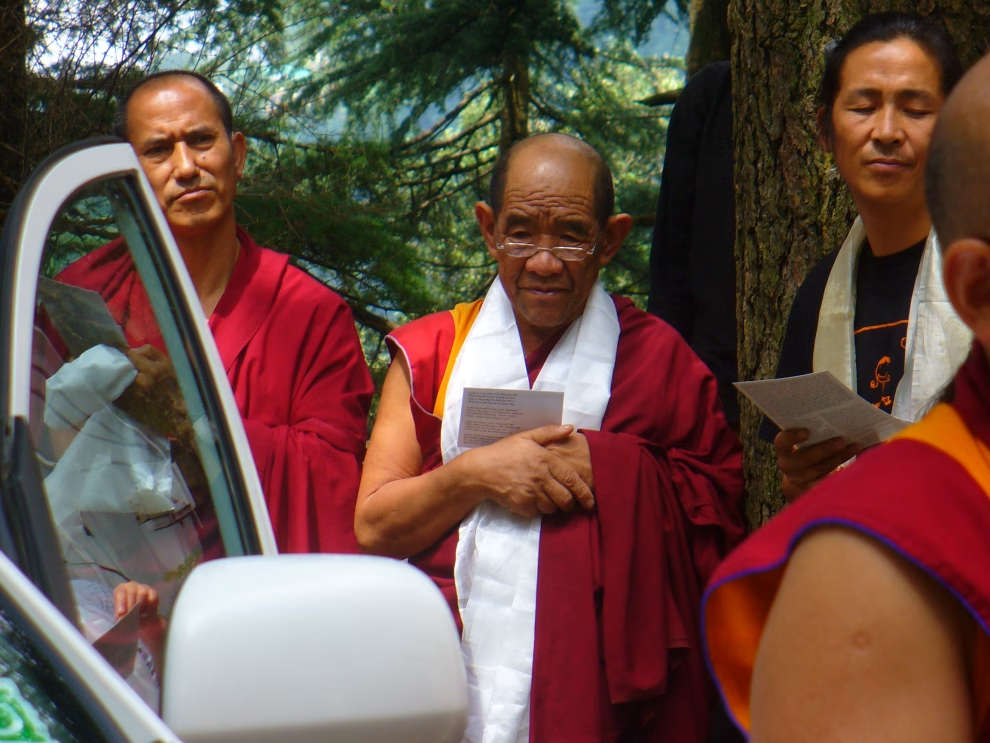
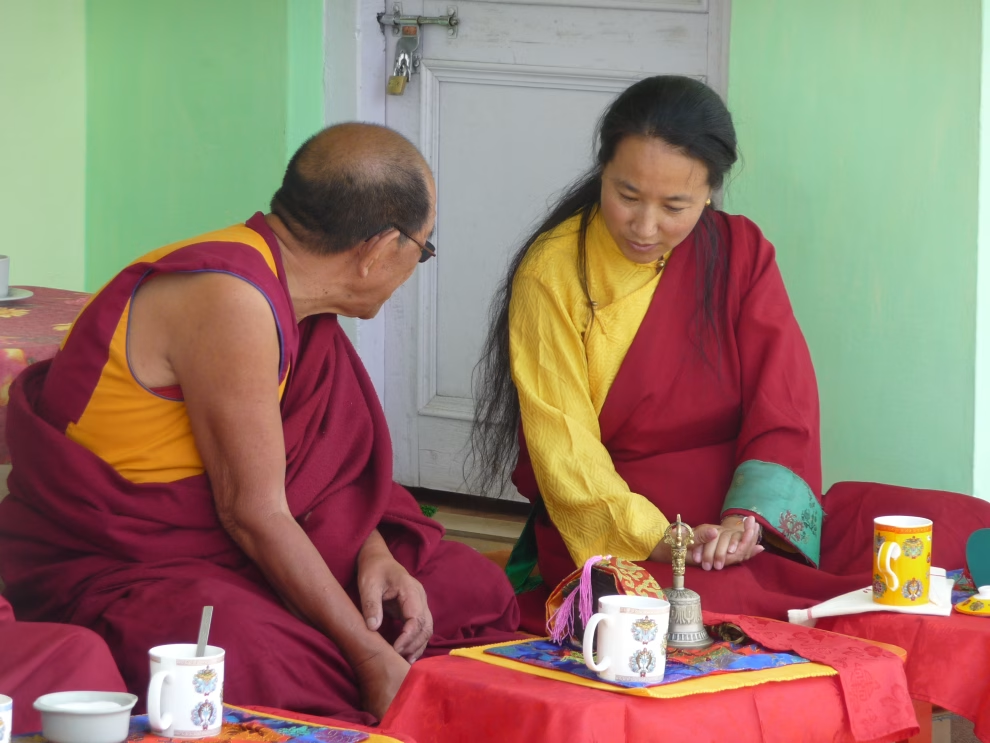
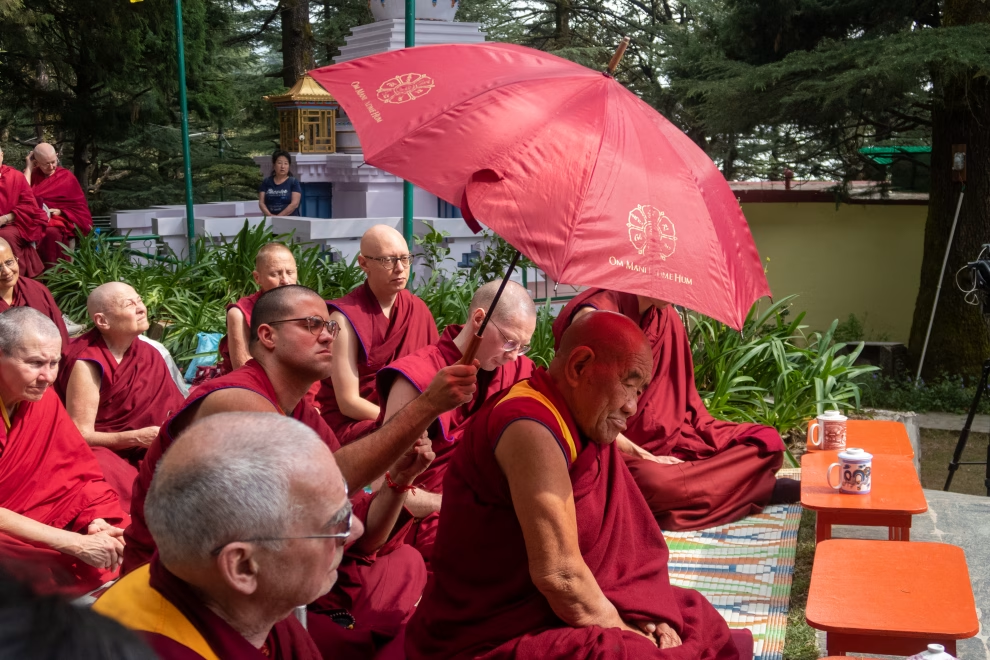
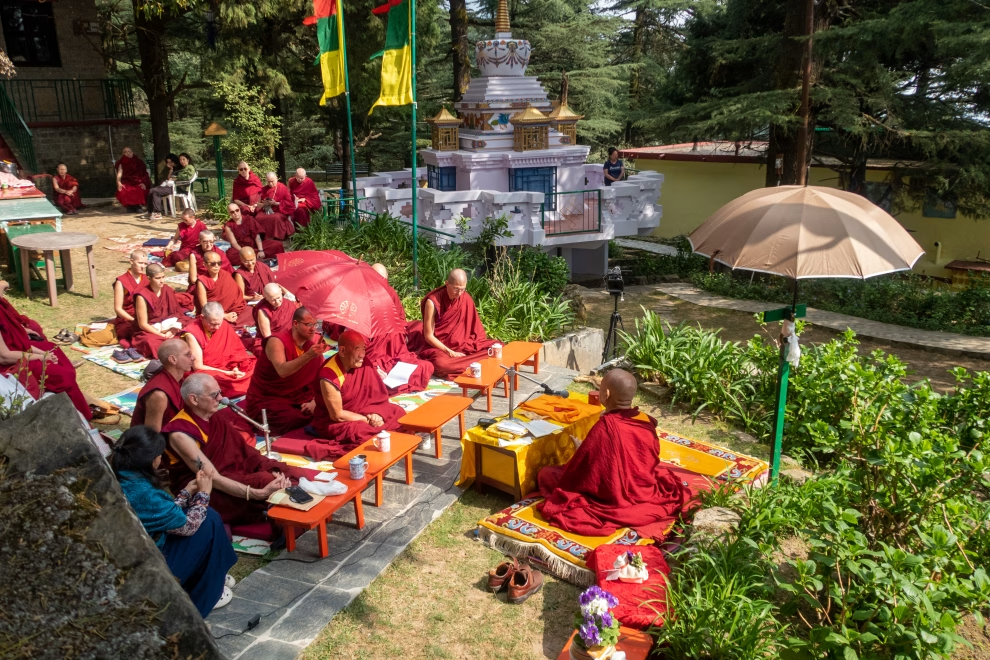
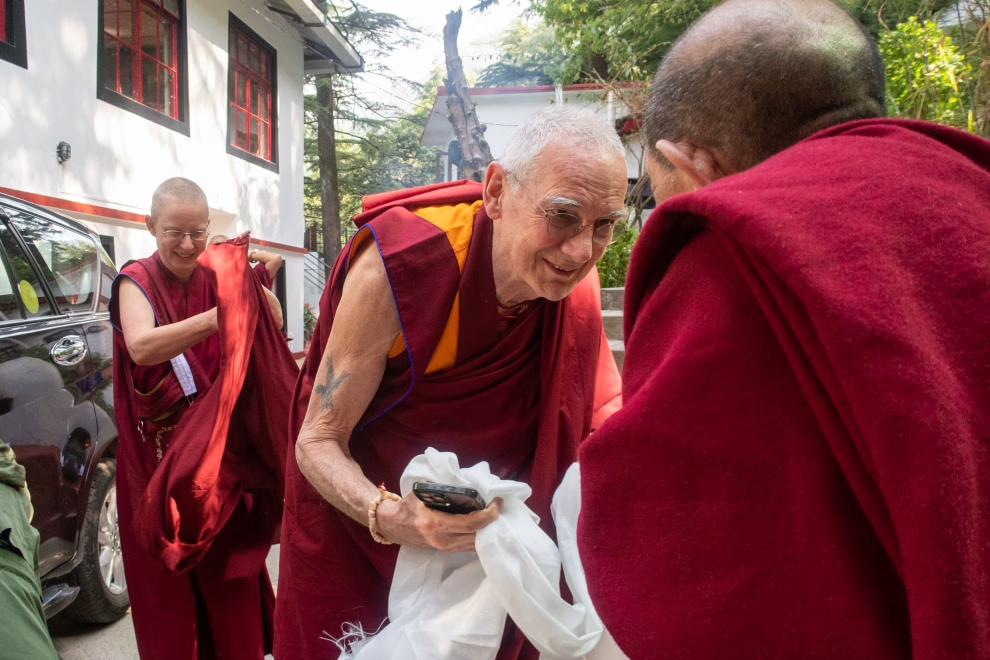
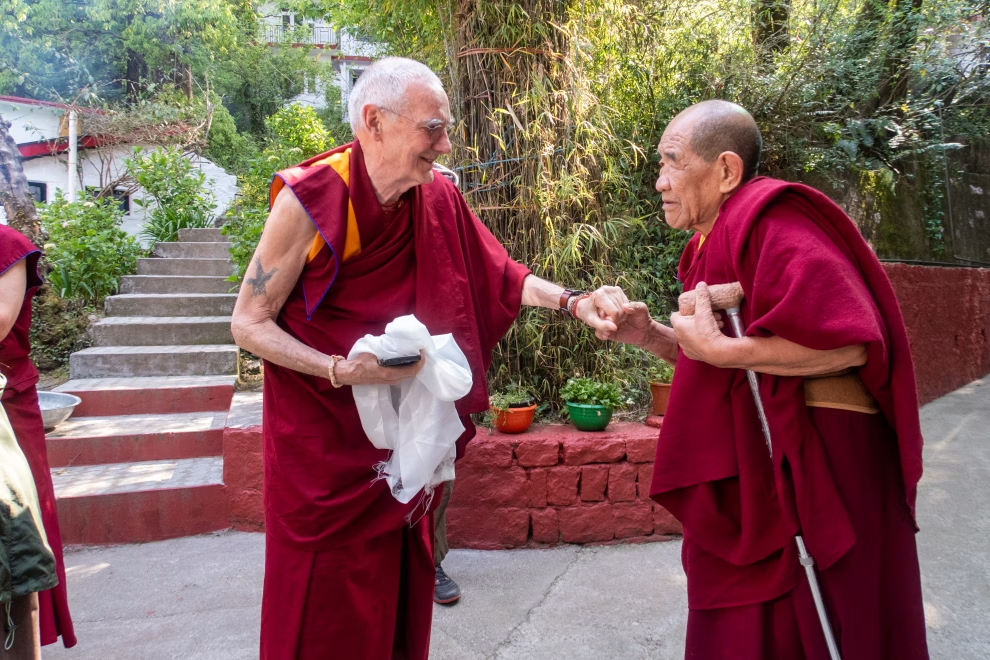
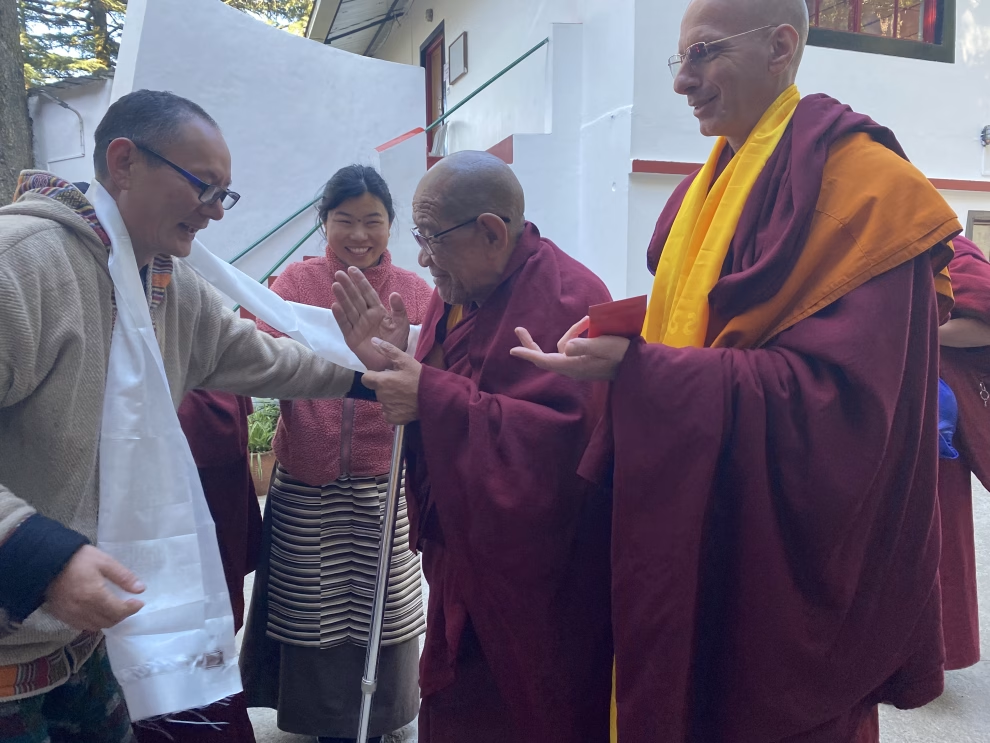
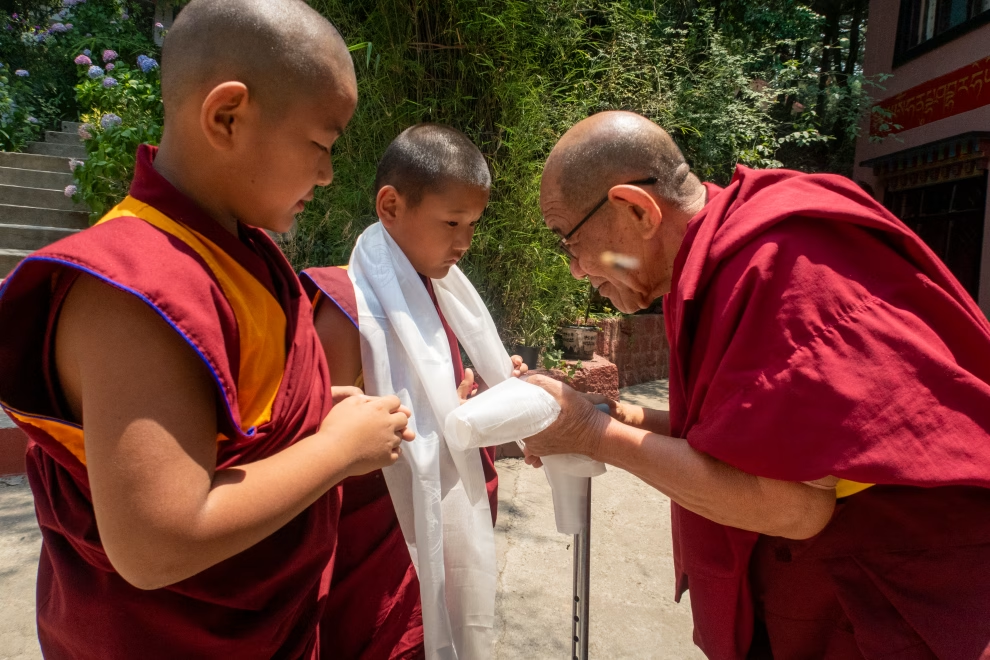
Lama Gyupa la welcoming Lama Zopa Rinpoche at Tushita | March 2023Lama Zopa Rinpoche with Lama Gyupa la | March 2023Lama Zopa Rinpoche with Lama Gyupa la and Tushita Team | March 2023Lama Gyupa la | March 2023Venerable Thubten Kalden holding an umbrella protecting Lama Gyupa from the strong sun, while attending a Sangha Lunch & Teachings with Lama Zopa Rinpoche at Tushita | March 2023Lama Gyupa la welcoming Venerable Roger at Tushita | April 2023Venerable Roger and Lama Gyupa la | April 2023Lama Gyupa la and Gen Tempa Choden | April 2023Lama Gyupa attending a Guru Puja for the Swift Return of Lama Zopa Rinpoche, led by Serkong Rinpoche at Tushita | April 2023Lama Gyupa la with Geshe Lhakdor and Tushita Team | May 2023Lama Gyupa la | May 2023Lama Gyupa la welcoming Geshe Tenzin Zopa at Tushita | May 2023Lama Gyupa la attending a Guru Puja with Kopan Monks in Vajrasattva Gompa | May 2023Lama Gyupa la attending a Guru Puja with Kopan Monks | May 2023Lama Gyupa welcoming Khen Rinpoche | May 2023Lama Gyupa attended a Four-Mandala Ritual to Cittamani Tara Puja commemorating the 6th week since Lama Zopa Rinpoche showed the aspect of passing away, together with FPMT Family at Tushita | May 2023Thromthog Rinpoche (the Abbot of Namgyal Monastery – left), Kopan Khenrinpoche Geshe Chonyi, Yangsi Rinpoche (President of Maitripa College), Serkong Tsenshab Rinpoche, Osel (Hita) Rinpoche, Dagri Rinpoche and Lama Gyupa la attending a Cittamani Tara Puja with FPMT Family at Tushita | May 2023Osel (Hita) Rinpoche, Dagri Rinpoche and Lama Gyupa la attending a Cittamani Tara Puja with FPMT Family at Tushita | May 2023Lama Gyupa welcoming Yangsi Rinpoche at Tushita | June 2023Lama Gyupa la (right) in Lama Yeshe’s room | June 2023Ven Kunphen, Lama Gyupa la and Ven Namdrol | 2023
2024
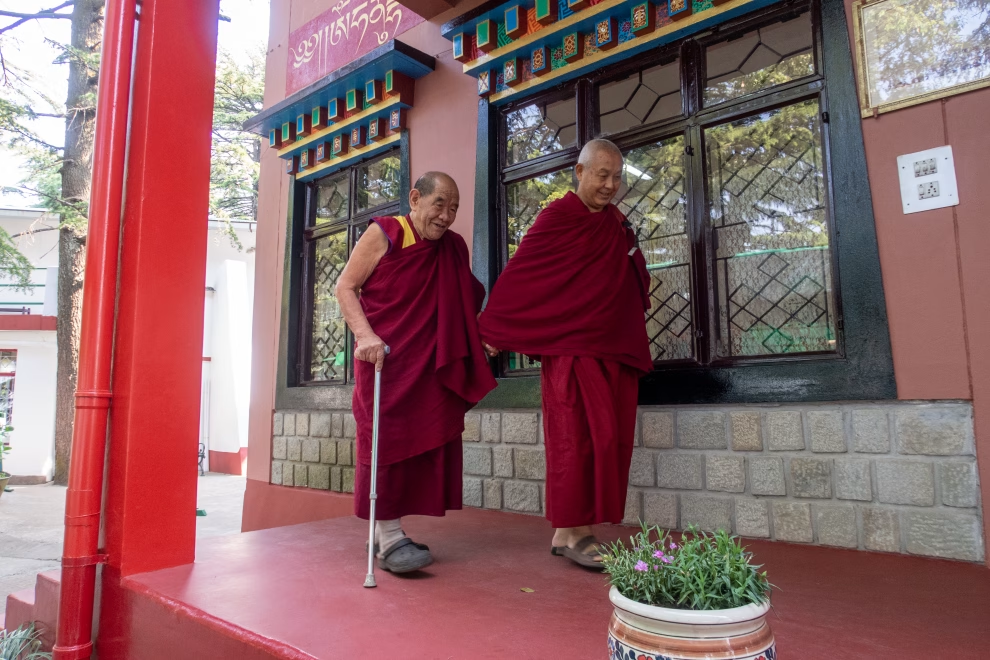
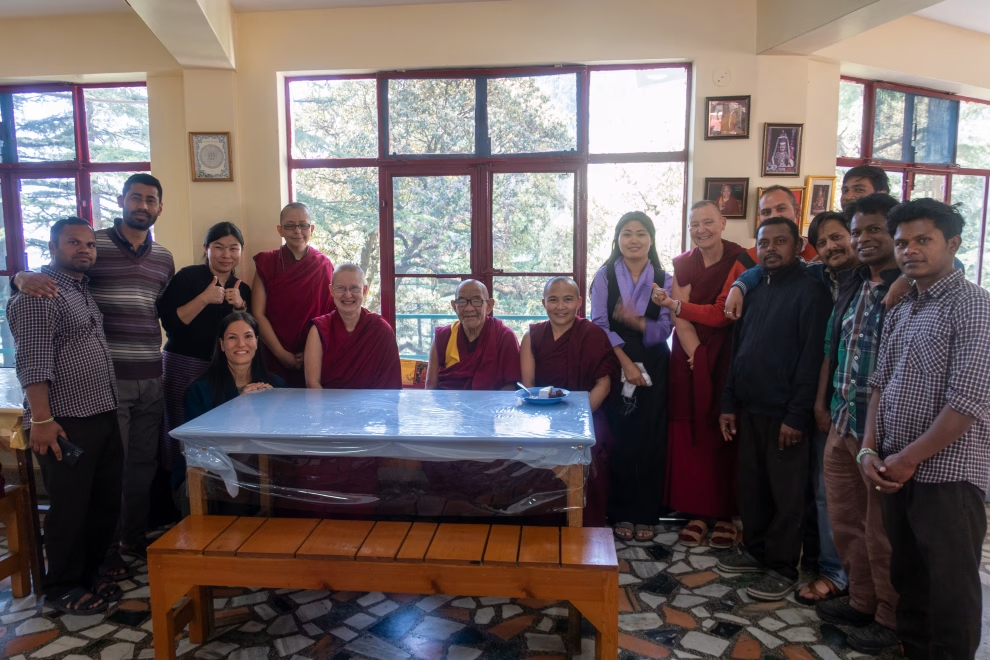
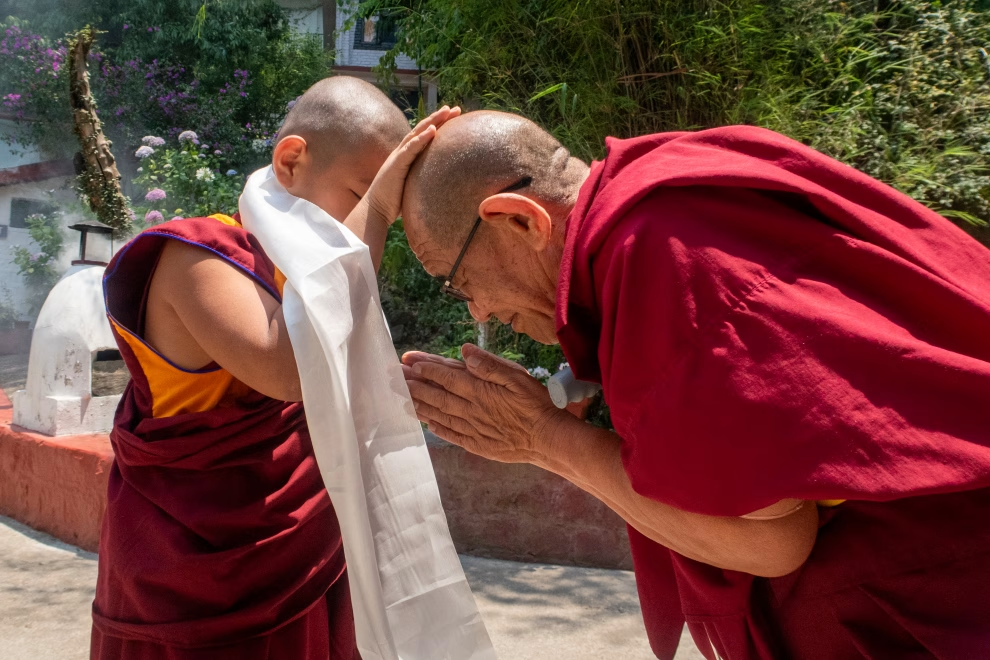
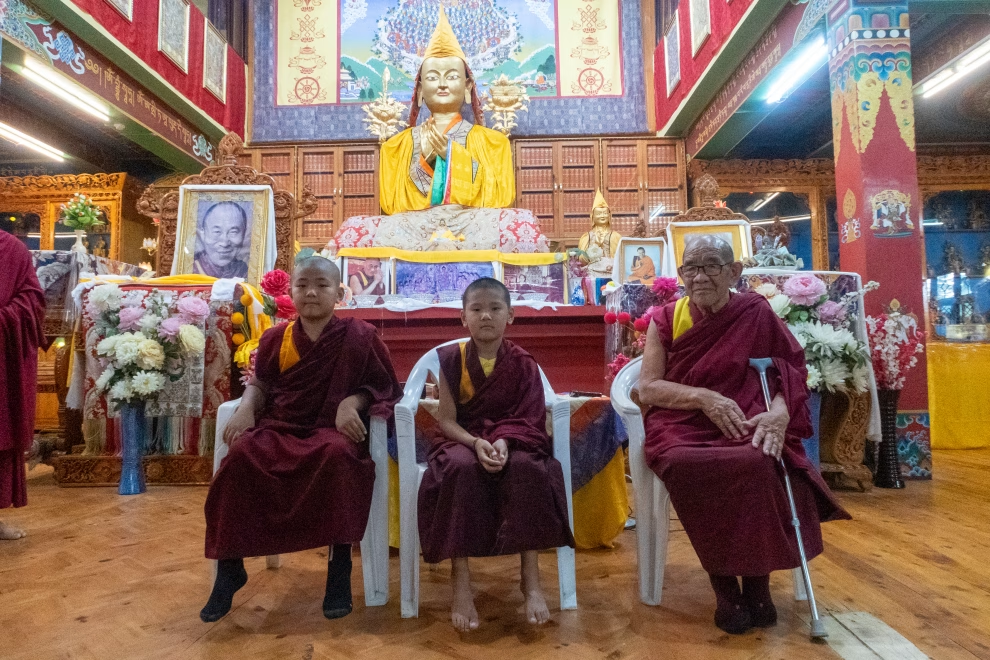
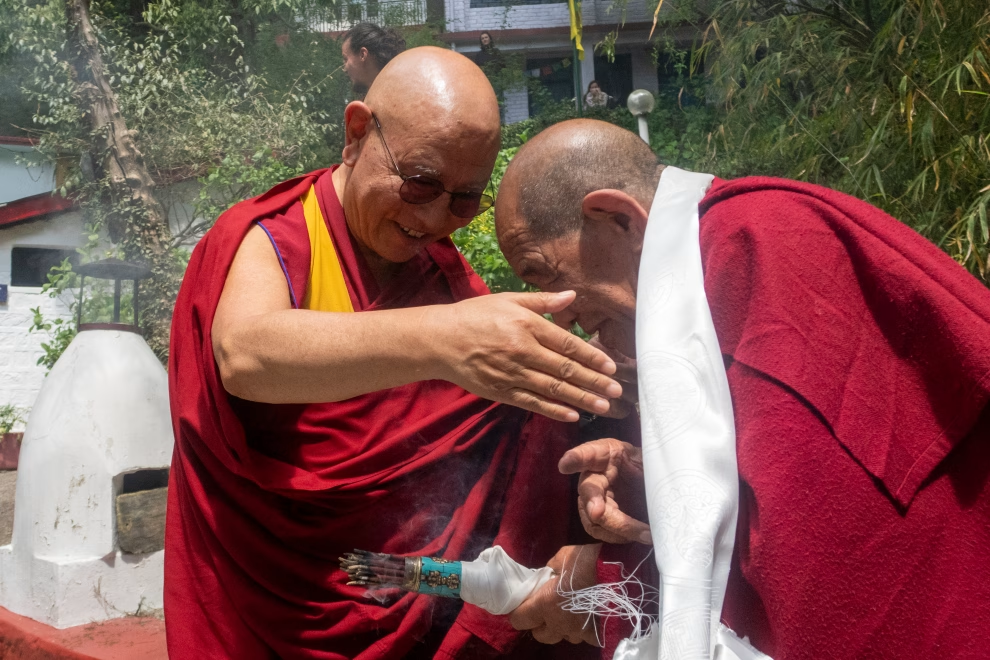
Lama Gyupa la coming back at Tushita from Gyudmed Monastery | February 2024Lama Gyupa with Gyume Monks | March 2024Lama Gyupa la and Tushita team after a goodbye party for our receptionist Pema | April 2024Lama Gyupa welcoming Tenzin Gyalten Rinpoche (Choden Rinpoche’s reincarnation) and Tenzin Choeying Rinpoche (Denma Locho Rinpoche’s reincarnation) at Tushita | June 2024Lama Gyupa la getting a blessing from Tenzin Gyalten Rinpoche (Choden Rinpoche’s reincarnation) | June 2024Tenzin Gyalten Rinpoche (Choden Rinpoche’s reincarnation), Tenzin Choeying Rinpoche (Denma Locho Rinpoche’s reincarnation) and Lama Gyupa la in the main gompa at Tushita | June 2024Lama Gyupa welcoming Jhado Rinpoche at Tushita | June 2024Lama Gyupa welcoming Jhado Rinpoche at Tushita | June 2024Samdhong Rinpoche with Lama Gyupa la and Tushita Team | June 2024Pema, Lama Gyupa la, Ani Lobsang | 2024Lama Gyupa la with Kabir Saxena near Lama Yeshe Stupa | June 2024Lama Gyupa la leaving Tushita for Gyudmed Monastery in the south of India | July 2024Geshe Legtsok and Lama Gyupa la at Gyudmed Monastery | June 2025
Rejoice in all the prayers made around the world for precious Lama Gyupa la!
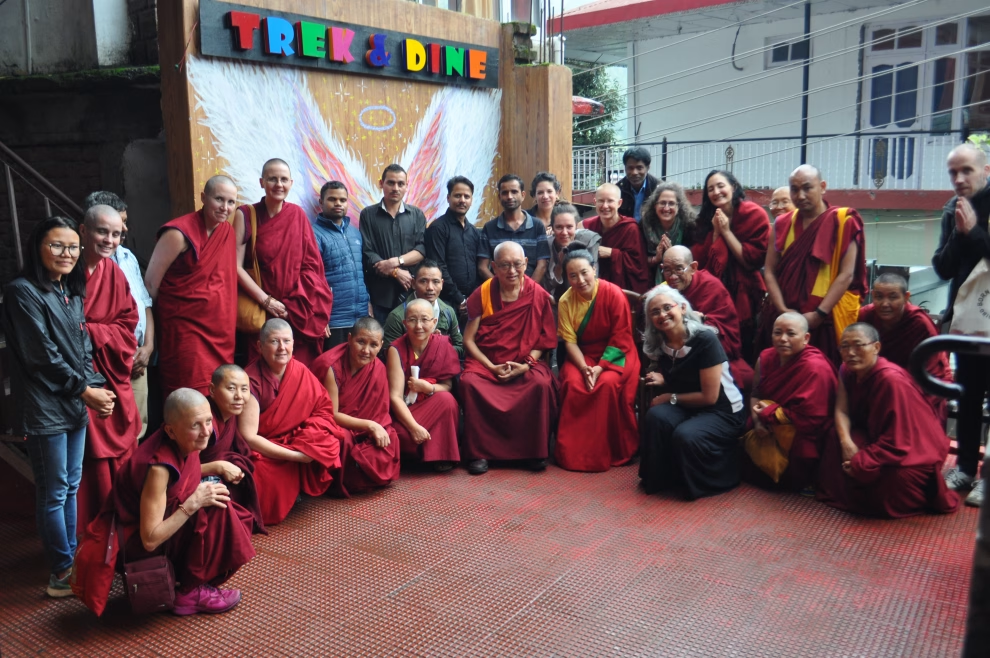
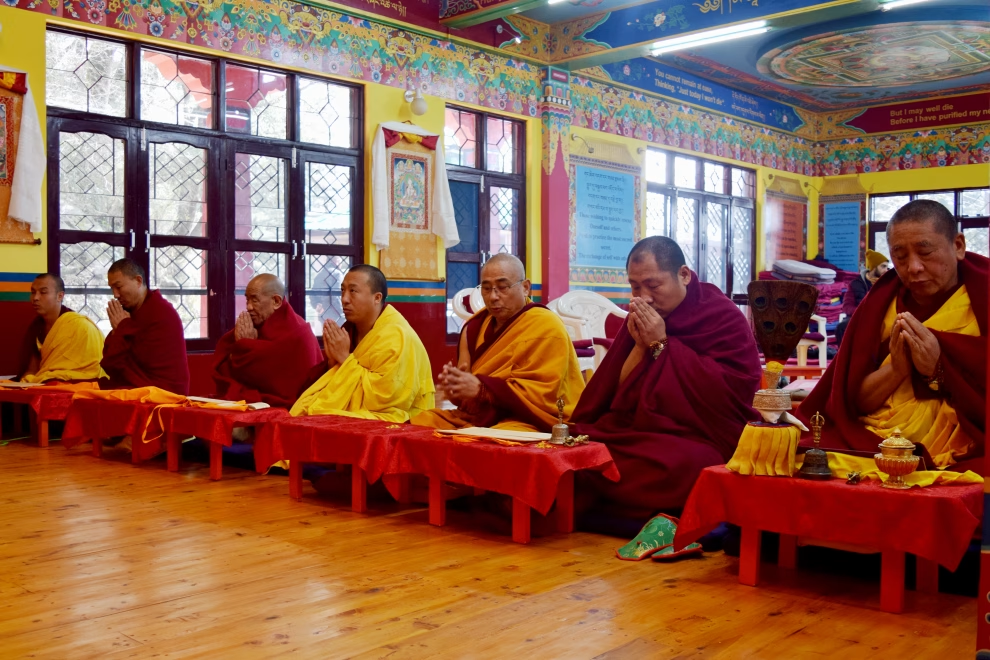
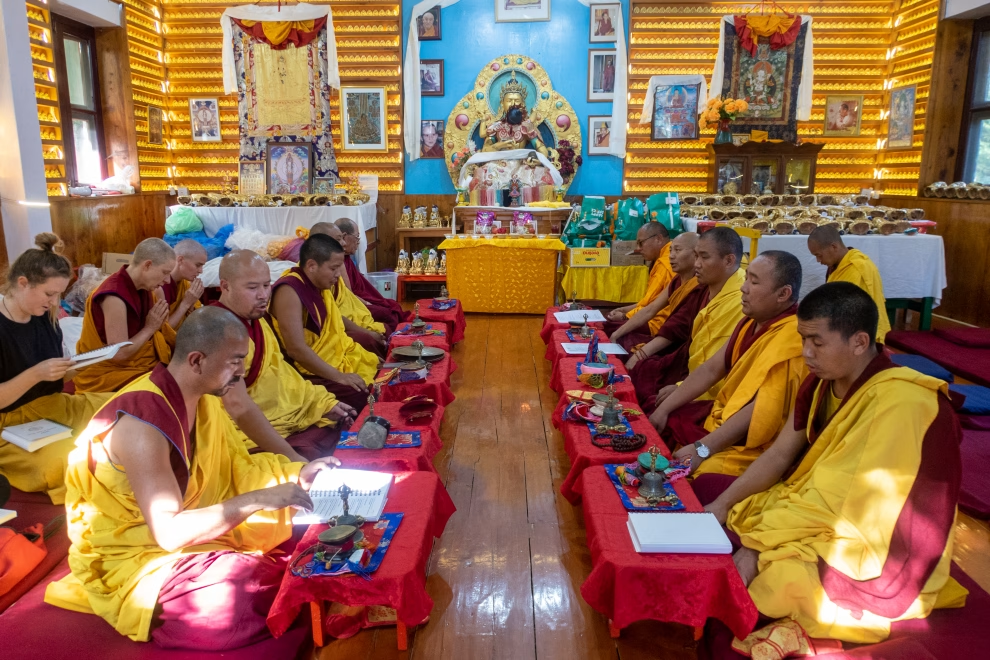
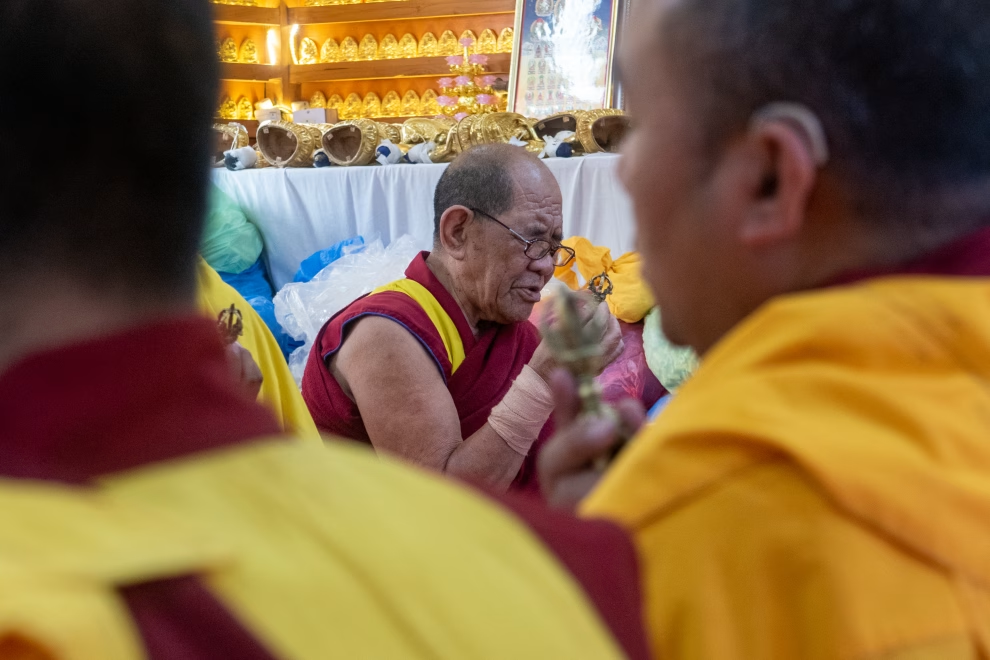
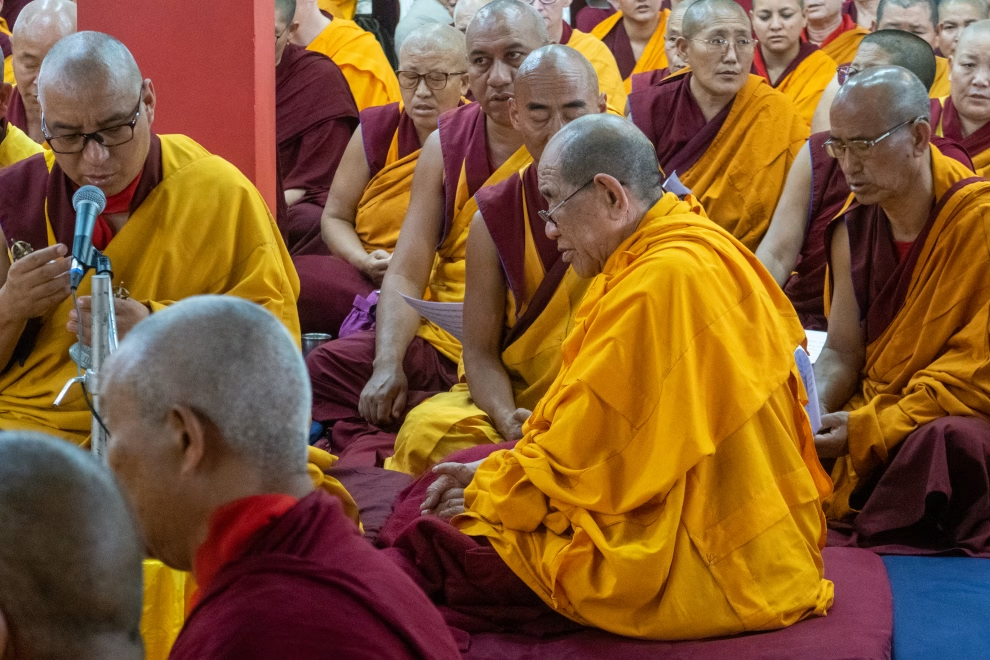
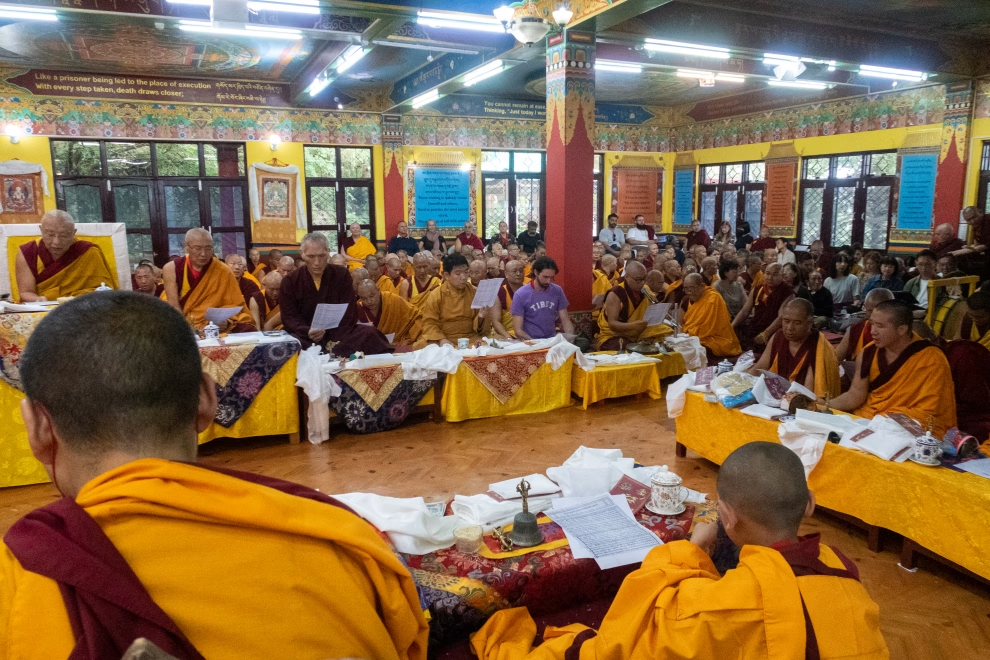
Monks doing prayers for Lama Gyupa la in Lama Zopa Rinpoche’ holy body room in Kopan Monastery | March 2026Prayers for Lama Gyupa la at Gyudmed Monastery | March 2026Prayers done at Kopan Nunnery for Lama Gyupa la, Kathmandu, Nepal | March 2026
Prayers by the meditators at Kirti Monastery for Lama Gyupa la, Dharamsala | March 2026
Prayers for Lama Gyupa la at Institute of Buddhist Dialectics, Dharamsala | March 2026Prayers for Lama Gyupa la in Lama Zopa Rinpoche’s room at Tushita | 2026